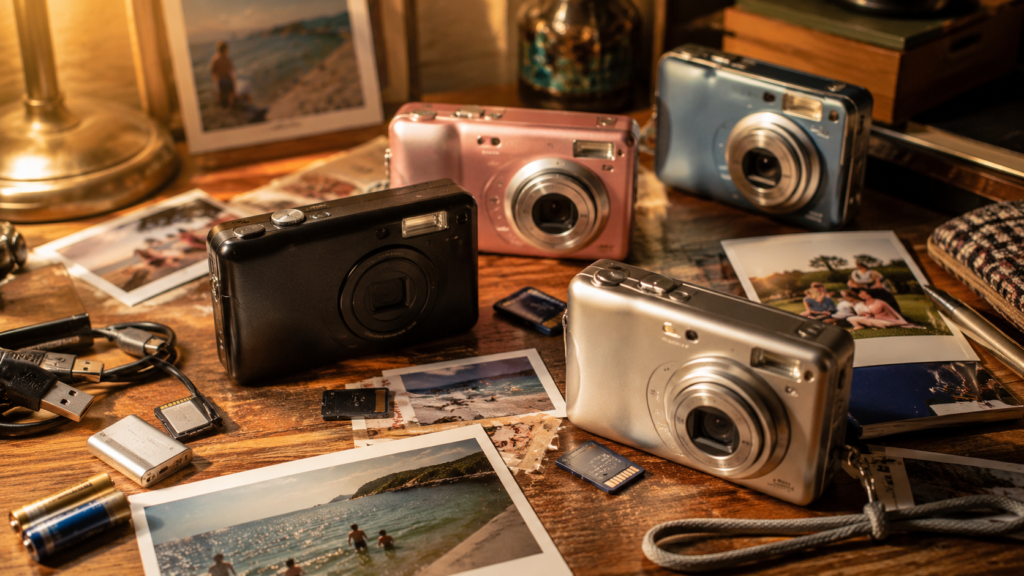
There was a stretch of the 2000s when a night out could require two devices: a phone for finding your friends and a small digital camera for proving that everyone had been there. The camera might be silver, pink or blue. Its wrist strap was permanently tangled. Its flash could make a dark room look like a crime scene.
Then phone cameras improved, the compact went into a drawer, and the charger became one more unidentified cable. Now a younger generation is rediscovering the whole arrangement—including the inconvenience.
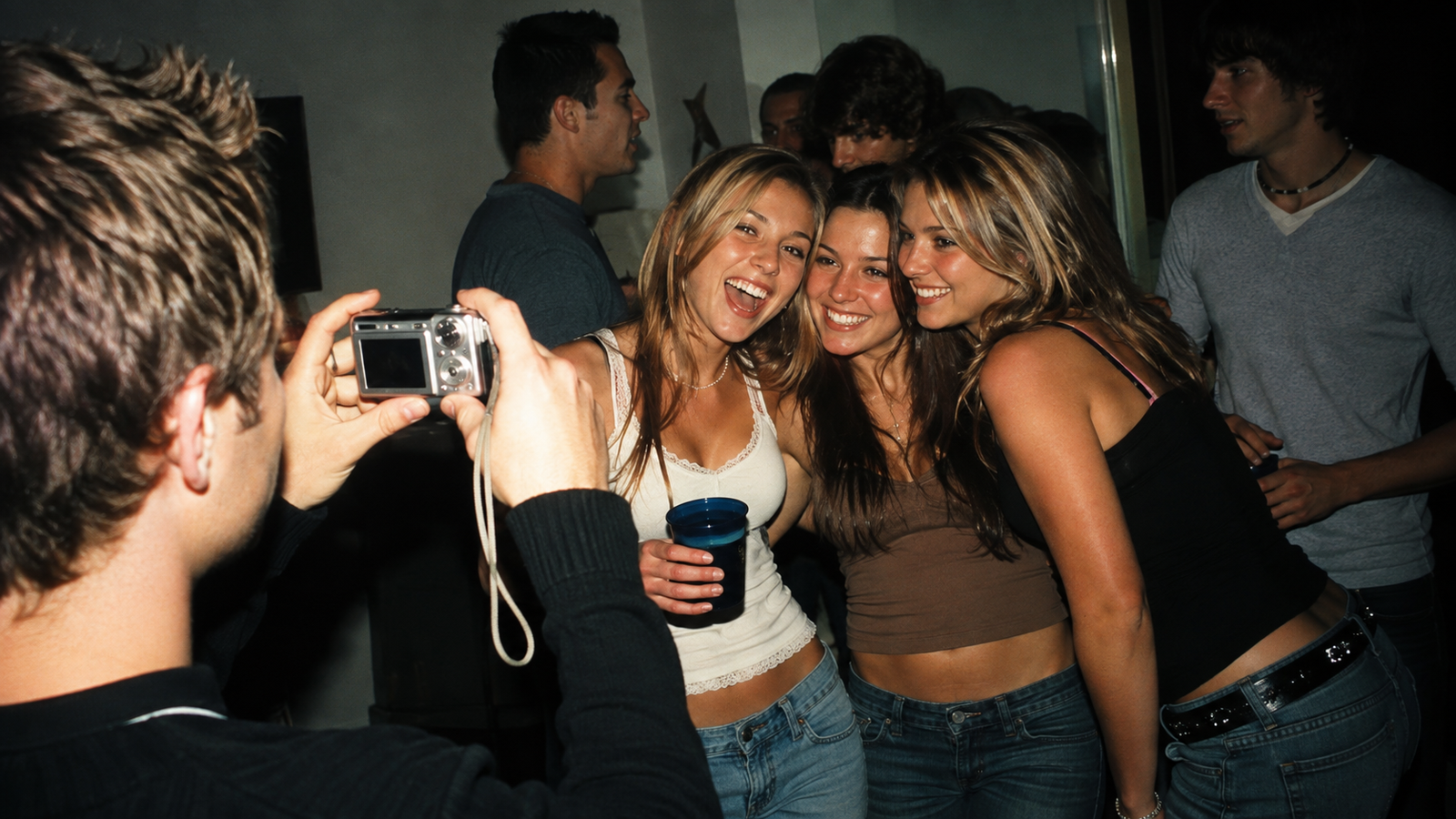
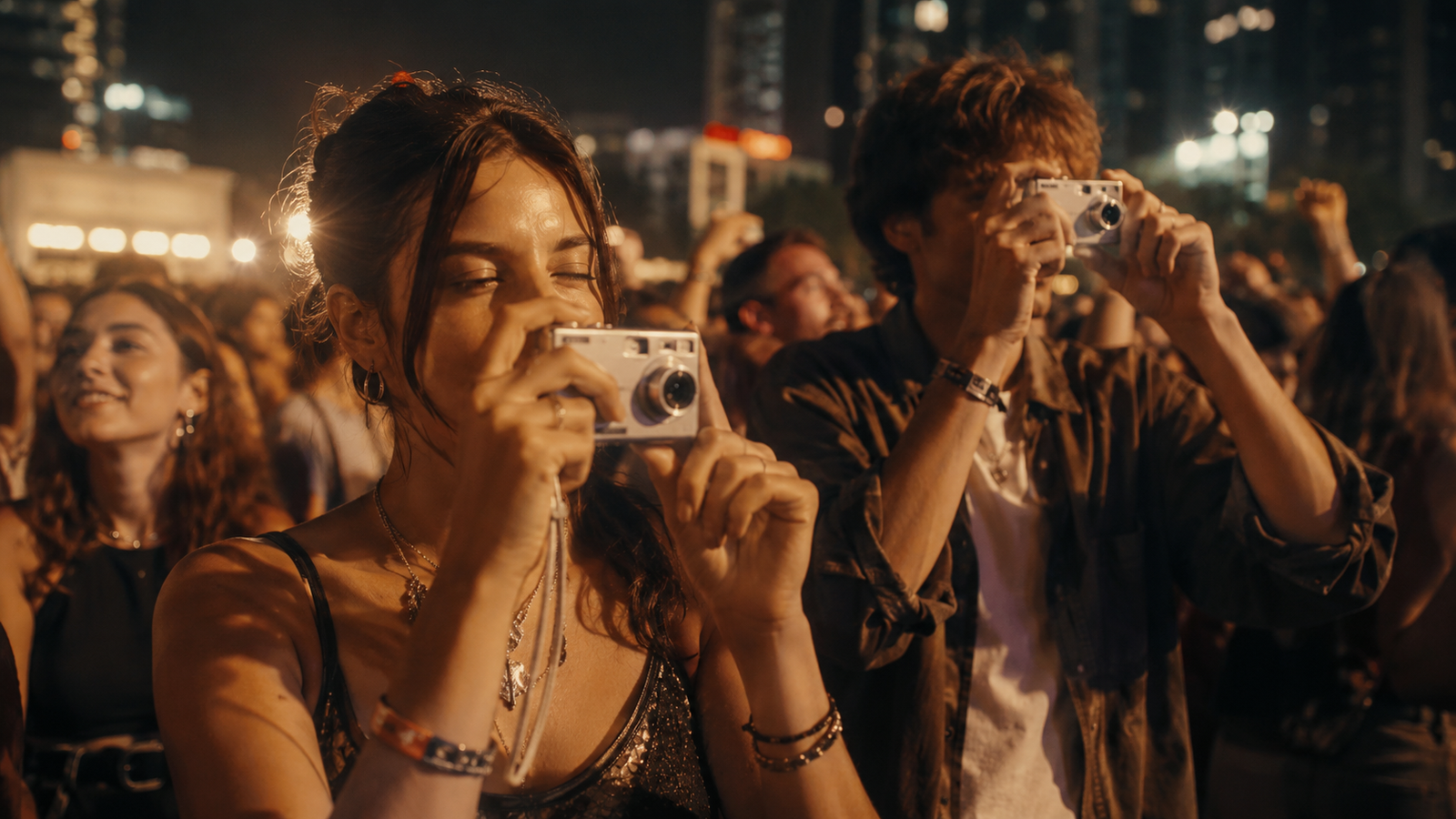
The appeal is easy to recognize in the pictures: bright faces, deep shadows, imperfect color, motion blur and a sense that the photograph happened during a night out rather than that the night was arranged around the photograph.
The comeback has a familiar flash
NPR’s July 2026 reporting on the return of compact cameras described younger users bringing them to social occasions and enjoying a device that separates photography from phone notifications. The attraction includes both older cameras and newer products built around a simpler experience.
Those are related trends, but they are not identical. A secondhand compact from 2006, a current premium point-and-shoot and a new screenless camera can have very different capabilities and prices. Putting them all under “digicam” can hide the differences that actually shape the experience.
For the old compact, part of the draw is the combination of an ordinary object and a recognizable photographic style. It looks like something found at home because, often, it was.
When seeing the photo immediately felt futuristic
The original excitement was practical. You could take a picture, see it on an LCD screen and try again. There was no need to finish a roll of film before discovering that somebody had closed their eyes in every birthday photograph.
Canon, Sony, Nikon, Kodak, Olympus, Casio, Fujifilm and Panasonic offered cameras in a bewildering range of shapes and colors. A compact could live in a jacket pocket, survive an entire vacation’s worth of sightseeing and become the family camera without demanding much technical knowledge.
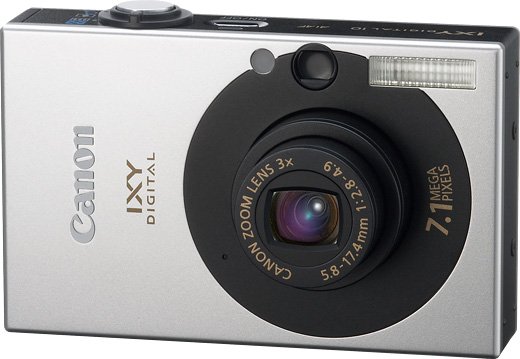
The Canon PowerShot SD1000, introduced in March 2007, captures that moment neatly: a slim body, a 7.1-megapixel CCD sensor, a built-in flash and a 3× optical zoom. Those specifications once described a desirable new camera. Today they also describe an object with a very particular place in people’s memories.
The imperfections became a style
An old compact can struggle in low light, miss focus, clip a bright area or produce obvious digital noise. It can also make clear, pleasing photographs when the light and settings suit it. “Old digital” is not one guaranteed look, and a CCD label is not a magic filter.
The sensor, lens, image processing, exposure, flash and conditions all matter. Two cameras from the same year can behave differently. Even the same camera can produce a soft party snapshot at night and a sharp landscape the following afternoon.
What people often respond to is the combination: a small sensor, a close built-in flash, limited room for correcting a difficult scene and a photographer more interested in friends than in perfection. The result recalls an era when sharing a photograph did not always involve editing it first.
There is no need to pretend that technical limitations are automatically better. A blurred picture of an important moment can still be disappointing. The pleasure comes from choosing an experience and accepting some unpredictability, rather than from discovering that every old camera was secretly superior.
MySpace without having to log into MySpace
The visual memory belongs partly to the camera and partly to the internet that received its pictures. Albums on MySpace, Fotolog, Flickr and early Facebook were full of mirror shots, concerts, parties and outings documented from almost every available angle.
People sometimes uploaded a whole evening at once. The good shot sat beside the strange one. A picture did not always have to make sense to a stranger; it only needed to remind the people in it what had happened.
Reusing the camera can recover a little of that informality. The small screen is not ideal for inspecting every pore, and the device does not immediately offer an audience. The photo can remain a photo for a while.
A camera with fewer invitations to get distracted
Taking out a phone opens many possible paths. A message arrives, an app badge catches your eye, and the attempt to photograph your friends becomes a detour through everything else happening in your life.
A compact camera narrows the task. Turn it on, frame the picture, press the shutter, put it away. It may still have menus and a playback screen, but it does not contain your inbox or your work chat.
That boundary is part of the appeal of other returning devices, too. An iPod gives music its own object. A CD turns an album into something you choose and handle. A compact camera gives photography a button that has only one job.
The pictures can wait until you get home
The old routine had a second stage. Find the cable or card reader, open the folder, copy the files, and promise that this would finally be the year you organized everything properly.
Folders accumulated with names such as VACATION_2007 and NEW_FOLDER_2. Some photographs were printed; others lived on a hard drive until a future afternoon unexpectedly brought them back.
That delay changes how you experience the pictures. Reviewing them together after an outing can be a separate pleasure. You see moments you had already forgotten and discover what somebody else noticed while holding the camera.
Digital cameras still process images; they always did. The meaningful difference is not the absence of an algorithm. It is the pace of the routine, the controls available to you and the distance between making a photograph and publishing it.
The best starting point might already be in a drawer
Interest can turn an unwanted old camera into a fashionable object, especially when a particular model attracts attention online. A nostalgic name on a listing does not tell you whether the lens works, the battery holds a charge or the right charger is included.
If you already have a camera, trying it is more informative than chasing somebody else’s sample photographs. The camera that documented your own family’s vacations has a connection that a newly purchased “vintage Y2K” accessory cannot manufacture.
None of this requires giving up a modern phone. There is room for a reliable everyday camera and an occasional device that makes the process feel different. One records efficiently; the other may encourage a different kind of attention.
The compact’s second life is a reminder that progress does not erase every reason to enjoy an older tool. We gained sharper pictures, faster sharing and extraordinary convenience. Some people also discovered that they missed the wrist strap, the little zoom motor and the unmistakable flash.