
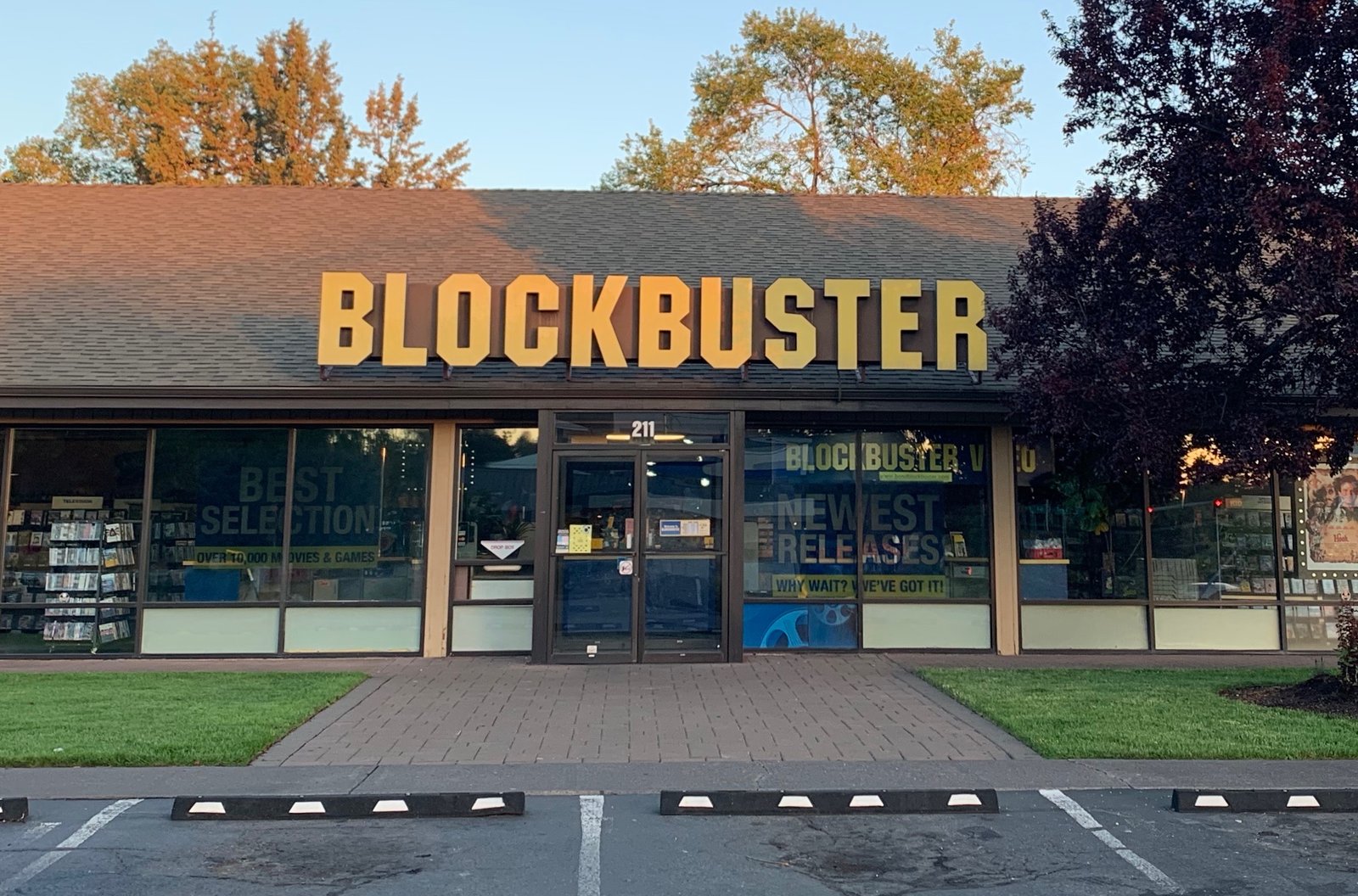
A Friday-night trip to Blockbuster could begin with one clear plan and end with a completely different movie. The new release was gone. Somebody wanted a comedy. Somebody else had found a horror film with a spectacular cover. A short errand became the first part of the evening.
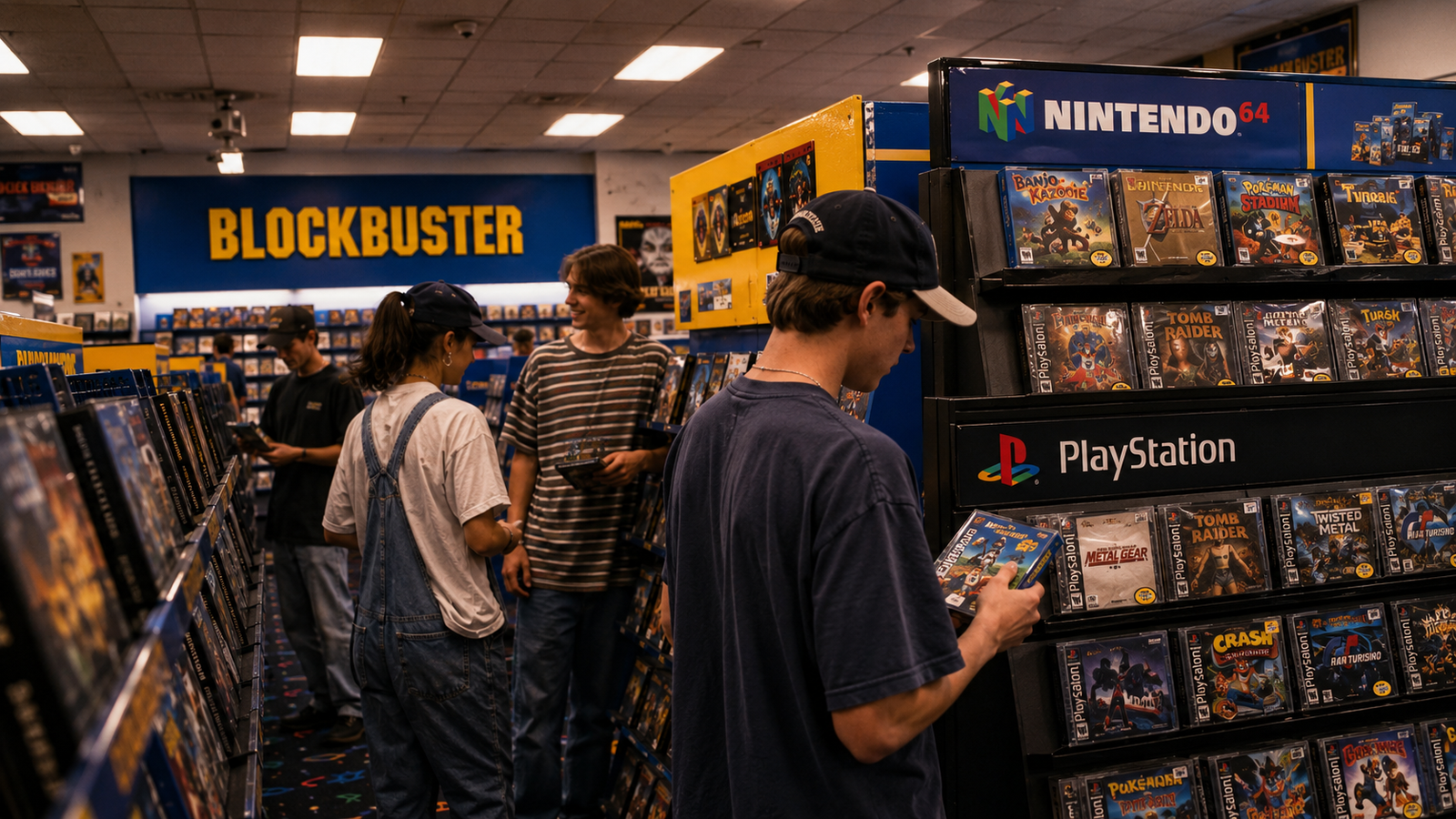
The game aisle made matters worse in the best possible way. A Nintendo 64 or PlayStation rental could turn the weekend into a race against the return date. You did not have to own a large collection to spend a few days exploring something new.
At the end of 2004, Blockbuster reported approximately 9,100 stores across the United States, its territories and 24 other countries. Six years later, the company entered bankruptcy. The familiar explanation—Netflix arrived and Blockbuster failed to notice—is too simple for what actually happened.
A software idea helped build a retail giant
David Cook opened the first Blockbuster Video in Dallas in 1985. His background in software helped shape a business that treated inventory information as an advantage. Knowing what was available and managing a large selection efficiently could make the store more useful to customers.
The chain offered a recognizable experience: bright stores, a broad selection and branding that was difficult to miss. Under investors led by Wayne Huizenga, who entered the business in 1987, expansion accelerated through new openings and acquisitions.
Scale changed the role of the video store. Blockbuster could become part of an ordinary shopping route, with a dependable promise that you would find something to watch even if the exact movie you wanted was unavailable.
Choosing the movie was part of movie night
Before a streaming menu occupied the television, home viewing involved more preparation. A film might be bought, recorded from a broadcast or rented for a limited time. Each option required a different sort of patience.
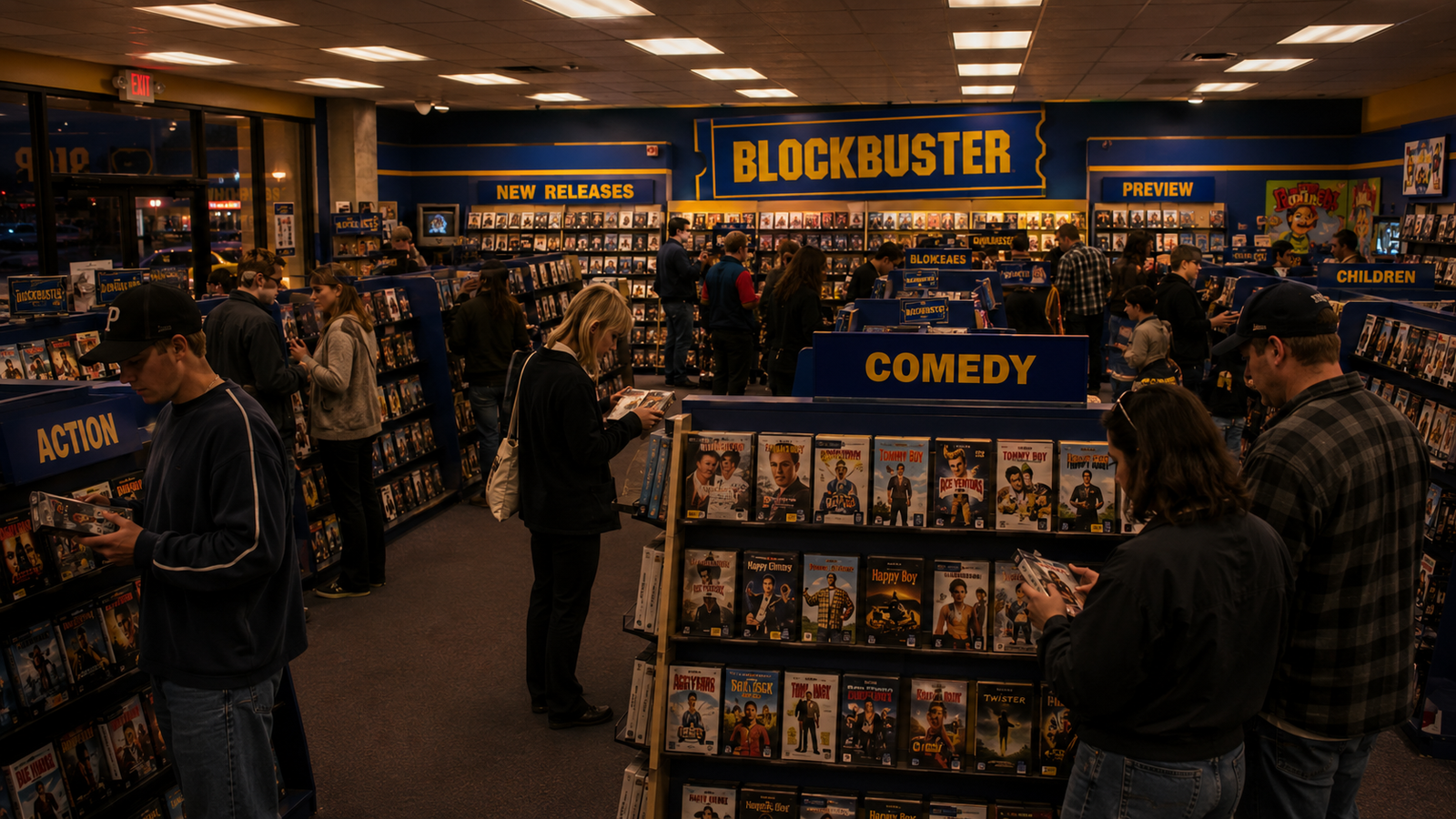
The store made choosing visible. Available copies sat behind display cases. An empty space could explain why your first plan would not work. A cover, a recommendation or a conversation in the aisle could send you toward something you had never considered.
Not every choice was good. A wonderful cover could conceal a terrible movie, and the group might spend the evening blaming whoever selected it. Even that became a shared memory because the choice had required a small commitment.
VHS and later DVD gave the evening a physical beginning and end: pick up the film, carry it home, watch it and take it back.
The Netflix meeting became a story bigger than itself
The often-retold account of a 2000 meeting places Netflix’s founders in front of Blockbuster executives with a proposal involving a purchase price of about $50 million and an online partnership. Blockbuster did not take the deal. Co-founder Marc Randolph later identified that rejected $50 million proposal as one of the pivotal alternatives in Netflix’s history.
With hindsight, the scene looks like an obvious turning point. At the time, Netflix was a much smaller company working in the DVD-by-mail market. The value of its future streaming business was not sitting on the conference-room table waiting to be collected.
Missing the opportunity mattered, but it does not explain every later decision. Buying Netflix would not automatically have solved the costs, incentives and financial obligations of operating thousands of stores. The familiar anecdote works best as one part of a much larger transition.
Blockbuster did compete online
The company’s own filings make this clear. It launched its U.S. online subscription rental service in August 2004. By March 9, 2005, it reported more than 750,000 subscribers and plans for further investment. Customers could rent DVDs by mail, while the stores remained part of the offer. Blockbuster’s 2004 annual report records those efforts.
The challenge was running the existing business while trying to build its successor. Stores supplied customers, revenue and a familiar name. They also required rent, staffing, utilities, stock and management.
A new service could compete for the same customer’s spending. Success online therefore did not necessarily strengthen every part of the physical business. The company had to fund change while a major source of its income was under pressure.
Convenience exposed the weak parts of the ritual
Late fees are an essential part of the memory, usually for the wrong reason. A tape behind the sofa or a disc left in the player could turn an inexpensive rental into an irritating expense.
Blockbuster’s campaign to end late fees attempted to address that frustration, but the terms surrounding unreturned rentals and other charges created their own confusion. The broader lesson was difficult to avoid: customers were becoming more sensitive to the inconvenience built into the old arrangement.
DVD-by-mail subscriptions changed when and how people returned films. Rental kiosks could place a cheaper transaction inside another errand. Video-on-demand and improving broadband offered more ways to watch without visiting a dedicated store.
Netflix began streaming in 2007, adding another route around the physical trip. No single alternative had to replace everything Blockbuster offered. Together, they reduced the number of occasions on which a customer needed it.
Debt made a difficult transition harder
On September 23, 2010, Blockbuster and certain domestic subsidiaries filed for Chapter 11 protection. The company’s announcement described a proposed restructuring of nearly $1 billion in debt.
That financial burden belongs in the explanation alongside technology. A business with declining demand, substantial fixed costs and heavy debt has less room to experiment, invest and wait for a new strategy to work.
DISH completed its acquisition of most Blockbuster assets on April 26, 2011. Its winning auction bid had been valued at $321 million, with the final transaction accounting reflecting further adjustments. DISH’s filing distinguishes the bid from the resulting purchase price.
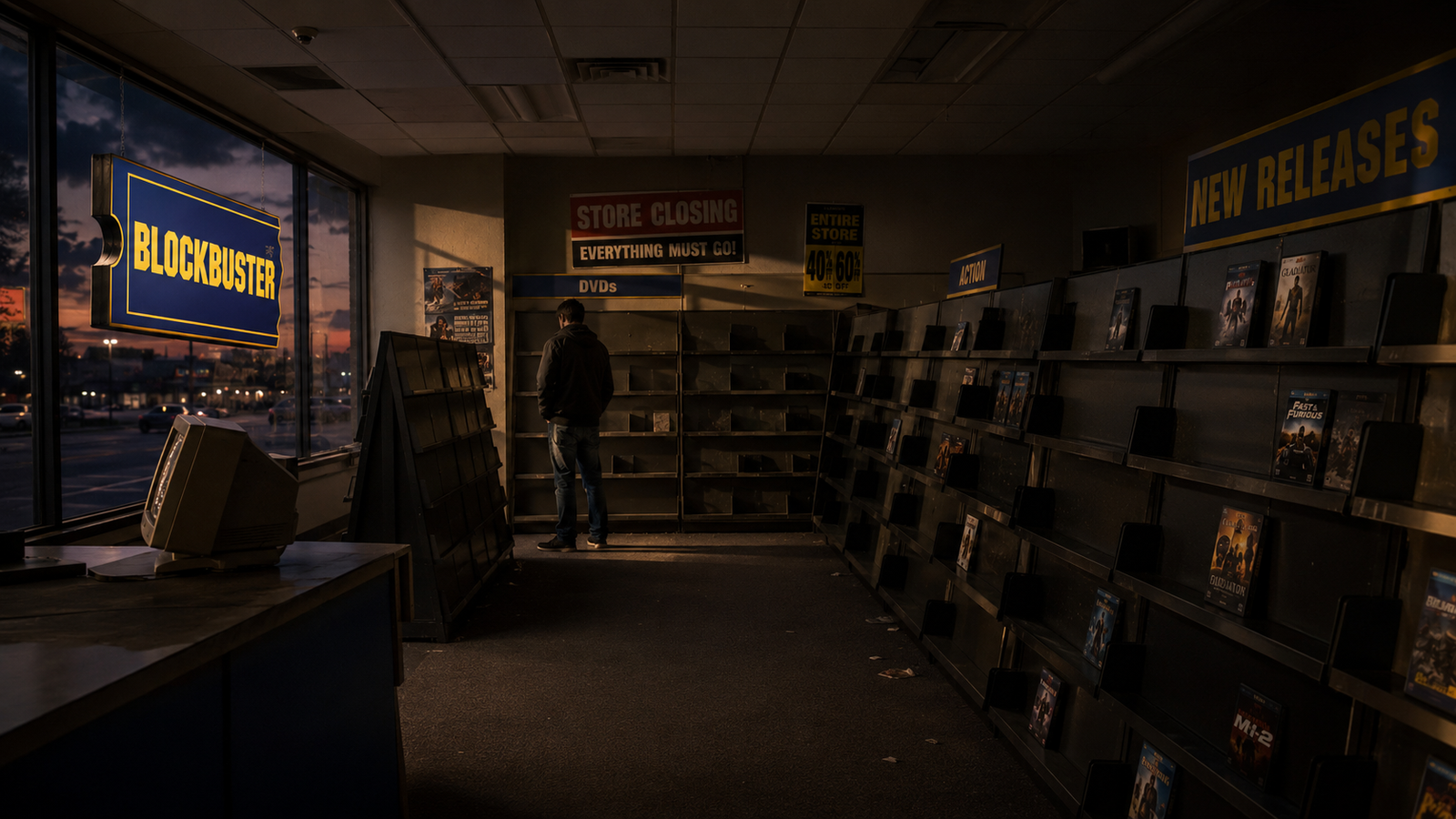
Some stores remained after the acquisition, but the vast network that had defined the brand continued to contract. The company had attempted to adapt; it had not found a sustainable way to carry that entire structure through the transition.
One store kept the sign lit
The story does have a remarkable survivor. The independently operated franchised store in Bend, Oregon, presents itself as the last Blockbuster and continues to maintain a rental catalog and an active official website.
It serves a different role from the old multinational network. Local customers keep a video-store routine alive, while visitors arrive because the routine itself has become unusual. An ordinary commercial interior can now feel like a place worth traveling to see.
That does not reverse the history of the chain. It gives the history a living location: shelves, cases, recommendations and a counter where choosing a movie can still be an interaction with another person.
Why the memory outlasted the business
Streaming solved many real problems. It reduced travel, waiting and the need to return an object before a deadline. It also made a particular kind of group decision less common.
At Blockbuster, people negotiated a finite selection together. The store could introduce chance: an unavailable new release, a recommendation from an employee, a strange title on a neighboring shelf. The evening started before the opening credits.
That is what the blue-and-yellow sign tends to recall. The loss of a business becomes mixed with the memory of parents, siblings, friends and the amount of free time a weekend once seemed to contain.
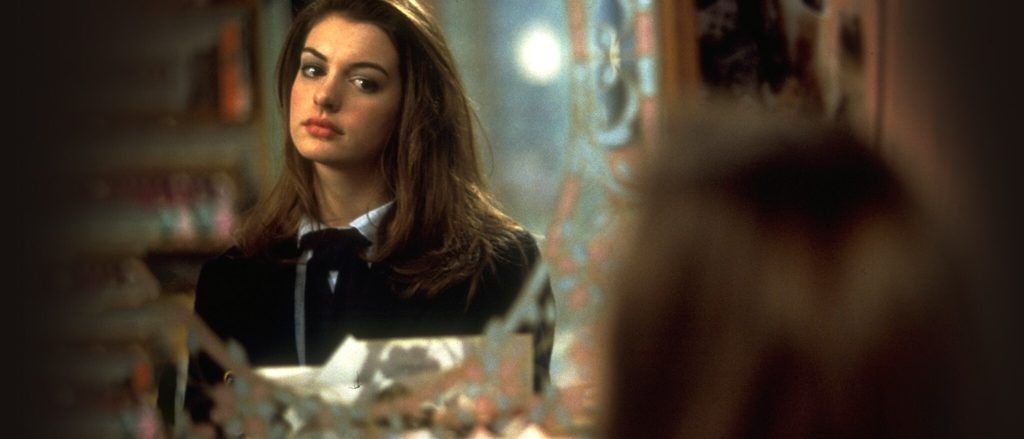
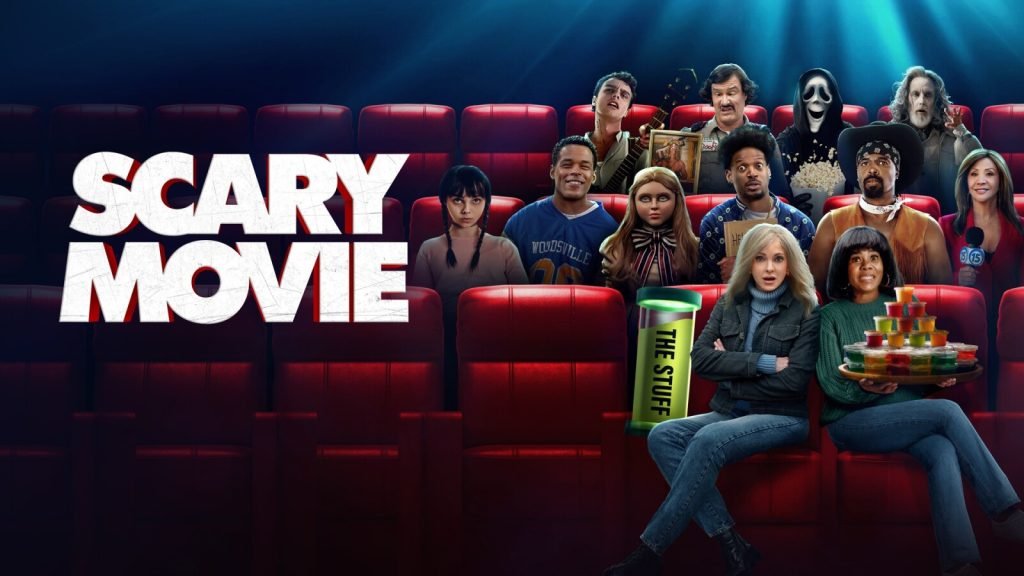
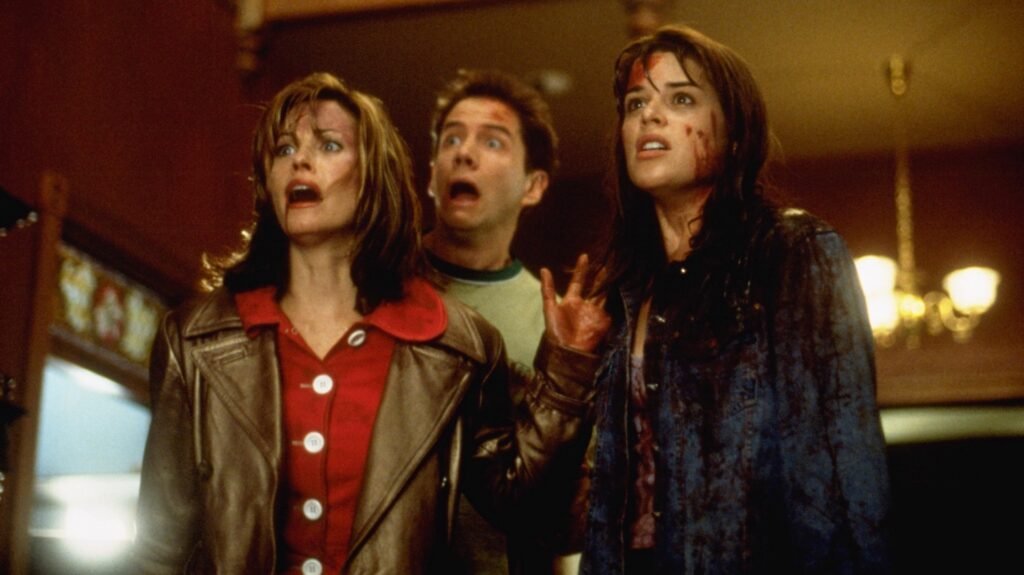
You can recover part of the ritual without recreating the late fee. Choose a film before sitting down, give somebody else a turn and commit to watching it together. Our 1996 horror selection and 2001 comedy shelf offer two places to start.

Shared memories