
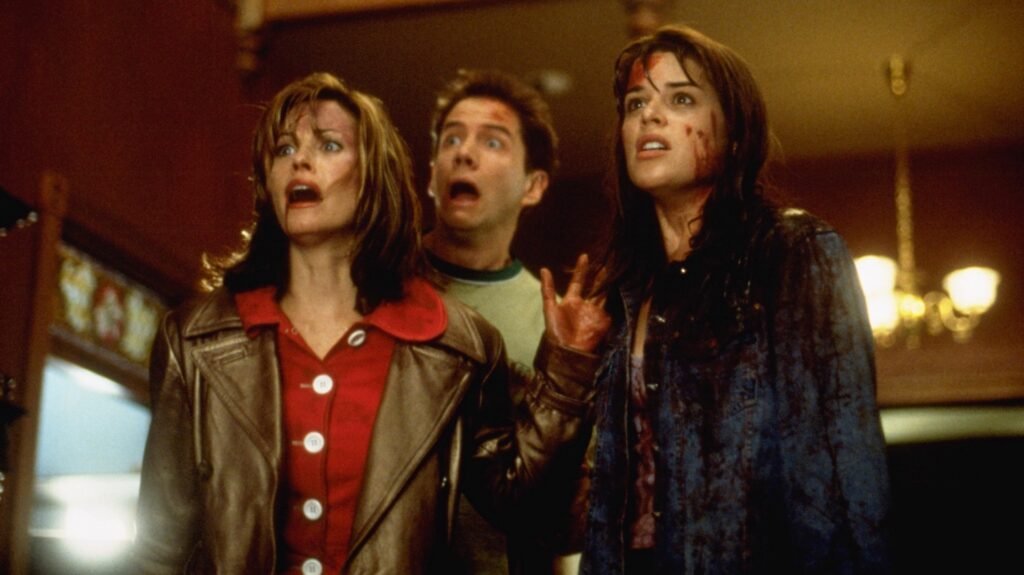
Thirty years after the first phone call, Scream is still testing an audience that thinks it knows the rules. The original made horror fans part of the game: recognize the reference, spot the clue, name the suspect. Then it made that confidence dangerous.
In 2026, the joke has acquired another layer. A franchise that taught viewers to be suspicious of sequels has produced its biggest worldwide box-office result in unadjusted dollars. Paramount reported that Scream 7 passed $200 million globally, with Neve Campbell back as Sidney Prescott and original screenwriter Kevin Williamson directing.
The number explains the franchise’s continued commercial life. The opening of the 1996 film explains why the mask still works.
Spoiler note: this retrospective discusses the opening sequence and themes of the original Scream. It does not reveal the killers in Scream 7.
A familiar voice made the room feel unsafe
The first scene begins with something ordinary: a young woman at home, a ringing telephone and an apparently harmless conversation. The caller sounds interested in the same movies that the audience knows. For a moment, the exchange offers the possibility of friendly recognition.
Then knowledge becomes a test, the test becomes a threat, and the distance between the voice and the room starts to collapse. The scene makes a telephone frightening without needing it to be a mysterious new technology. Its power comes from the fact that the device already belongs inside the home.
Drew Barrymore’s presence adds another trap. Casey Becker looks like somebody a film might protect because the audience recognizes the actor. Her death in the opening sequence removes that reassurance. A familiar face on the poster cannot tell you who will survive.
The sequence establishes a useful contract: the movie knows what you know, and it is prepared to use that knowledge against you.
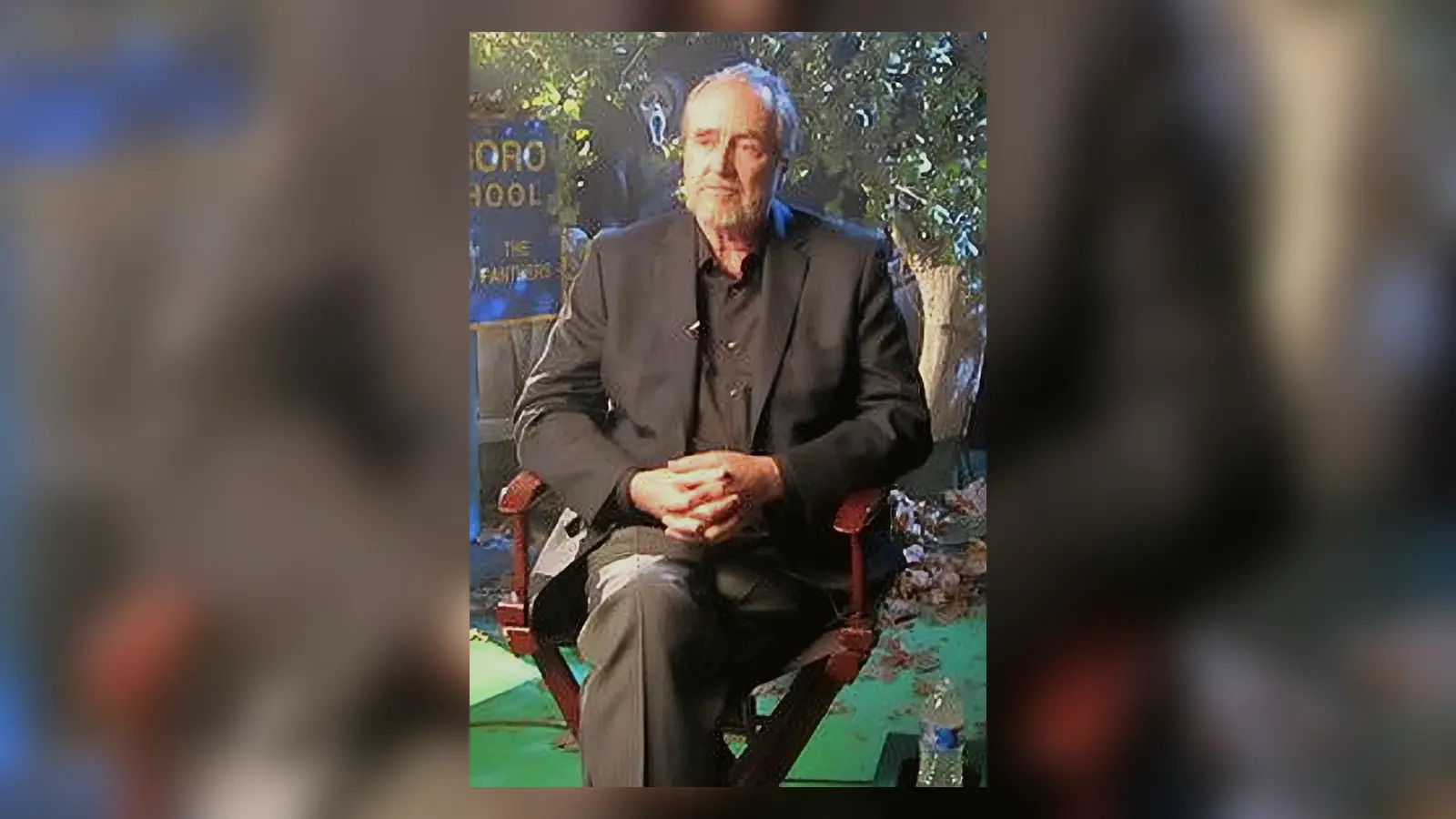
Wes Craven kept the jokes close to the fear
Self-awareness alone does not make a horror film work. Characters can list references until every threat begins to feel like an excuse for another joke. Wes Craven kept Scream anchored in the physical danger surrounding its characters.
A funny conversation could give way to an attack that was staged with urgency. The humor did not erase the possibility that somebody would be hurt. That balance allowed the audience to enjoy being clever and still feel vulnerable a few seconds later.
Craven had already explored the relationship between horror stories and the people who make them in Wes Craven’s New Nightmare in 1994. Scream placed a different version of that awareness inside a recognizable teenage social world: classmates, parties, gossip and a local history that everybody understood differently.
The rules were useful because they could fail
Randy Meeks turns slasher conventions into a set of rules that a roomful of fans can recognize and argue about. Sex, intoxication and an ill-timed promise to return become part of a comic survival lesson.
But a rule in Scream is not a guarantee. It creates an expectation that the film can fulfill, delay or overturn. The audience is invited to anticipate the mechanism, then forced to decide whether that anticipation is helping.
Sidney’s importance comes partly from refusing to remain a helpless object inside that mechanism. She responds, fights back and learns. Her ability to survive is not reducible to passing a trivia quiz or behaving exactly as somebody else’s rules demand.
That distinction gives the story more weight than a collection of references. The characters are living through danger while the audience is enjoying a genre exercise. Craven lets both experiences occupy the same scene.


Scream did not invent horror that knows it is horror
Calling Scream the first self-aware horror movie makes its history simpler than it should be. Horror had been examining its own habits for years, and Craven’s earlier work provides an obvious example.
What the 1996 film did exceptionally well was make that awareness feel like everyday conversation. Its teenagers did not sound as if they had stepped outside the story to deliver an academic argument. They sounded like people who rented movies, remembered actors and disagreed about sequels.
Their knowledge resembled the audience’s knowledge. You did not need to know every reference to follow the mystery, but recognizing one made the conversation more enjoyable. The film could reward a long viewing history while also giving newcomers a list of movies to seek out.
The mask stays while the mystery changes
Ghostface has an advantage that many horror icons do not. The disguise can survive a change of identity. A new story can bring different motives, relationships and suspects while retaining the silhouette and voice that make the threat immediately recognizable.
That structure gives the series two kinds of continuity. The costume supplies the icon. The mystery supplies the question of who is using it this time, and why.
It also makes ordinary relationships unstable. A friend, a partner or somebody who seems to understand the situation may be performing for another audience. The films repeatedly turn familiarity into a reason to look more closely.
Sidney and Gale remember what happened
Returning survivors give the franchise something beyond a reusable costume. Sidney carries the consequences of having her experience turned into public entertainment. Neve Campbell keeps the character understandable even as the plots become more elaborate.
Gale Weathers provides another way of living with the same history. Ambition, courage and responsibility do not always point her in the same direction. Courteney Cox makes those contradictions part of the character’s continuity.
Neither woman is simply a familiar face brought back to reassure an audience. Their presence can remind us that the previous stories happened to somebody, and that surviving does not mean beginning the next installment with a clean slate.

The video store trained another kind of detective
For a 1990s viewer, the references had a physical geography. They lived on shelves in video stores, where a familiar cover could lead to an unfamiliar film. Knowing horror meant spending time with tapes and with people who had opinions about them.
Scream fit naturally into that routine. A group could watch it on VHS, argue over clues and return to a scene to see what somebody had missed. Later, DVD made revisiting a particular moment easier.
The group experience mattered. Somebody announced a suspect too early; somebody else insisted that a familiar convention proved the answer. The movie became a contest between friends as well as a contest between filmmaker and audience.
Online discussions and frame-by-frame trailer analysis changed the speed of that activity. They did not invent the desire to solve the movie before it solved itself.
Thirty years later, the audience still wants to play
Williamson’s return as director of Scream 7 connects the current series directly to the writer of the original. It is a fitting anniversary image: the person who wrote the first invitation is now staging another version of the game.
Commercial longevity does not mean that every sequel works equally well for every viewer. It does show the durability of the central invitation. A mask appears, a voice asks a question, and an audience starts building theories.
Ghostface endures because the costume makes a promise that the identity can keep changing. Scream endures because it understands the pleasure of being a knowledgeable fan—and the even greater pleasure of discovering that the movie still has something you did not anticipate.
Shared memories