A masked killer can survive another sequel. Surviving Brenda Meeks is a different problem. The particular pleasure of Scary Movie is watching a carefully arranged horror scene lose control of itself because somebody refuses to behave like a proper victim.
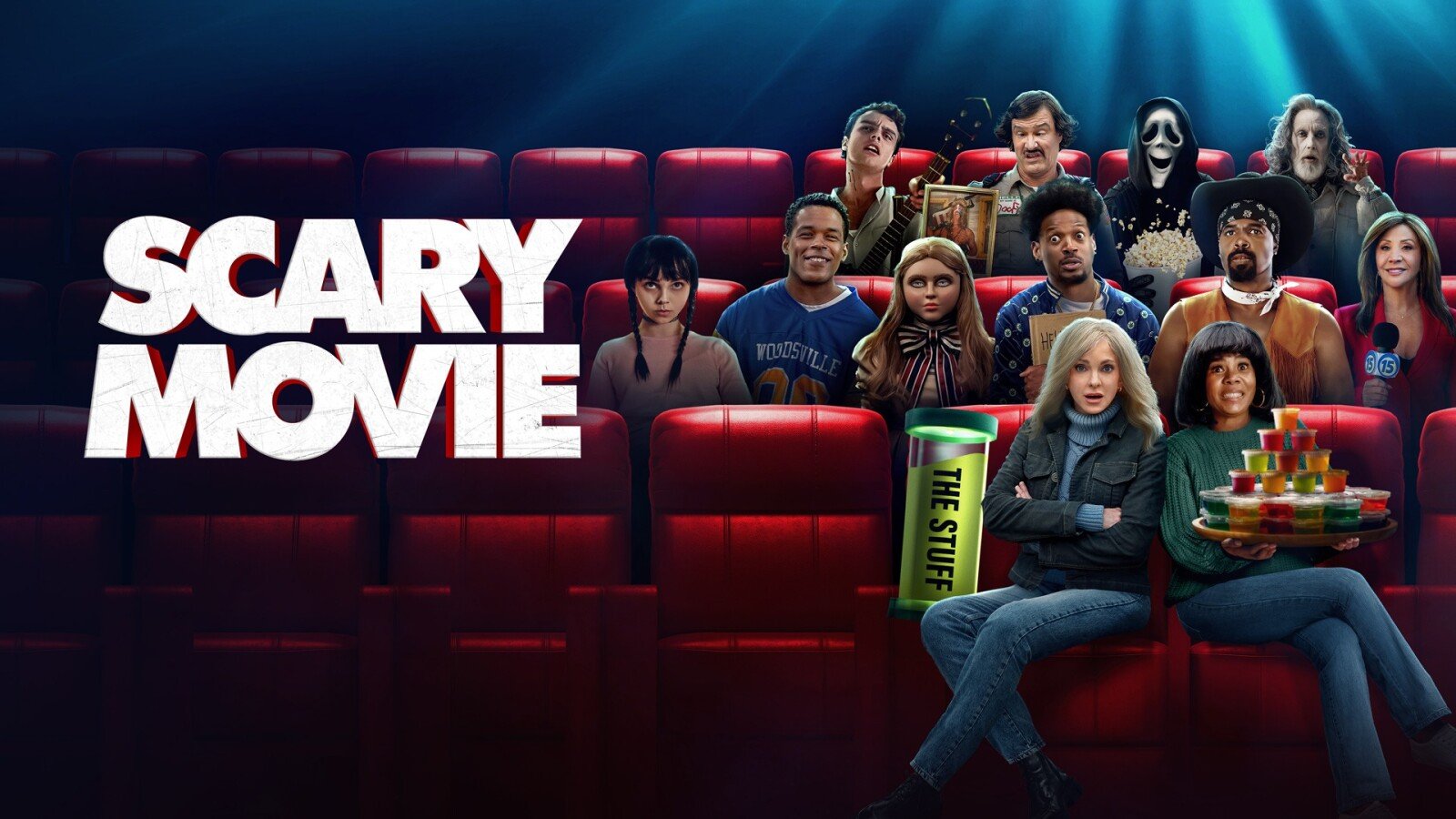
The 2026 film reunited Anna Faris, Regina Hall, Marlon Wayans and Shawn Wayans. Paramount’s streaming announcement set its Paramount+ arrival for September 3, a date now in the past. An extended cut is also listed by the studio for digital release. Availability can differ by country and service.
The reunion is a reason to revisit the original’s particular comic machinery. Familiar faces matter, but a parody needs more than recognition. It needs something to do with what the audience recognizes.
How do you parody a movie that already knows the rules?
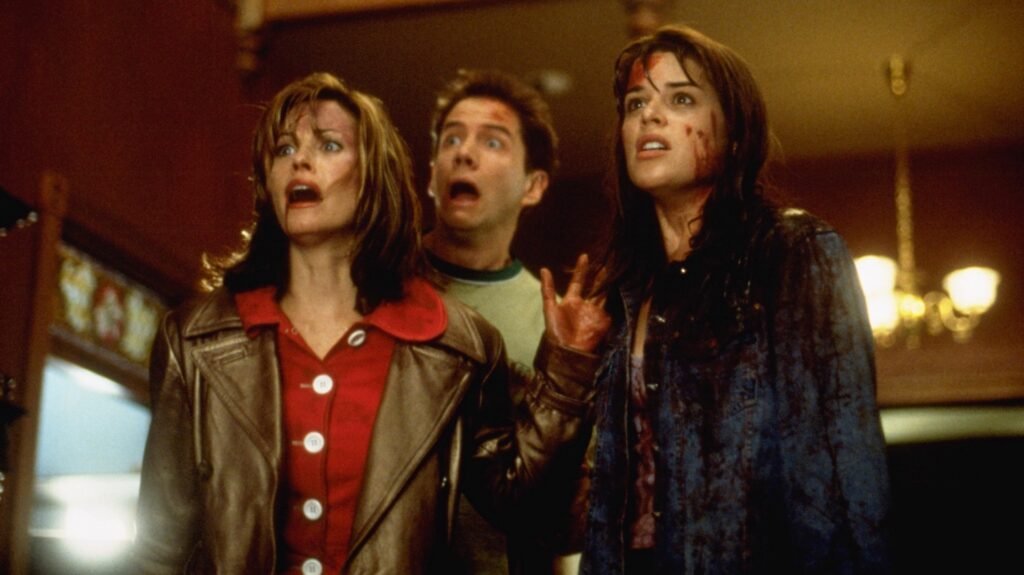
When the first Scary Movie arrived in 2000, Scream had already taught its characters to discuss slasher conventions. Knowing what usually happened in a horror film did not keep them safe. That tension made the genre self-conscious without making its violence harmless.
Scary Movie pushed the awareness beyond the story. Its targets included the performances, the camera’s attention, teenage behavior and the audience’s certainty that it knew where a scene was going. It could take the structure of a frightening sequence and let a ridiculous practical detail dismantle it.
A reference is only an invitation. The joke starts when the borrowed situation changes direction. That distinction explains why a familiar costume or a recognizable musical cue can land with a thud if there is no comic idea behind it.

Cindy and Brenda make different kinds of chaos
Anna Faris gives Cindy Campbell an earnestness that can withstand absurd surroundings. She often behaves as though she has been placed in a serious movie and nobody has told her otherwise. The sincerity gives the scene something to push against.
Regina Hall’s Brenda pushes in the opposite direction. She interrupts, complains, talks back and claims space. In the cinema sequence, the disruptive audience member becomes more overwhelming than the danger on the screen. Hall can turn a reaction into the center of the scene.

The contrast is more durable than any single topical reference. Cindy can try to restore the story’s logic while Brenda questions why she should cooperate with it. Their personalities keep the film from becoming an unrelated stack of sketches.
Reuniting those performers restores a recognizable rhythm. That is a creative opportunity rather than automatic proof of success: a new film still has to find situations that give each character something funny to do.

The video-store rental gave the jokes a second life
A comedy plays differently in a crowded room. Laughter can hide a line; someone repeats a moment before the next scene begins. The audience develops favorites together. The repeat viewing then becomes partly anticipation: you watch your friend wait for the joke you already know.
The video-store and DVD years made that cycle easy to repeat. A disc could travel between homes and return to the same scene without much ceremony. Quotes escaped their original context and became greetings, reactions or impressions.
That habit resembles sharing a clip, but it had a different pace. You could not always send the moment immediately. Sometimes you had to describe it badly until somebody finally watched the movie with you. The failed imitation could become its own joke.
Some jokes have aged much better than others
The original is broad, sexually explicit and deliberately abrasive. Returning to it does not require pretending every gag has become timeless. Some rely on cruelty or stereotypes in ways that a present-day viewer may find tiring rather than mischievous.
That does not prevent a useful appreciation of its performances and physical comedy. Nostalgia is more interesting when it allows both reactions: remembering how hard a scene once made a room laugh while noticing what the room was being asked to laugh at.
A retrospective can hold those experiences together. It need not turn affection into a defense of every line, or discomfort into a claim that nobody should have enjoyed the film.
The modern horror audience supplies plenty of material
Horror now comes surrounded by trailer breakdowns, timeline debates, franchise rankings and arguments over whether a sequel is really a reboot. The publicity for a returning character can become a story before the film itself arrives.
That surrounding behavior is rich territory for parody. A character who studies the promotional campaign more closely than the danger in front of them already sounds plausible. The audience’s relationship with horror can be as funny as the monster.
But topicality has a short shelf life. A parody built only from the week’s internet references risks expiring with the feed. A frightened person making a ridiculous decision, or a friendship that survives an outrageous interruption, gives the humor something more durable to lean on.
The reunion is the opening, not the punch line
The 2026 return reconnects the series with performers who helped define its identity. Paramount identifies Michael Tiddes as director and credits the returning Wayans writers among the team. That makes the reunion more specific than simply putting a familiar title on another poster.
The lasting test remains the same as it was in 2000: does the scene transform its target into a joke, or merely point at it? Scary Movie is most interesting when it remembers that the horror film is only half the spectacle. The rest is us—watching, quoting, interrupting and being very sure we would never make that particular mistake.