
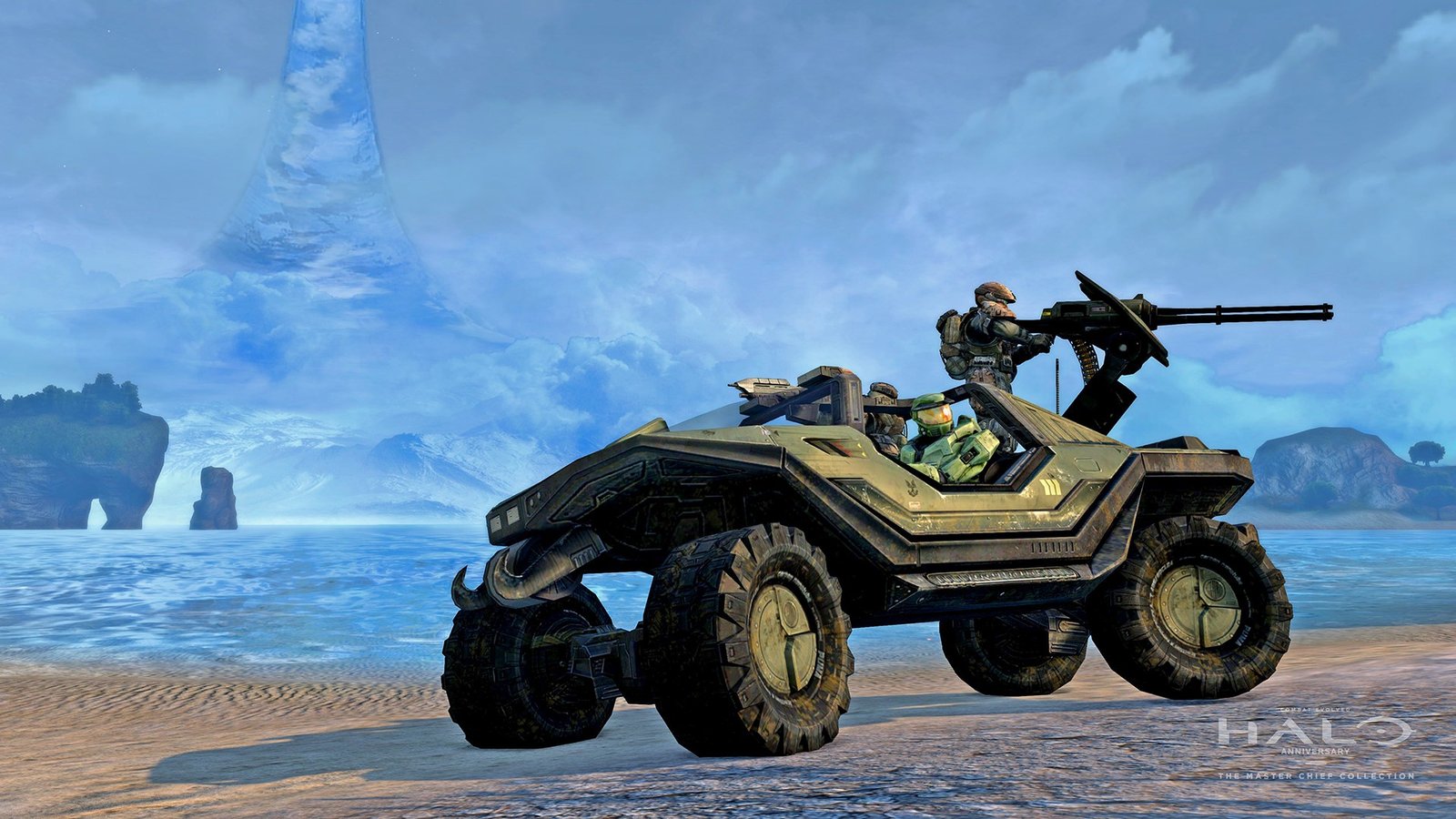
Halo’s 25th anniversary arrives with a twist that would once have sounded impossible: the adventure that helped define Xbox can now be played on PlayStation 5. Halo: Campaign Evolved launched on July 28, 2026, revisiting the original campaign for a different generation of hardware and players.
The interesting comparison goes beyond graphics. What did the 2001 game do to make a new console, built by a company entering unfamiliar territory, feel immediately recognizable? Halo did not establish Xbox all by itself. It gave the machine something no specification sheet could provide: an identity.
Back to the ring, a quarter-century later
Campaign Evolved’s official description outlines a rebuilt campaign with refreshed presentation, a larger arsenal and three additional missions. It supports two-player split-screen on consoles and four-player online cooperation, with crossplay and shared progression.
The campaign focus brings the original question back into view. Why did this particular journey, now so familiar, matter so much? To understand the anniversary, it helps to remember a time before Master Chief’s helmet was shorthand for an entire platform.
Xbox needed more than powerful hardware
Microsoft launched the original Xbox in North America on November 15, 2001. The machine had a hard drive, an Ethernet port and impressive technical ambitions. It was also entering living rooms where PlayStation already meant something, Nintendo had decades of affection behind it and Sega had only recently stepped away from console hardware.
Power could win an argument in a magazine. It could not automatically make someone want a new console. A game had to turn the technical promise into something you could feel while sitting on the couch.
Halo: Combat Evolved arrived on the same day. Its imagery did immediate work: the impossible ring hanging in space, green armor, the blue presence of Cortana. More importantly, picking up the controller made the appeal understandable. For many players, Microsoft’s console quickly became the Halo console.

The relationship spread beyond the game case into special-edition hardware and the colors people associated with the brand. Players who had spent afternoons around Nintendo 64’s four controller ports recognized the gathering. Halo gave it a new setting and, with connected consoles, more room to grow.
A shooter that felt at home on the couch
Console shooters existed well before Halo. So did the argument that first-person games really belonged to a mouse and keyboard. Bungie’s achievement was to make its particular combination of movement, aiming, assistance and button placement feel coherent in the hands of a console player.
One stick moved you; the other looked around. The triggers and buttons put firing, grenades and melee attacks close together. Aim assistance helped translate intention into action without asking the player to think about the translation.
The two-weapon limit kept decisions manageable. Finding something new meant deciding what to leave behind. A grenade was not buried several steps into an inventory. A melee strike was available when the distance between you and an enemy suddenly disappeared.
The shield gave encounters breathing room. Find cover for a few seconds and it could recharge, inviting another attempt at the fight. The original game still had a separate health bar and health packs; the rechargeable shield did not remove them. Together, those systems let combat swing between confidence, retreat and recovery.
Fights that produced stories of their own
Guns, grenades and melee became a flexible language. Different enemies gave you reasons to change your approach. Grunts could panic when their leader fell. Elites pressed forward behind shields. Jackals encouraged you to look for another angle. Holding the trigger down was rarely the whole answer.
The combination generated little unscripted disasters: a grenade landing somewhere unexpected, a vehicle overturning at the worst possible moment or an Elite surviving the shot that was supposed to settle the argument.
It was readable from the couch and unpredictable enough to keep repeated encounters interesting. Someone watching could understand why a plan had gone wrong. Someone playing could believe that the next attempt might go differently because they would try something else.
The ring made a sequence of levels feel like a place
The campaign begins inside the Pillar of Autumn, surrounded by military corridors. Then it opens out. Step from a lifeboat and look up: the landscape curves into the sky. The structure beneath your feet becomes an impossible object you can see yourself inhabiting.
Valleys, beaches, snow and ancient architecture suggested a history older than the human conflict happening across them. The world seemed to extend beyond the immediate objective. Its visual scale made travelling through it feel consequential.
The Flood changed the mood again. What began as military science fiction turned toward horror, and the ring’s significance became more disturbing. The setting was no longer simply an extraordinary battlefield. Learning what it was for changed the meaning of the journey.

Televisions, cables and a very competitive living room
The campaign established the world. Multiplayer made it a ritual. Four people could share one television, while System Link connected multiple Xbox consoles over a local network. Suddenly the practical questions mattered: who could bring another screen, who had spare controllers and how far the cable would reach.
Blood Gulch, Hang ’Em High and Battle Creek became places you could discuss without explaining them. Their layouts were learnable, but a group of friends could keep finding new ways to argue about what had happened there.
Screen-looking was an accusation. A lucky grenade became evidence of supposed genius. The person celebrating was sitting close enough to hear the response. Before an online profile followed you everywhere, your reputation could grow inside one room over an afternoon.

That is why remembering Halo often feels like remembering a gathering. In an era of Windows XP computers, internet cafés and uneven home connections, a local network gave you both speed and company. Your opponent was literally across the room.
The first Halo did not launch with Xbox Live
Memory tends to bundle Halo and Xbox Live together. The dates tell a more interesting story. Combat Evolved and Xbox arrived on November 15, 2001. Xbox Live launched one year later, on November 15, 2002.
The original Xbox release of Halo did not gain official online multiplayer through Live. Its competitive reputation grew around split-screen and System Link. Halo 2, released in 2004, made matchmaking, online play and persistent identities central to the series on a much larger scale.
The order matters. Halo first brought people together around the hardware. The platform’s online service then helped carry that community beyond the room. As we explore in the story of the original Xbox, the machine’s connection to the outside world was part of its foundation, but not every part of that future arrived at once.
A million copies made the relationship impossible to miss
In April 2002, less than five months after launch, Microsoft announced that Halo had passed one million copies. The figure mattered because every copy depended on a console that was itself still new.
Halo could demonstrate the hardware, deliver a complete adventure and host an evening with friends. Those roles reinforced one another. A person came for the campaign, stayed for multiplayer and helped persuade somebody else to bring another console.
Master Chief’s helmet began doing a job the corporate logo could not. It suggested a setting, a rhythm of combat and a group of memories. That is what it means for a game to give a platform an identity.
What the anniversary changes—and what it asks of Halo
Today’s audience takes many once-new ideas for granted. Twin-stick controls are familiar. Progress can follow an account. Playing together across different hardware is an established expectation. A remake cannot recreate the original surprise merely by reproducing its technical advances.
Campaign Evolved therefore faces a more useful test: whether the encounters and world remain compelling when they no longer need to explain a new console. Its console split-screen option keeps a piece of the old social experience within reach, even as the adventure travels to more platforms.

The original Halo turned Microsoft’s ambitions into things you could experience in an afternoon: comfortable aiming from the couch, a fight that changed with another attempt, an enormous world and a network of friends.
That history cannot be recreated by a sharper texture alone. It lives in the connection between a game and the people who played it. Twenty-five years later, the green helmet can still bring both the ring and the living room back into view.