For a child accustomed to afternoon cartoons, The Transformers: The Movie could feel like the rules had changed without warning. The opening threatened an entire planet. Familiar characters fell in battle. Then Optimus Prime, the figure who usually made a crisis feel manageable, died.
Forty years later, that scene remains the film’s emotional center. The 1986 adventure has enormous machines, a planet-sized villain and a soundtrack determined to turn every setback into a charge forward. Its most lasting moment is quiet: the hero can no longer get up.
This retrospective discusses major events in the original film.
The television routine made the shock possible
A recurring cartoon creates habits of trust. The villains may be dangerous, but the familiar team will be there for the next episode. Children can carry that confidence from the screen to their toys, replaying battles with outcomes they control.
The movie interrupts that arrangement. Its futuristic setting and larger battles suggest an expansion of the series, but the consequences are more important than the scale. Characters do not merely disappear behind an explosion and return for the next scene.
Optimus’s death gives the action a permanence that the regular routine had not prepared every viewer to expect. A red truck could be a product on a shelf and also a dependable presence in a child’s imaginative world. The second role is what makes the loss hurt.
Peter Cullen made authority sound reassuring
The character’s physical strength is obvious. The more distinctive quality lies in his voice. Peter Cullen gives Optimus a measured certainty that can make an order sound like responsibility rather than a performance of dominance.

That matters when the character is surrounded by mechanical noise and shouted threats. Optimus does not need to be the loudest presence to become the center of the scene. His steadiness creates the expectation that somebody has understood the danger and is trying to protect everyone else.
The hospital-like stillness of his final scene removes that reassurance. The body changes color; the others have to respond to something leadership can no longer fix. The animation makes the loss unmistakable without requiring the viewer to understand an adult explanation of death.
Succession is harder than introducing a new hero
Hot Rod enters a story already crowded with attachments. The film can give him courage and potential, but it cannot simply order the audience to transfer its loyalty. His journey takes place under the shadow of somebody viewers already know.
That tension gives the Matrix of Leadership more significance than an ordinary object of power. It represents a responsibility that cannot be reduced to being physically capable of holding it. The question is not only who will win the next fight, but who can help the survivors believe in a future.
For some fans, the new generation expanded the world. For others, the earlier losses made that expansion difficult to welcome. Both reactions are part of the movie’s history. Remembering it only as a triumphant handover leaves out the resistance that made the transition so memorable.

The soundtrack refuses to stand still
The music pulls in the opposite direction from grief. Vince DiCola’s electronic score and the rock songs create a world of momentum, transformation and exaggerated possibility. The contrast is part of the film’s strange personality: melancholy can arrive inside an adventure that otherwise sounds as though it intends to outrun every problem.
“The Touch” works in that context as an announcement of heroic arrival. Its return can be recognized before the action fully explains what is changing. The song becomes part of the film’s language of confidence.
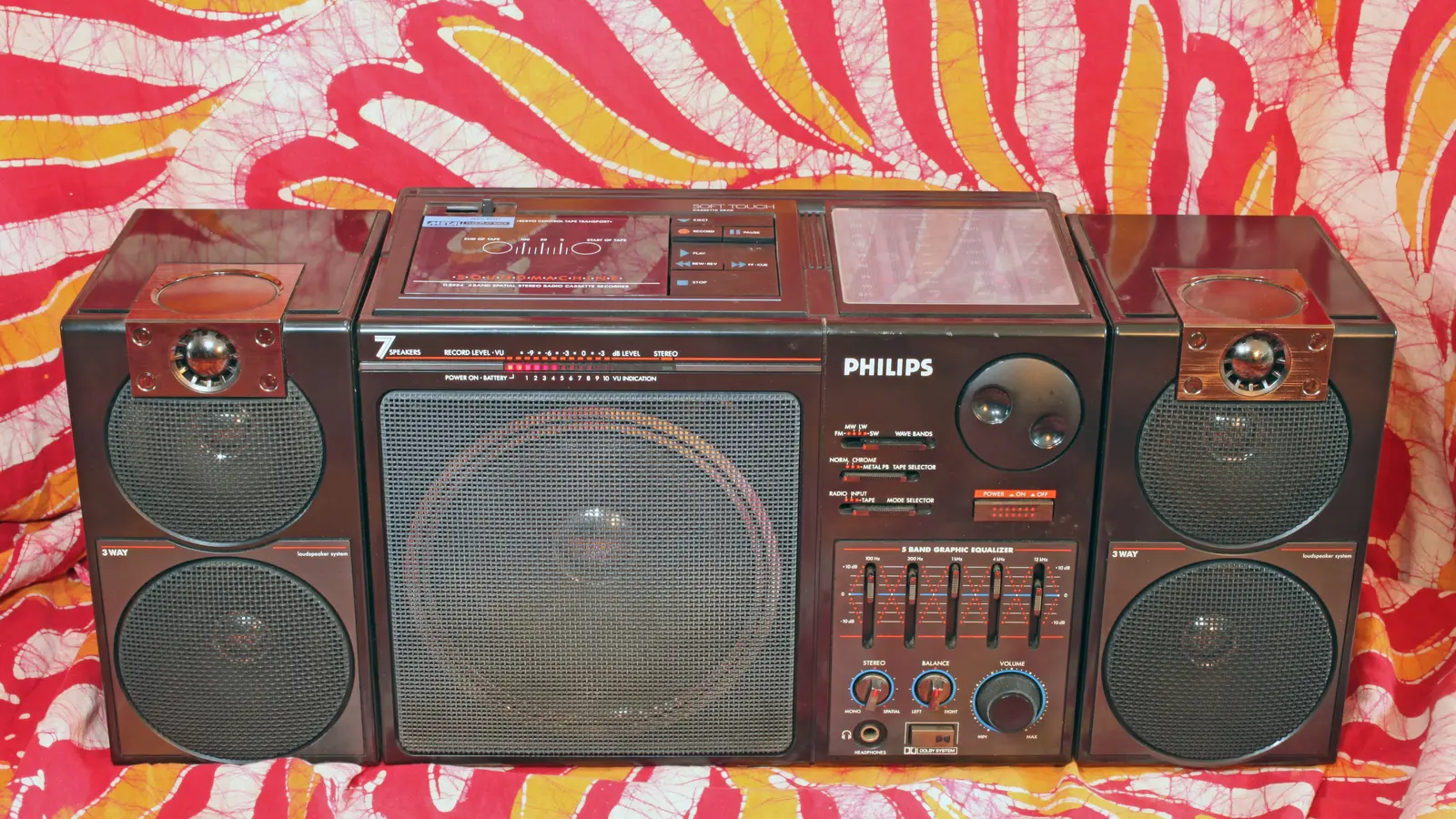
The accompanying boombox photograph is an illustration of the listening era, not a prop from the production. It points to another route the film took into everyday life: music could be replayed separately from the story, making its energy available long after the tape had been returned.
Home video gave the film time to become familiar
A difficult first viewing does not always lead to avoidance. The ability to watch again can turn an upsetting surprise into a sequence a viewer can anticipate and discuss. The film’s life on VHS made that kind of repetition possible.
At home, the dense designs and rapid changes of setting could become easier to follow. The songs became familiar. The new characters acquired memories of their own. A movie that first seemed overwhelming could eventually feel like a precisely known object.
Video stores also gave viewers who missed its original theatrical run a way in. Later disc editions and restorations carried the film forward without requiring every new fan to share the same 1986 experience.
The anniversary campaign acknowledges the wound
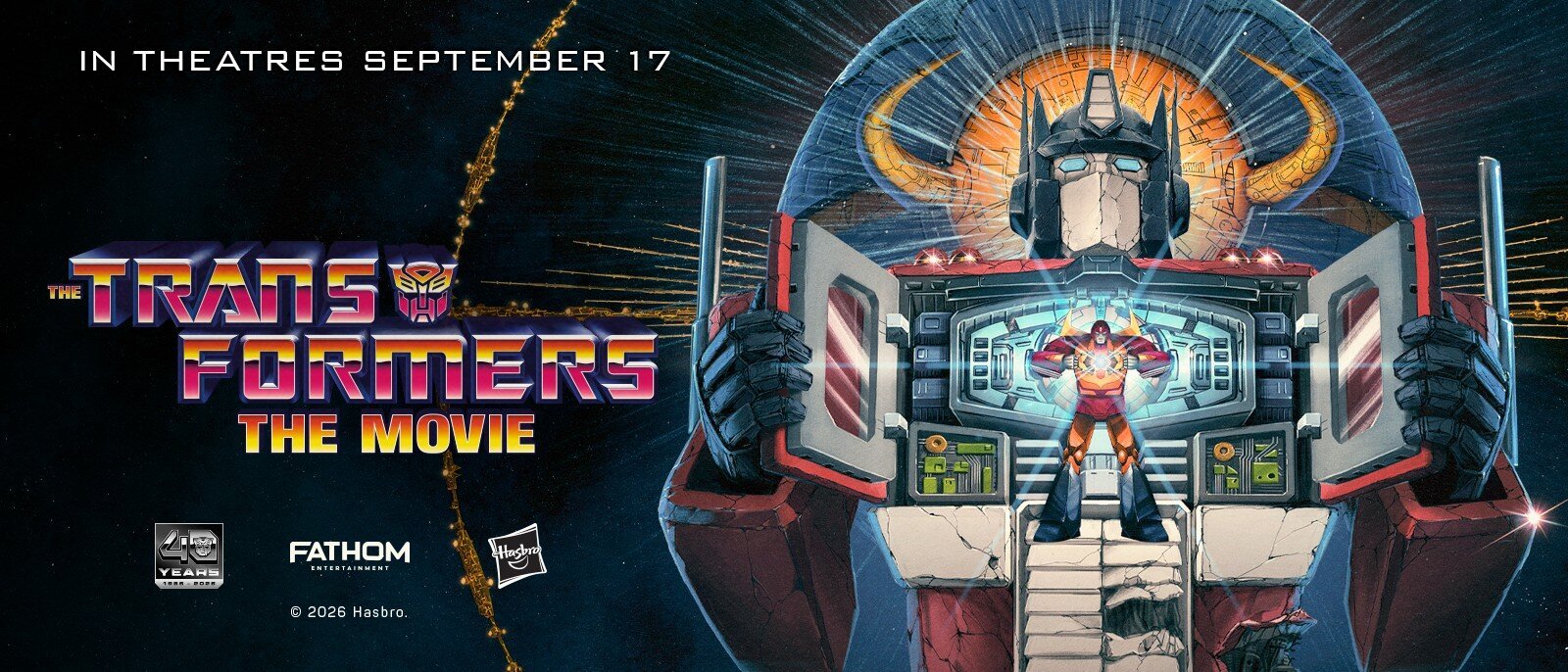
For the fortieth anniversary, Hasbro and Fathom explicitly built a campaign around that history. Their July 2026 announcement described an “Apology Tour” acknowledging Optimus Prime’s death and a theatrical return beginning September 17, with a 4K presentation and additional material after the credits.
The announcement is evidence of how the film is being remembered, rather than proof that every childhood audience reacted in the same way. The campaign can make a joke about apologizing because the underlying attachment has remained recognizable for decades.
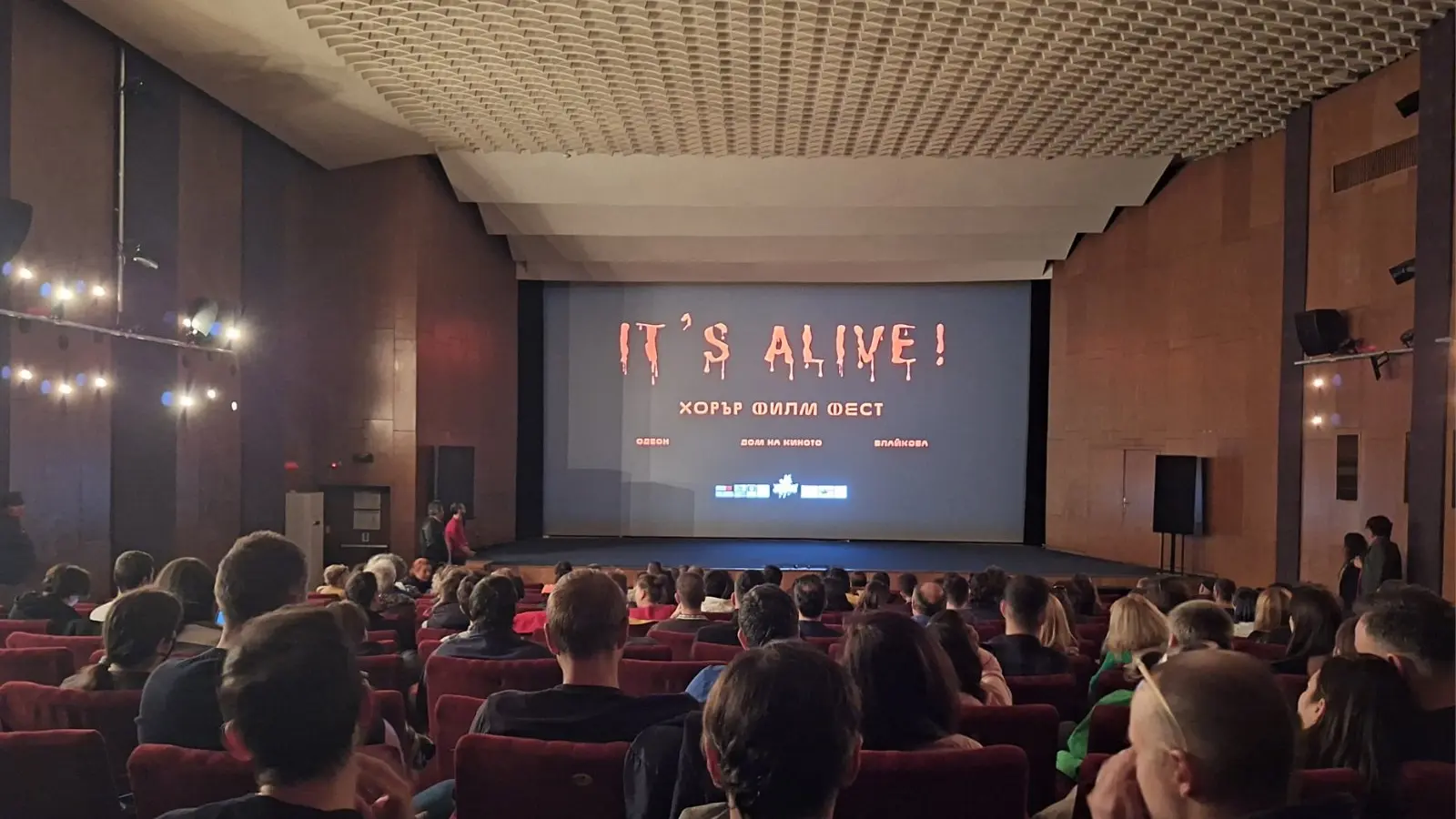
That September event is now part of the anniversary’s history. The image and announcement should not be read as a promise of screenings currently available in every city. The original film’s appeal also stands apart from any added anniversary chapter.
What remains after the surprise is gone
A returning viewer knows what will happen to Optimus. The suspense lies elsewhere: in watching how the scene is prepared, hearing the change in the voices and remembering the time when the outcome was not known.
The movie’s mixture of toy-world spectacle and irreversible loss remains unusual. The brightness of its designs does not make the sadness disappear; it can make the contrast sharper. A world that seemed built for endless replacement suddenly asks its audience to recognize an absence.
That is why the death outlasted the shock. It became a point around which people could describe their relationship with the character, the show and each other. Forty years later, the story still asks the survivors to continue. It never makes that continuation feel quite as simple as getting a new robot out of the box.