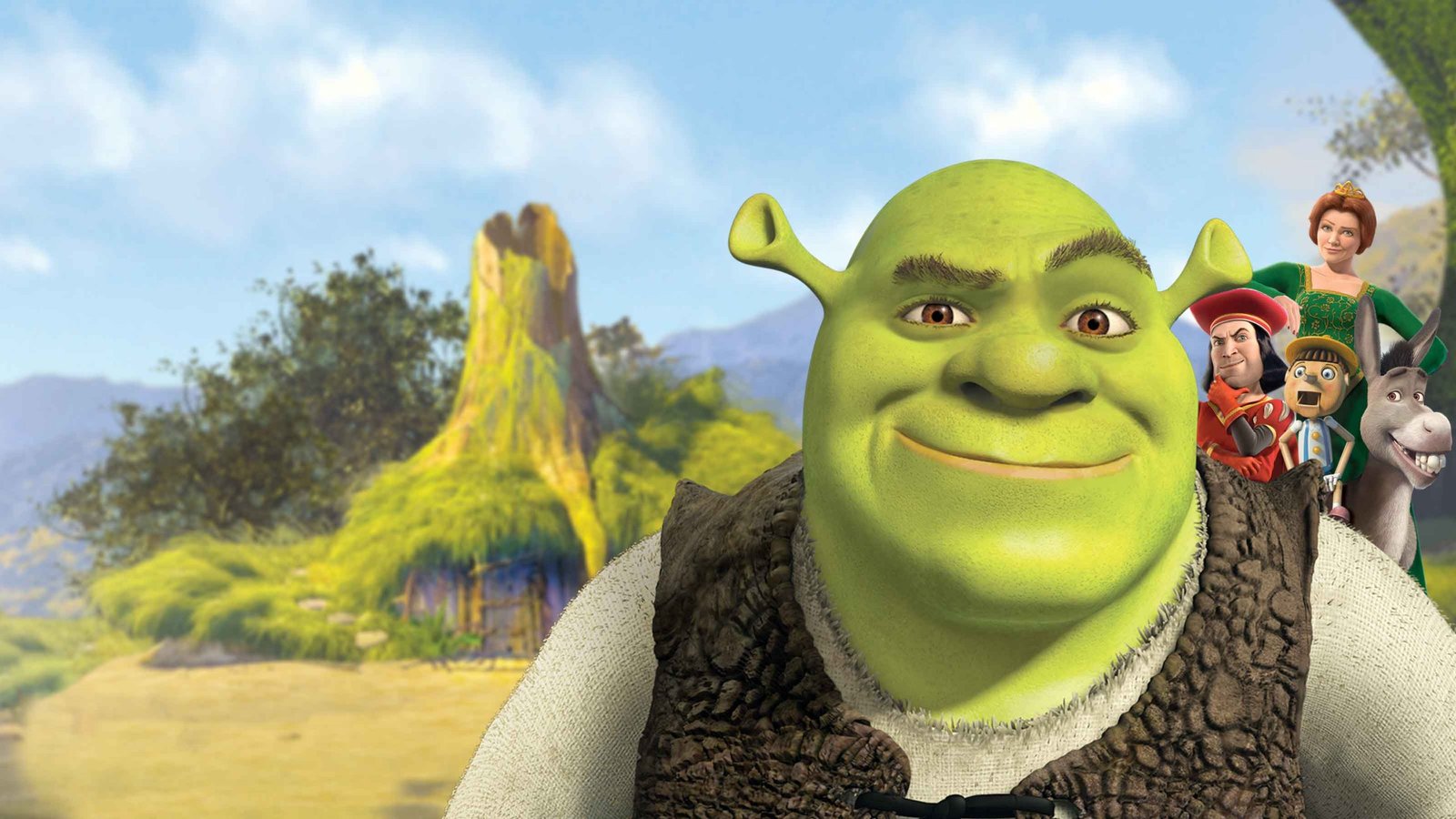
The first joke in Shrek is a declaration of intent. A storybook promises a princess, a curse and a handsome rescuer. Then the ogre interrupts the reading from his outhouse. Before the adventure has started, the movie has made room for someone who would normally be chased out of it.
Twenty-five years after its 2001 release, that invitation still works. The pop songs and celebrity voices helped make the film sound contemporary. The emotional story underneath them explains why it has outlived the moment.
Shrek is funny about fairy tales because it understands their machinery. It also understands why people keep wanting a happy ending, even after they have learned to make fun of one.
A rescue mission with a very unromantic motive
Shrek does not set out to save the kingdom. He wants his swamp back. Lord Farquaad has expelled fairy-tale creatures from Duloc, and their arrival destroys the solitude Shrek has arranged for himself. Rescuing Princess Fiona becomes a transaction: complete the job, recover the property, send everyone away.
That selfish beginning gives the adventure somewhere to go. Shrek cannot simply become braver or stronger; he already has those qualities. He has to reconsider the assumption that other people are a problem best solved by a locked door.
Duloc gives the story a visual opposite to the swamp. Everything is clean, ordered and insistently cheerful. Its welcome attraction is funny because the cheerfulness feels compulsory. Farquaad wants the appearance of a perfect kingdom, and anyone who complicates that picture becomes disposable.
Donkey gets through the armor by refusing to leave
Mike Myers and Eddie Murphy make the journey work through rhythm. Shrek answers in short, irritated bursts; Donkey keeps finding another question. One character tries to end the conversation while the other treats every silence as an opening.
The relationship would become exhausting if Donkey existed only to produce noise. What gives it warmth is his willingness to stay. He recognizes Shrek’s frightening appearance without treating it as the most interesting thing about him. To an ogre accustomed to torches and screaming, that persistence is more disruptive than an attack.

The onion conversation is memorable partly because it refuses to become a polished speech about vulnerability. Shrek tries to explain himself. Donkey takes the comparison somewhere inconvenient. A real feeling appears inside an argument, which is exactly where these two characters would permit it.
Fiona changes the meaning of the happy ending
Fiona initially knows how her rescue is supposed to look. The arrival of an ogre and a talking donkey is a serious casting error. But the journey exposes how much of her expected role is a performance: she can fight, joke and enjoy herself when she stops supervising the image of a proper princess.
Cameron Diaz’s performance lets the shifts feel connected. Fiona’s embarrassment and confidence belong to the same person. She does not need to lose every traditionally romantic desire to become an interesting heroine. She needs a romance that can accommodate who she actually is.

The ending makes that distinction literal. The kiss leaves Fiona as an ogre. Rather than rewarding her with the human appearance she has been taught to prefer, the film asks the audience to accept the form in which she can stop hiding.
It is a sincere conclusion in a movie full of insults and bodily jokes. The sincerity works because the preceding comedy has already made the supposedly ideal alternative look hollow. Farquaad wants a princess as a finishing touch. Shrek has learned to want a person.
The parody has a target
Shrek did not invent the idea of laughing at fairy tales. Its achievement lies in how consistently it connects the jokes to this particular world. The castle, dragon, royal marriage and transformative kiss are all still present; their meanings change when the usual hero is replaced.
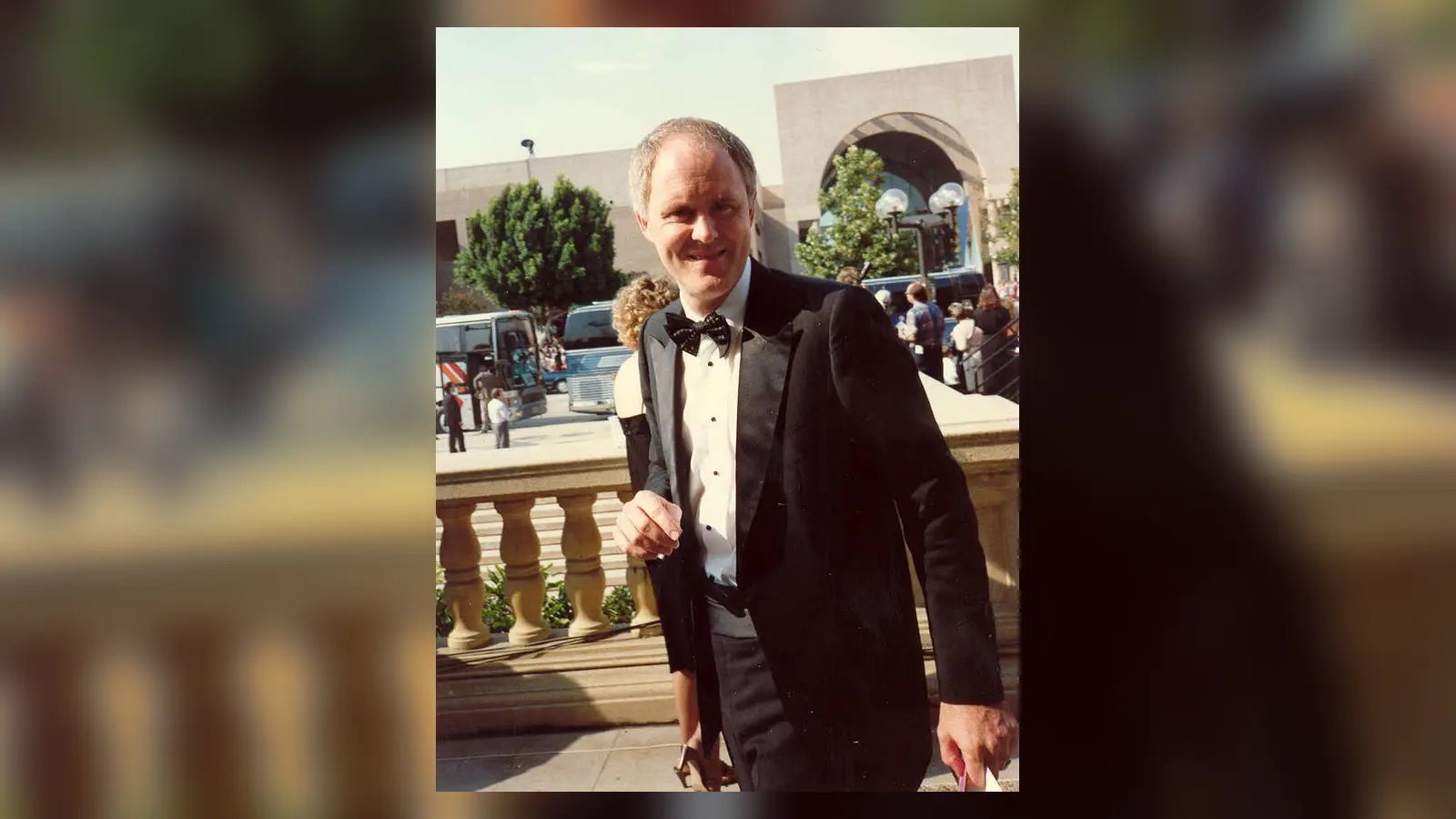
John Lithgow gives Farquaad the authority of someone who believes his preferences are natural law. His vanity is silly, but his treatment of the displaced creatures supplies real stakes. Without that ugliness beneath the immaculate presentation, the story would be little more than a collection of references.
Some gags are blunt, and some references land differently a quarter-century later. The film does not need every joke to survive equally well. Its central contrast remains legible: an unpleasant-looking home can offer more kindness than a beautiful kingdom.
An ogre at Cannes, then an Oscar
The film’s institutional history is almost as unlikely as its hero. The Cannes archive lists Shrek in competition in 2001, directed by Andrew Adamson and Vicky Jenson. At the 2002 Academy Awards, it won Animated Feature Film and also received an adapted-screenplay nomination.
Those honors matter because they recognize the whole film, including the writing beneath its irreverent packaging. The ogre was not merely a comic mascot attached to impressive computer animation. The relationship between appearance, shame and belonging gave the adventure its shape.
The movie became a household language
For many viewers, Shrek belongs as much to a living room as a cinema. A rental from Blockbuster could dominate a weekend. An owned copy became something to put on again when nobody wanted to negotiate a new choice.
Repetition changed the experience. A pause before a punchline became a cue. The opening song meant the evening had begun. With a DVD, the menu and extras became part of the familiar object; with VHS, watching again included the wait for the tape to rewind.
Internet jokes later pulled expressions, scenes and music out of that shared memory. Their effectiveness did not require the film to be forgotten and rediscovered. Much of the pleasure came from recognizing something already learned by heart.
The world grew beyond its first hero
The later films and Puss in Boots spin-offs expanded the fairy-tale world. Antonio Banderas’s swaggering swordsman found a different balance between confidence and vulnerability, showing how the setting could support more than another version of Shrek’s original problem.

NBCUniversal’s anniversary retrospective documents the franchise’s expansion into films, television, theater and attractions. That scale can make the first movie look like the beginning of an inevitable business plan. On screen, its appeal remains much more specific: three people on a journey slowly discovering that the roles assigned to them are insufficient.
The best reason to revisit Shrek is not to check whether every reference still feels new. It is to watch the movie move from a joke about storybook endings to an ending it takes seriously. The ogre begins by insisting he needs nobody. By the end, being understood matters more to him than being left alone.