Two small Game Boy cartridges arrived in Japan in 1996 with an idea that extended beyond the screen: find creatures, raise them, and meet somebody whose collection was different from yours. Thirty years later, that invitation is still working.
Pokémon now exists as games, cards, animation, films, toys, tournaments and an almost inexhaustible supply of objects with a familiar yellow face on them. You can recognize Pikachu without having owned a Nintendo console. You can also spend years with one part of Pokémon while barely touching the others.
The scale makes the beginning easy to overlook. Before it became an entertainment world with countless entrances, Pokémon made a handheld game feel more interesting because another person was playing it, too.
1996: the cable connected more than two machines
Pokémon Red and Green launched in Japan on February 27, 1996. Exploration and turn-based battles gave the adventure its structure. Catching, evolving and trading creatures gave it a second life alongside the main journey.
The two versions encouraged people to compare discoveries. A friend might have a creature you could not find in your own game. Some Pokémon evolved through trading. Connecting two Game Boys with a Link Cable made cooperation a physical event: two people, two cartridges and a reason to sit beside each other.
It was a clever use of a portable machine. You could develop a team on your own, take it somewhere else and show another person what you had found. The save file became something like a personal collection, carrying evidence of the time you had spent inside it.
The collection gave every player a different story
Finishing an adventure is a clear objective. Building a collection opens many more possibilities. You can search for something rare, evolve a favorite, improve a team or decide that the creature everyone else overlooks deserves a place beside you.
That flexibility helped Pokémon escape the boundaries of a single competition. Two players could disagree about the best creature and both have a perfectly satisfying reason for their choice. One cared about battles; another remembered the first one they caught; somebody else simply liked the design.
Information traveled with those preferences. Where did you find it? How did it evolve? What happened when you used that item? Playground conversations mixed useful knowledge, personal theories and rumors that could survive astonishingly little evidence.
The games supplied the rules, but the conversations helped make the world feel larger. A creature mattered partly because you wanted to show it to somebody who understood why finding it was exciting.
Television opened another door
During the international expansion of the late 1990s, many children encountered Pokémon through the animated series before they ever held one of the games. A monochrome creature on a small screen now had a voice, movement, a personality and relationships.
That route into the franchise mattered. Owning the hardware was not a prerequisite for knowing the characters. You could watch the show, draw a favorite, collect a toy or join a conversation about the latest episode. The world became accessible from several directions at once.
For many viewers in Latin America, the television schedule was the center of that experience. The history of Pokémon’s releases and the history of an individual childhood do not always begin on the same date. What stays in memory may be the hour the show came on, rather than the launch date of a cartridge.
Cards made the collection something you could hold
The trading card game gave the creatures a different kind of presence. A card could be examined, displayed, traded or used in a match. It could also become the subject of a negotiation conducted with all the seriousness available to a school-age collector.
Not everybody who collected played by the game rules, and not everybody who played cared most about owning the flashiest card. Those overlapping interests gave the cards several lives. The artwork, the character, a useful ability or a remembered trade could each make one particular piece of cardboard important.
The best memories do not require a card to be worth a large amount of money today. A bent favorite carried in a pocket can have a history that no price guide captures. Pokémon’s social value was often established long before its adult collecting market entered the conversation.

The 2000s: outlasting the first wave
A childhood phenomenon can become enormous and still disappear quickly. Pokémon’s more difficult achievement was making room for a new generation of players after the first wave grew older.
New regions, creatures and adventures arrived on new hardware. Players who began on Game Boy could keep following the series through later systems, while a newcomer could start with a different set of favorites. Familiar characters remained visible enough to make a return feel possible.
The result is a franchise with several overlapping childhoods. One person remembers the original Game Boy; another thinks first of Game Boy Advance or Nintendo DS. Their details differ, but the central acts—choosing a partner, exploring, building a team and comparing discoveries—are recognizable to both.
This continuity does not mean every game made everyone happy. It means that the basic invitation remained understandable while the surrounding technology and audience changed.

2016: the map moved outside
Pokémon GO made the search physical in a new way. The initial launch on July 6, 2016 brought the game to Australia, New Zealand and the United States, with other markets following. A phone could turn a familiar park or street into somewhere worth exploring again.
The appeal reached people who had followed Pokémon continuously and people who had not thought much about it for years. Recognizing a creature supplied the connection; finding one in the world around you supplied the surprise.
GO did not reproduce the old handheld games exactly. Its success as an idea came from moving a familiar desire into a different routine. You could be returning to Pokémon and discovering a different way to play at the same time.
Thirty years, several starting points
- 1996Red and Green debut on Game Boy in Japan. Trading gives the adventure a reason to leave the bedroom.
- Late ’90sGames, television and cards bring overlapping waves of international discovery.
- 2000sNew hardware and regions give younger players their own first Pokémon memories.
- 2016Pokémon GO turns real places into part of the search.
- 2026The franchise celebrates 30 years while several generations continue playing together.
The anniversary is a meeting place
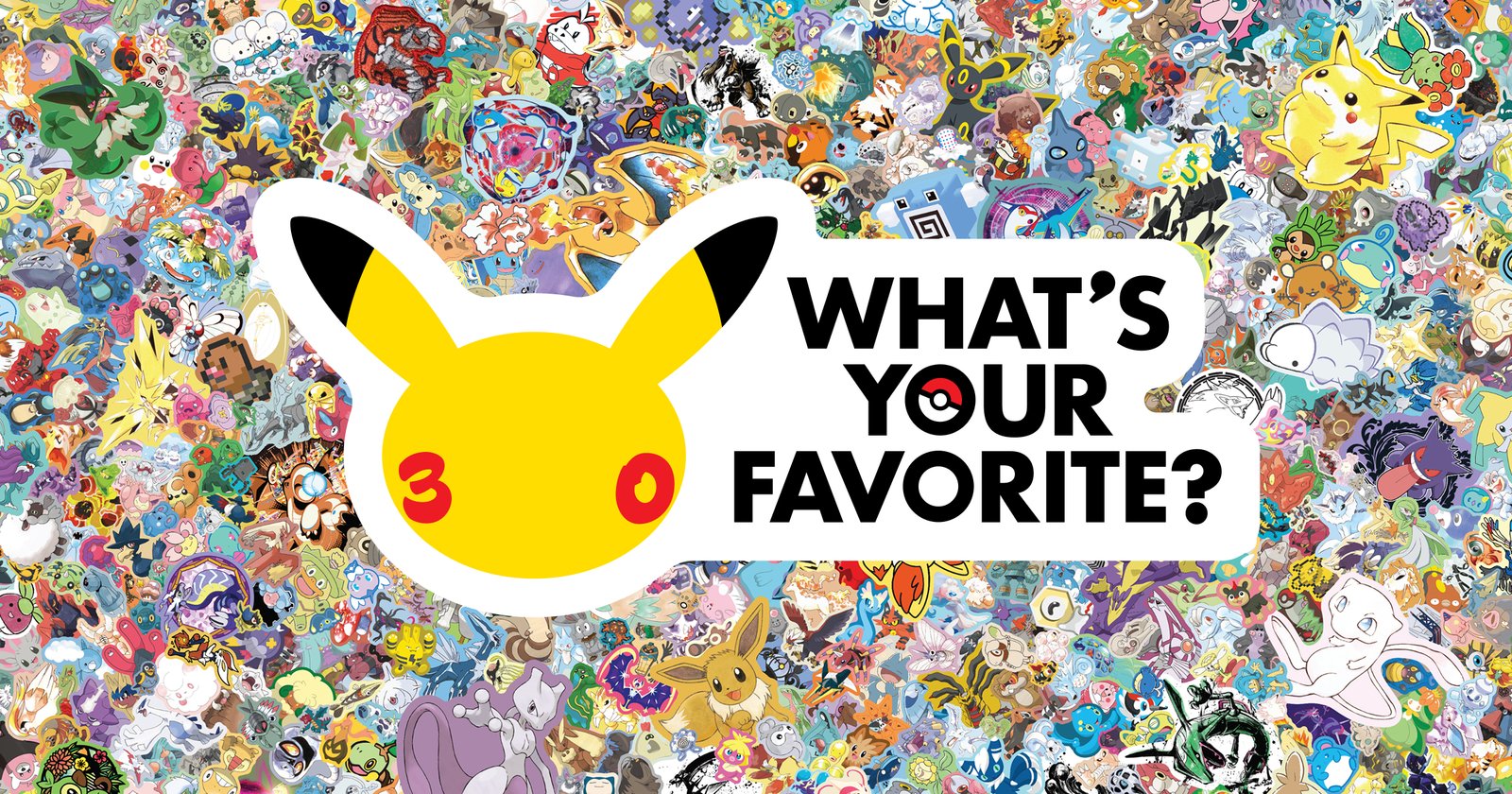
The official 30th-anniversary celebrations bring together games, events and products across the franchise. The 30th Celebration trading-card release is another expression of the same idea: an old favorite can become the beginning of a new collection.
What makes an anniversary interesting is not simply the amount of merchandise surrounding it. It is the range of memories that people bring. A first starter, a television theme, a tournament, a traded card or a walk with friends can all be part of the same celebration.
Our separate look at the trading card game’s anniversary follows that more physical side of the story: opening, sorting, playing and deciding which cards deserve a place in the binder.
The first players can now introduce the next ones
Thirty years changes who is standing on either side of the conversation. A child who once needed help connecting a Link Cable may now be explaining an evolution or a type matchup to a younger family member.
That does not mean the younger player has to inherit the same favorites. Part of the pleasure is seeing them choose differently. The adult brings a memory; the newcomer brings a discovery. Both can recognize the excitement even when they disagree about the creature.
Pokémon began with limited hardware and a remarkably portable idea. Technology has changed, the collection has grown and the audience has widened, but the small sequence at the heart of it remains familiar: find something interesting, make it part of your world, and show somebody else.