The first journey to Hogwarts takes its time. There is a letter, a shopping trip, a railway platform and a train before the castle finally appears. For Harry, each step makes the existence of another life slightly more believable. For the audience, the delay makes arrival feel earned.
That is one reason Harry Potter and the Philosopher’s Stone—released as Sorcerer’s Stone in the United States—still feels welcoming 25 years after its 2001 debut. The film does more than show a magical school. It builds a route to somewhere a lonely child might belong.
Rewatching it as an adult adds a second journey: back through the cinemas, borrowed tapes and living rooms where the movie first became familiar.
A world introduced through ordinary needs
Before Hogwarts is a place of danger, it is a place where Harry can eat, sleep and make friends without apologizing for existing. The contrast with the Dursleys gives the spectacular architecture a practical meaning. The castle is impressive, but a seat at its table may be the more important discovery.
Chris Columbus’s film makes that welcome tactile. The crowded shop windows, school trunks, uniforms and feast create a world full of things that can be touched and used. Magic arrives inside routines that children already understand: buying supplies, finding a classroom and hoping somebody will sit beside them.
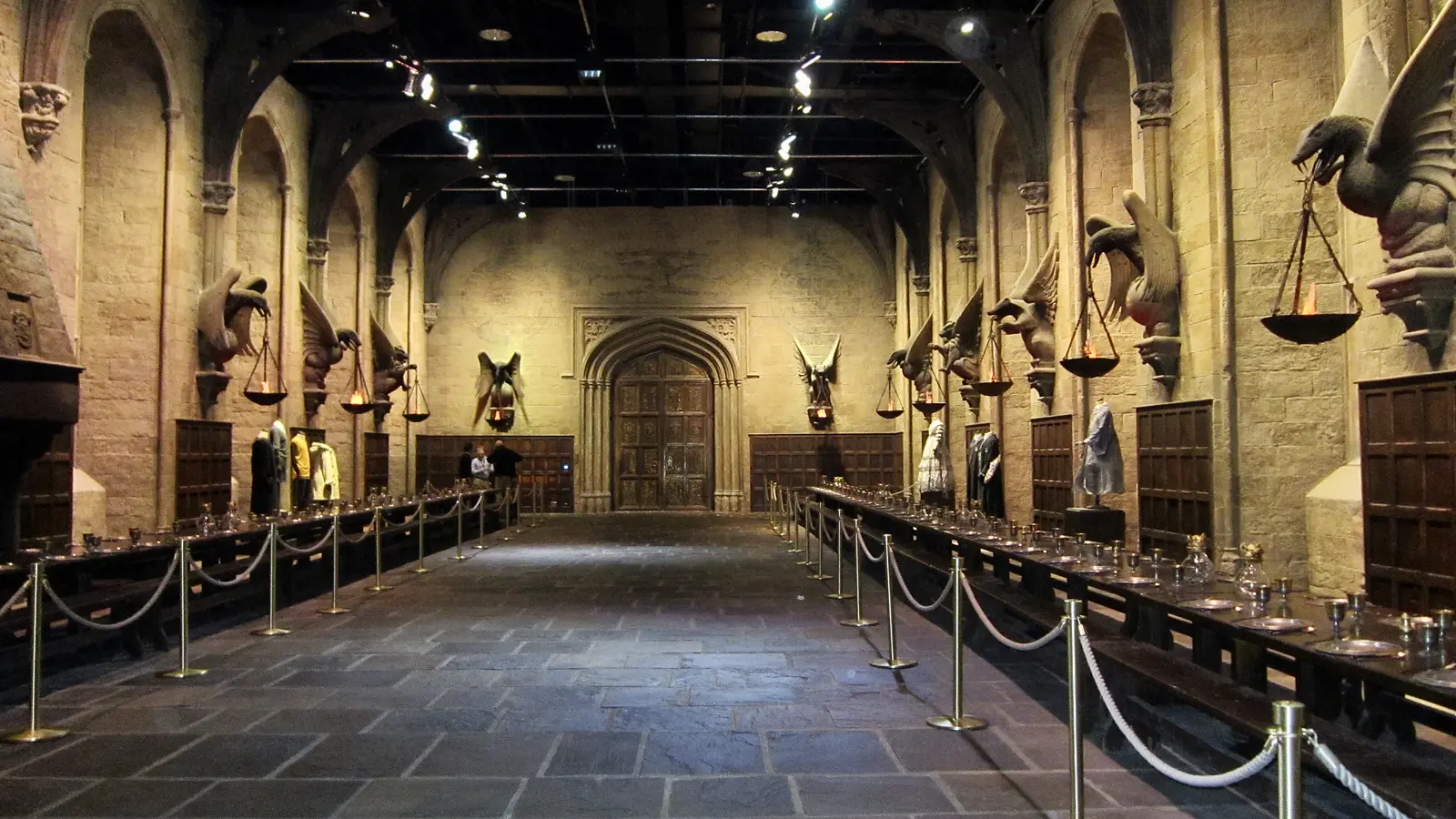
The Great Hall is central to that effect. Its scale suggests an institution older than the children entering it, while the tables place them inside a community. It is both intimidating and reassuring, which is a useful combination for a story about starting school.
The trio gives the spectacle a human scale
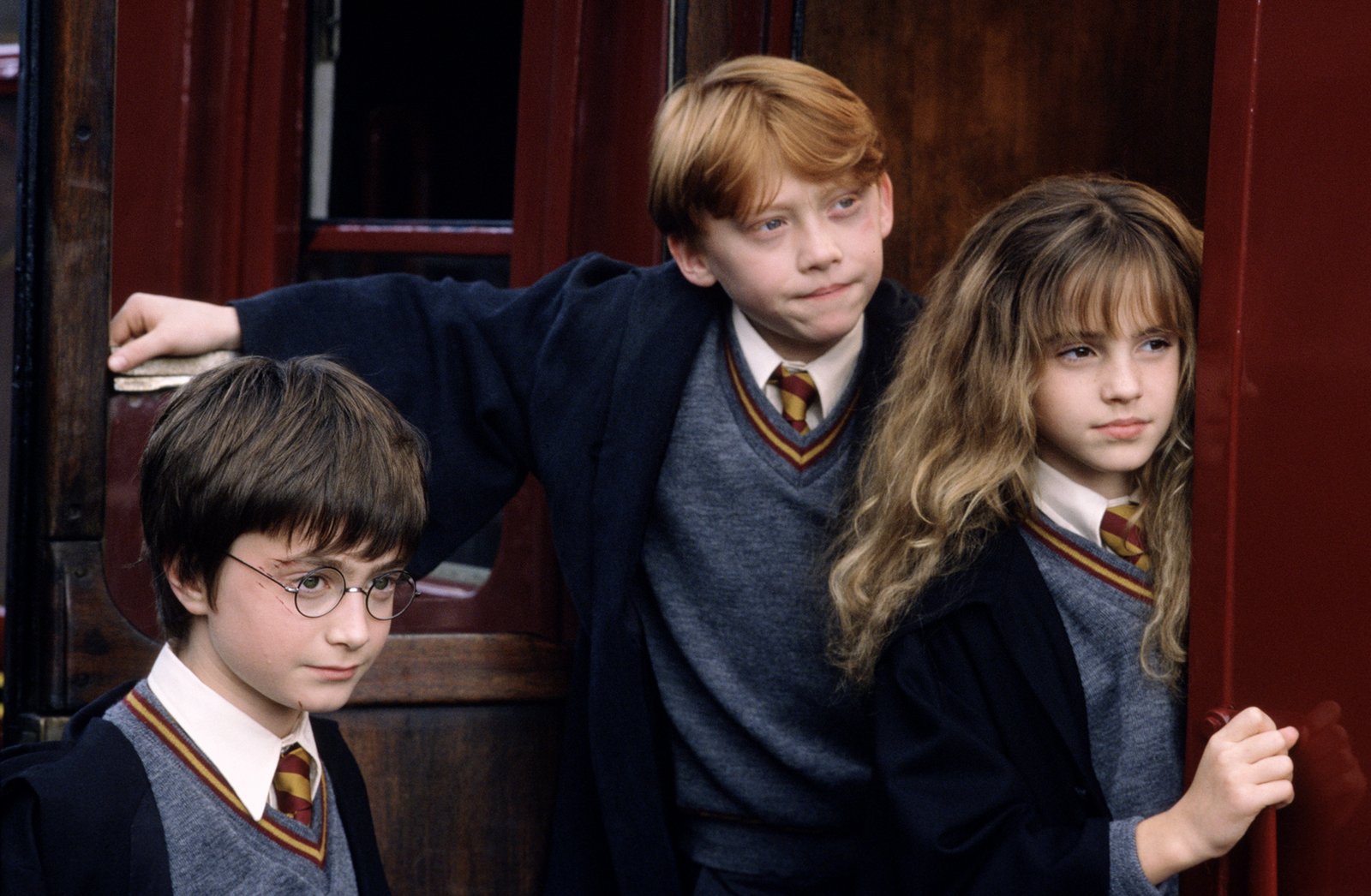
Harry, Ron and Hermione do not begin as a perfectly functioning team. Their different kinds of confidence produce friction. Harry knows little about the world that considers him famous. Ron recognizes its everyday rules but carries his own insecurities. Hermione’s preparation can make her seem more certain than she feels.
Those differences let the film turn information into relationships. An explanation can be a boast, an embarrassment or an attempt to help. The audience learns about the school while learning why these particular children need each other.
The eventual friendship is therefore more satisfying than a simple assignment of hero and assistants. Each contributes something the others lack. Knowing the later films can make the early awkwardness especially moving: the audience sees a durable friendship before its participants do.
The wait between films became part of growing up
The series also gave its audience a calendar. A new installment was something to anticipate, discuss and fit around school years. Waiting allowed guesses and preferences to develop before the next film supplied an answer.
The second life happened at home. A trip to Blockbuster, a borrowed copy or an owned DVD made another visit possible. Menus, bonus features and familiar packaging became attached to the story.
The earliest films also belonged to the final major years of VHS. For some viewers, returning to Hogwarts still carries the sound of a cassette being inserted. For others it means arranging a row of disc cases. The fiction is the same; the doorway into it depends on when and where somebody grew up.
Hogwarts is a cinematic place, not one complete building
The apparent solidity of the school can make it tempting to imagine a single real castle containing every familiar room. The films assembled Hogwarts through sets, locations, models and visual effects.
The Warner Bros. Studio Tour’s art-department account explains the work behind the designs and the castle model. Seeing that construction does not have to diminish the illusion. It reveals how many separate decisions were needed to make invented spaces feel connected.

The school also changes across the films. Different lighting, landscapes and camera movements make familiar spaces feel less secure as the story darkens. A place associated with arrival and celebration becomes a place its characters must defend.
That transformation gives the first film a special quality on a rewatch. Its warmth is still present, but viewers who know the ending can see how much remains to be lost, challenged and rebuilt.
Growing older changes what comes into focus
A younger viewer may concentrate on sweets, sports and secret passages. Returning later can bring the adults into sharper focus: their authority, their mistakes and their uneven ability to protect the children entrusted to them.
The school setting makes those changes in perspective natural. Nearly everybody has experienced the distance between how an institution presents itself and how it actually works. Hogwarts adds extraordinary hazards, but the discovery that adults do not know everything is familiar.
The series’ movement toward loss and moral uncertainty also prevents the original welcome from being the whole story. Belonging matters, but it does not remove the responsibility to decide what is right. Friendship must survive disagreements rather than remain a permanent reward for meeting in the first film.
Fans turned imaginary journeys into real rituals
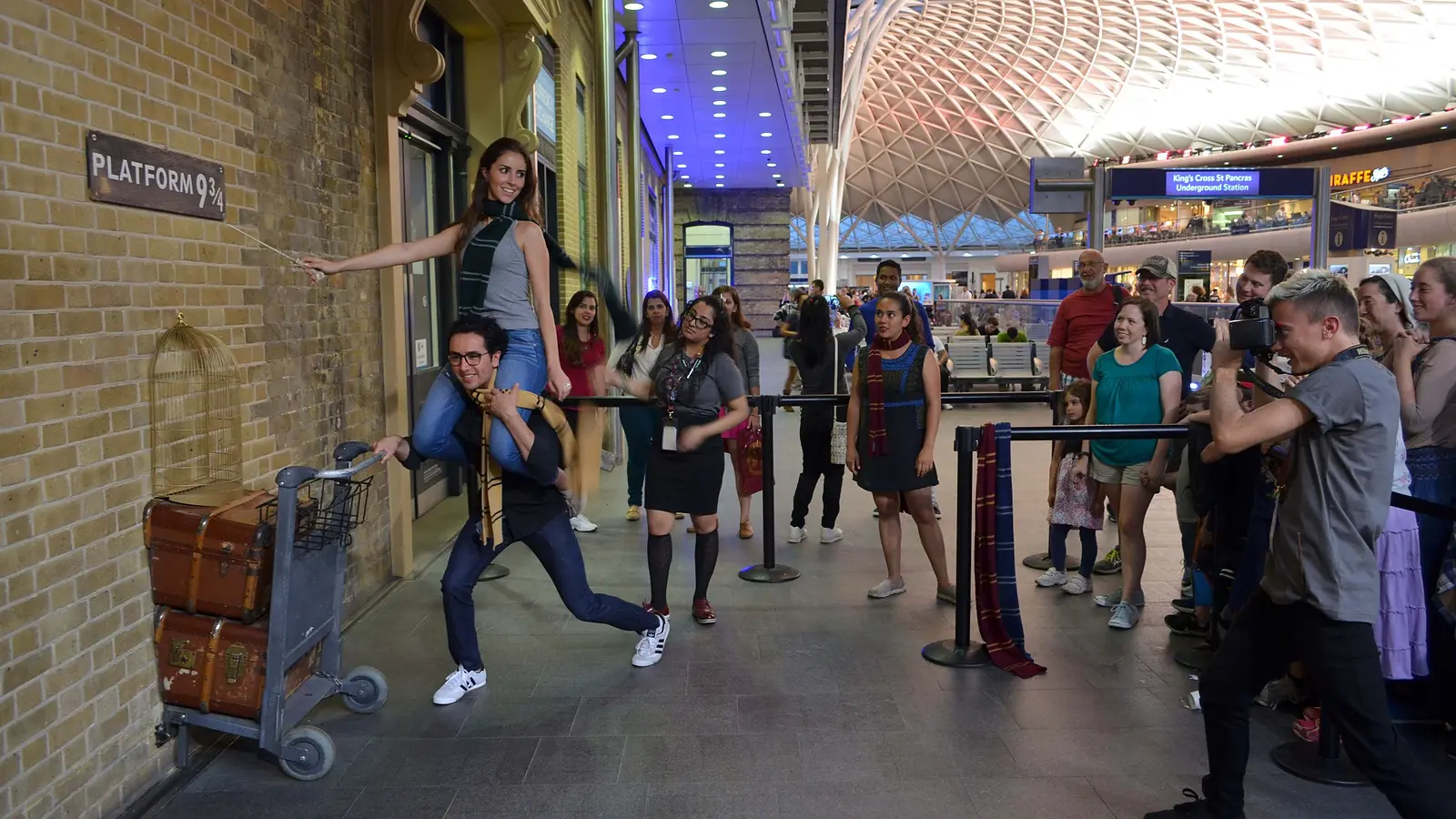
The photographs people take at King’s Cross reveal something about the appeal. Nobody needs to believe the wall will open. Recreating the gesture allows a private memory to become an activity shared with the person holding the camera.
Studio sets and recognizable landscapes offer a similar connection. The visitor can stand near something that helped produce a familiar image, while remaining aware of the difference between the film and the place.

Our photographs show real locations and visitor experiences, rather than frames from the movies. That distinction matters: the Hogwarts of the screen is a collaboration between physical places and filmmaking, not a destination that can be captured completely in one holiday photograph.
What the twenty-fifth anniversary celebrates
The franchise’s official 2026 anniversary announcement included theatrical screenings around the Back to Hogwarts period, with dates varying by location, and ten minutes of behind-the-scenes material for the first film. That late-August and early-September window has passed; it should not be mistaken for a current showtime listing.
The more durable reason to revisit the film needs no special booking. It is the pleasure of recognizing a world while noticing something different within it. A performance, a prop or a reaction at the edge of the frame can stand out after years of concentrating on the central action.
Hogwarts feels like coming home partly because returning is built into the story. Each school year begins with a familiar route and a different problem. The audience repeats that pattern on a larger timescale, arriving with another stretch of life behind it.
The first journey cannot happen again exactly as it did in 2001. The film offers something else: a familiar place from which to notice how the person watching has changed.