
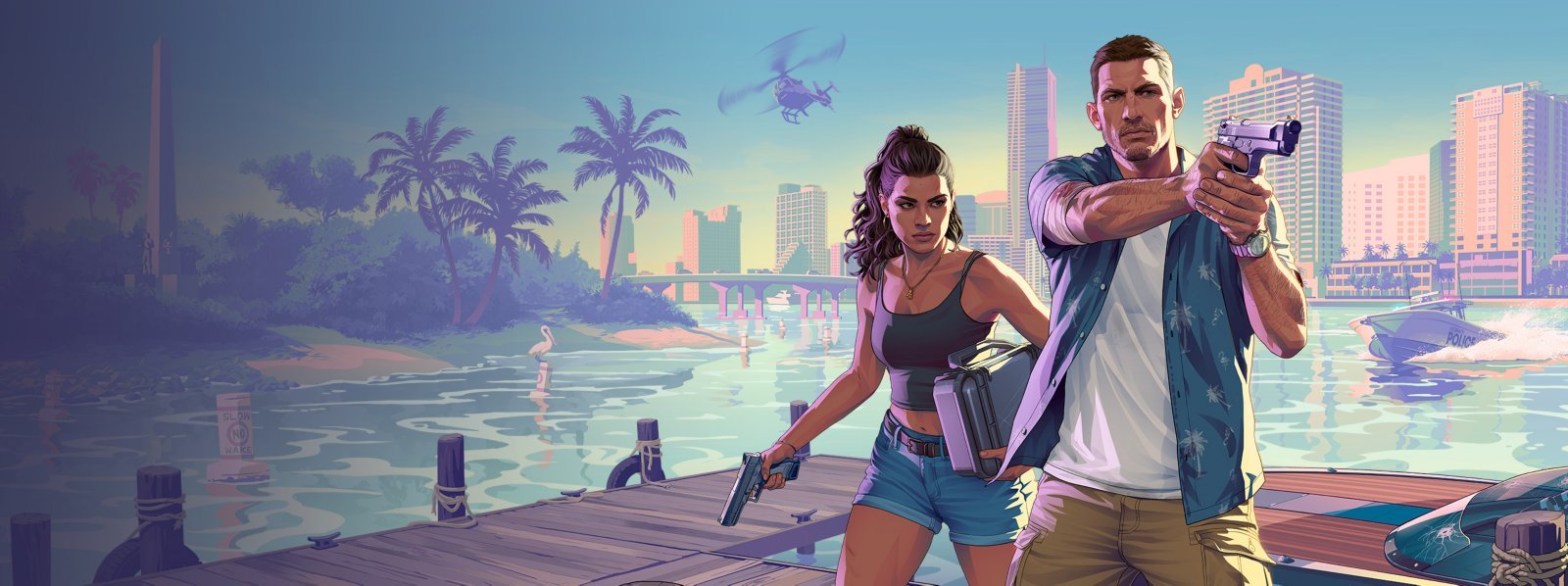
Vice City can return in a few colors: pink neon, turquoise water, a dark row of palms against the sky. For players who first visited in 2002, those colors carry the weight of an entire console generation.
Grand Theft Auto VI is bringing the city back in a contemporary setting. As of this update, Rockstar lists November 19, 2026, for PlayStation 5 and Xbox Series X|S. The game remains unreleased, so this is a look at the confirmed setting and the history behind it, rather than a review.
The interesting question is what happens when a place remembered through an old game has to become new again.
Vice City was already nostalgic in 2002
The original Grand Theft Auto: Vice City arrived on PlayStation 2 in North America on October 29, 2002, as documented in Take-Two’s launch announcement. Its story took place in 1986.
That double time frame is part of its appeal today. A game that once recreated a stylized version of the 1980s now brings back the early 2000s to the people who played it.
Tommy Vercetti’s world drew its identity from clothes, cars, crime stories and music. Its Miami-inspired streets felt different from GTA III’s Liberty City before the player had even learned the map. Sunshine did not make the place innocent. It gave the danger a different backdrop.
The radio made taking the long way worthwhile
A memorable open world needs more than destinations. Vice City’s radio gave the journey its own entertainment: licensed songs, station personalities and fictional advertisements accompanied the traffic and the trouble.
Sometimes the best reason to keep driving was that the song had not finished. A routine trip could become a memory because a particular track happened to be playing when the road opened up.
That connection between movement and music is difficult to capture in a screenshot. It made the city feel inhabited even when the player had stopped following the story.
The experience also belonged to physical routines: opening a case, finding room on a memory card, handing a controller to a friend. A copy discovered at a video rental store could dominate a weekend before it had to go back.

GTA VI places the city inside a larger Leonida
Rockstar’s official guide to people and places presents Vice City as part of the fictional state of Leonida. The locations include Leonida Keys and Grassrivers, extending the setting beyond the urban waterfront.
The distinction matters. This is a new game using a familiar city name, rather than a claim that every street from the 2002 map will return in the same position.
Florida gives that approach plenty of visual possibilities. Dense hotels and apartment towers can give way to wetlands, low roads and long stretches of water. The contrast makes the region useful for stories about glamour and exposure: a character can appear surrounded by luxury and still have nowhere comfortable to hide.

Jason and Lucia change the center of the story
The publisher’s synopsis describes Jason and Lucia becoming caught in a conspiracy across Leonida after a job goes wrong. Their reliance on each other is central to that setup.
That offers a different starting point from Tommy’s rise through Vice City. A partnership creates questions that an individual climb does not: how much can either person trust the other, and what happens when survival and loyalty pull in different directions?
Those are possibilities suggested by the announced premise. Whether the finished story delivers on them can only be judged after release. A trailer can establish tone; it cannot show how an entire game holds together.
What the official footage establishes—and what it does not
Rockstar released An Extended Look on August 27, 2026, describing it as captured from in-game footage on PlayStation 5. That provides a clear source for the preview, while leaving performance across the full game to later testing.
The current official site lists PS5 and Xbox Series X|S. It does not provide a PC release date. A future version should not be treated as a simultaneous launch without an announcement.
The same caution applies to fan maps, supposed mission lists and promises about everything a player will be able to do. They can make lively conversation, but they are not substitutes for confirmed information.

A familiar place has to earn new memories
The old Vice City is personal because players learned it through use. Failed missions, favorite routes and arguments over shortcuts turned a map into a place they could navigate from memory.
A modern game arrives in a different environment. Its smallest details can be shared almost immediately, and speculation can spread before most people have touched a controller. Discovery is still possible, but it happens amid much more conversation.
Returning to Vice City gives Rockstar a recognizable starting point. It also creates a demanding comparison. Better-looking buildings alone will not reproduce the feeling of knowing a city well enough to turn off the route and drive somewhere simply because you want to.
The most promising kind of return would leave room for both experiences: remembering the old streets, then finding a new route worth taking twice.


Shared memories