
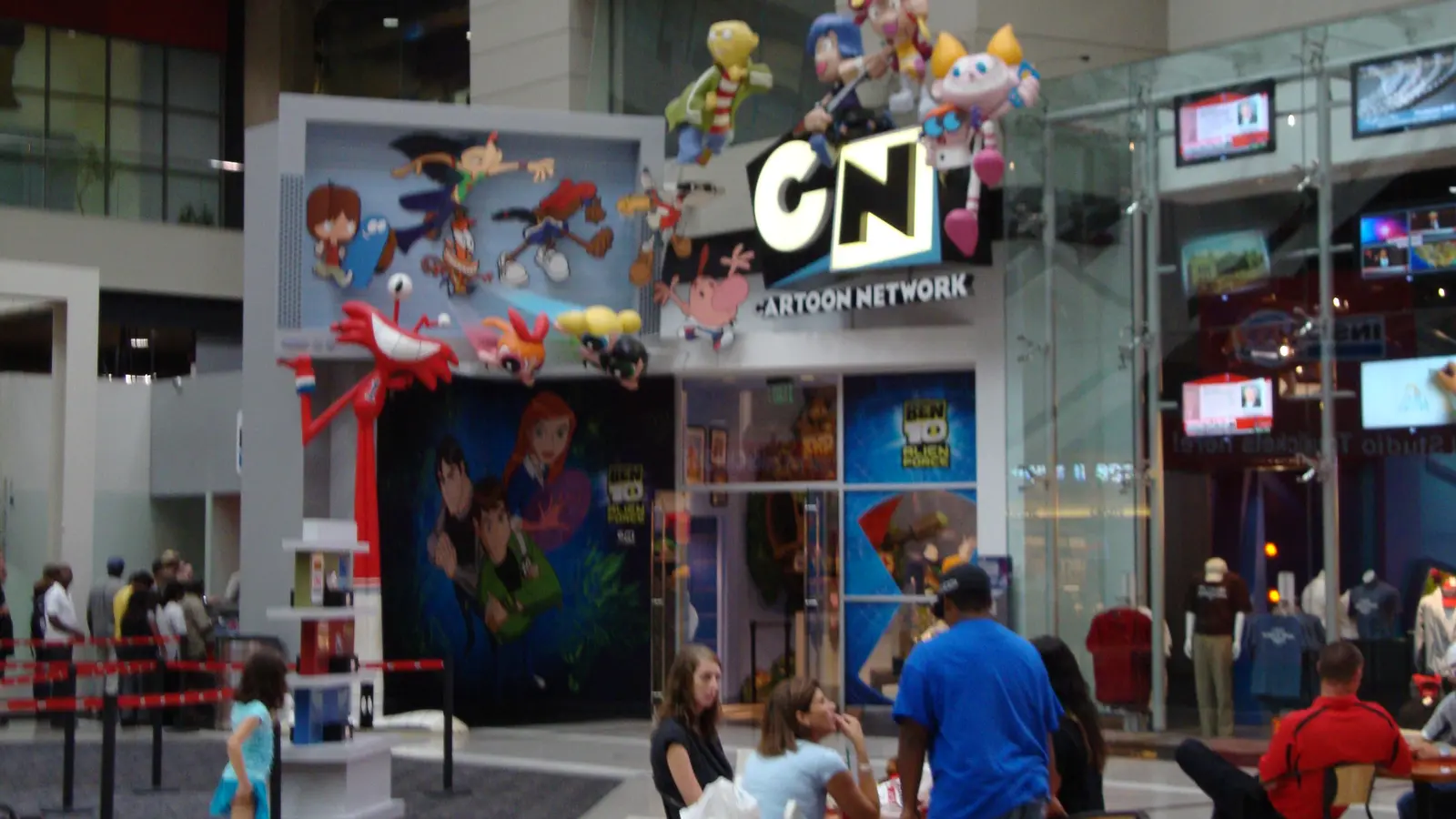
Leave Cartoon Network on long enough in the early 2000s and the same television could begin to feel like a different channel. A talk-show host might be a recycled superhero. A pause could last too long. A plain black screen could deliver the funniest line of the night.
Adult Swim launched in the United States on September 2, 2001. Twenty-five years later, its most distinctive achievement is still easy to recognize: it made the space around a program feel like part of the program.
The shows mattered. So did the hour, the music and the strange sensation that someone at the network had been allowed to try something without explaining it first.
All the kids out of the pool
Adult Swim began as a nighttime block sharing Cartoon Network’s signal, rather than a separate all-day U.S. channel. Its name turned the transition into a swimming-pool joke: the children had their time, and now the adults could get in.
The contrast did useful work. A viewer already knew what the channel usually looked like. Encountering Home Movies, Harvey Birdman, Attorney at Law or Sealab 2021 in that setting made the shift feel more surprising.
The launch history and original lineup are recalled in Adult Swim Central’s anniversary retrospective. The block did not invent adult animation. It gave a particular selection of it a recognizable home.

The breaks had a voice of their own
Most television promotions have an obvious assignment: hold attention, announce the next show, make everything look exciting. Adult Swim’s bumpers could instead offer an awkward observation, a mundane photograph or a message that seemed to have wandered in from somewhere else.
The black-and-white text cards were especially economical. With little visual decoration, the wording and timing had to carry the joke. Sometimes the delay before the next line was the joke.
That restraint helped establish intimacy. The network could feel less like a giant institution addressing millions of viewers and more like someone sending a dry message to the other people still awake.
It also taught viewers to keep watching between episodes. The material usually treated as packaging became another reason to stay.
Space Ghost had already shown what a strange format could do
Space Ghost Coast to Coast began in 1994, before the Adult Swim block existed. Its central transformation was wonderfully simple: an old animated superhero became the host of an unreliable talk show.
Limited movements and repurposed animation did not have to disappear behind the illusion. They could become part of the comedy. A stiff reaction or a badly timed pause made the host seem even less capable of controlling his own program.
That approach offers a useful way to understand Adult Swim’s identity. A production constraint can become a creative choice when the work knows how to use it. Expensive polish is not the only route to a distinctive screen presence.
Late-night discovery was not always planned
The television schedule could introduce something a viewer would never have searched for. Stay after one familiar show and the next might demand a completely different set of expectations.
Cowboy Bebop demonstrated that range. As TIME’s history of the series explains, its Adult Swim exposure helped introduce it to U.S. audiences. Its jazz, melancholy and genre mixture offered a very different experience from a short absurdist comedy.
The common thread was a willingness to let animation do more than one thing. Adult Swim could hold jokes, action, sadness and deliberate discomfort inside the same nighttime identity.
That feeling will be familiar to viewers who remember Toonami in Latin America, even though the regional schedules and histories differ. The surrounding music and presentation could make individual shows feel like destinations in a larger world.
Robot Chicken put childhood objects to adult use
Robot Chicken arrived in 2005 with a format that made nostalgia unusually tangible. Figures and toys became performers in short stop-motion parodies. Familiar characters brought their old meanings with them, giving the show something to bend or dismantle.
The joke often depends on recognition. An object once used for straightforward adventure can become ridiculous when it is asked to deal with an ordinary frustration or an unexpected consequence.

For Adult Swim’s anniversary, the network announced a Robot Chicken special for August 30, 2026. Using a parody series to mark the occasion fits a brand whose history has rarely depended on treating itself solemnly.
Latin America followed a different schedule
Adult Swim arrived on Cartoon Network Latin America in October 2005. A reproduced regional press announcement describes its late-night format and programs including Harvey Birdman, Aqua Teen Hunger Force, Sealab 2021 and The Brak Show.
The regional experience was shaped by dubbing, access and different hours. Someone remembering an early morning broadcast in Latin America is not necessarily remembering the same lineup as an American viewer of the same age.
In 2023, Warner Bros. Discovery announced a dedicated Adult Swim channel for Latin America. The brand that had once occupied a corner of the schedule gained a separate signal in the region.

The internet connection is a resemblance, not a single origin story
Short text, awkward edits, reused pop-culture material and jokes aimed at people who already understand the reference all became familiar online. Adult Swim was one influential place to encounter that combination, but internet humor has many histories.
Its community feeling also has something in common with MySpace and early chat culture: identity expressed through small signals, shared tastes and the pleasure of finding someone who gets the same joke.
After 25 years, the enduring appeal is the expectation of surprise. A familiar bracketed name can still suggest that the next few minutes might be difficult to classify—and worth staying awake for.