
The television was turned down, the room was dark, and tomorrow’s alarm was already a problem. For a generation of viewers in Latin America, that was part of the appeal of Toonami: action animation occupying a different corner of the day, with a different atmosphere from the cartoons around it.
Remembering it can be confusing. The Latin American block did not follow the same history as the better-documented American version. It also returned after its original run, disappeared again, and became part of later announcements that were not always reflected in the branding viewers actually saw.
The short answer is that Cartoon Network’s original regional run lasted from 2002 to 2007; a Crunchyroll-supported revival ran from 2020 to 2022. Those are distinct chapters, and neither tells the whole story of anime on Latin American television.
A block could make several different shows feel like one destination
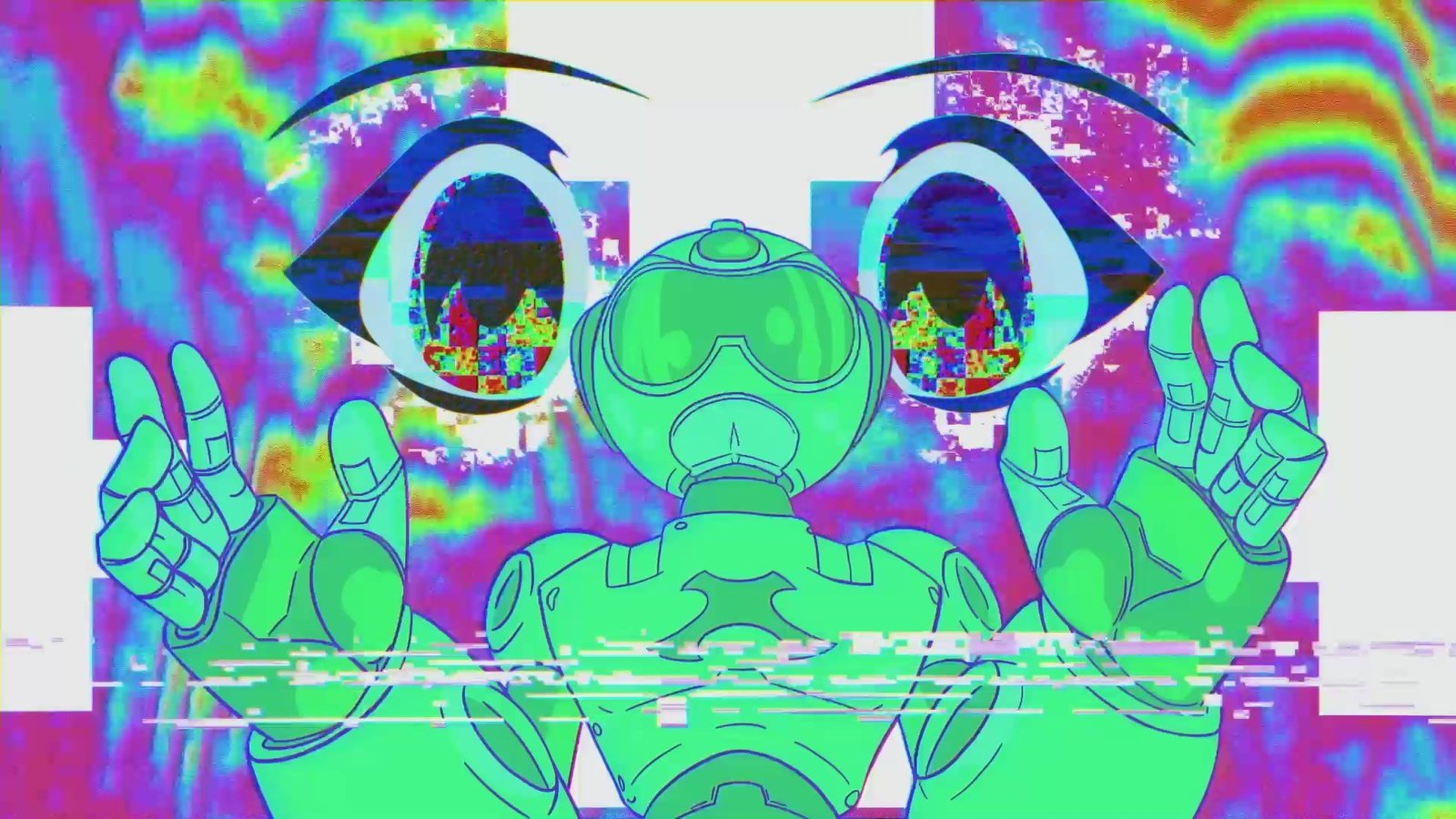
Toonami was a way of presenting programs, rather than a single series. Its science-fiction identity, urgent editing and electronic sound suggested a place where something consequential was about to happen.
That presentation gave viewers a reason to stay between shows. A channel could assemble unrelated fictional worlds into a recognizable evening: one battle ended, another story began, and the surrounding graphics made the transition feel deliberate.
The broader Toonami identity is closely associated with robot host TOM and his spaceship setting. The versions, presentation packages and amount of host material varied across countries and periods, however. A compilation of American bumpers is not automatically evidence of what a Latin American household watched on the same date.
This is one reason nostalgia for the block can be so specific. People remember a voice, an opening sequence or a transition that belongs to their particular feed. Those details are part of the experience, not imperfections to smooth out into a single international history.
2002–2007: a regional chapter with its own audience
The first Latin American era began in late 2002 and ended in 2007. Regional television publication TVLaint’s retrospective places that run between December 2002 and March 2007.
Anime already had an audience in the region. Broadcast television, other cable channels, home video and fan communities had introduced Japanese animation long before this particular block arrived. Toonami gave some of that enthusiasm a memorable home inside Cartoon Network; it did not create it from nothing.
Viewers associate the era with series such as Dragon Ball Z, Yu Yu Hakusho, Inuyasha and Rurouni Kenshin, known to many regional viewers as Samurai X. The exact mix and scheduling changed. A remembered lineup from one country or year should not be treated as a timetable for the entire continent.
What linked those memories was a willingness to follow continuing stories. Rivalries, friendships and unfinished battles supplied a reason to come back. Missing an episode could mean arriving at school without the explanation everybody else seemed to have.
The schedule became part of the memory
Later-night placement changed how some viewers experienced the block. Watching required negotiation, a recording or an optimistic calculation about how much sleep was really necessary.
A late slot could make the programs feel older and more intense even before an episode started. The rest of the household was quiet. The screen occupied more of your attention. The volume stayed low enough that dialogue became something to concentrate on.
That atmosphere should not be mistaken for evidence that every broadcast was uncut, intended for adults or identical to its Japanese release. Editing, dubbing and scheduling were separate decisions, and regional memories of them often blur together.
It is also easy to turn the block’s eventual removal into a tidy story about one complaint, one executive or one failed series. Without direct evidence, that explanation is too confident. Schedules establish that the block ended; they do not, by themselves, establish a single internal cause.
2020: Crunchyroll helped bring the name back
The revival had a clear announcement. On August 18, 2020, Crunchyroll and Cartoon Network announced a return beginning August 31 under the Toonami Powered by Crunchyroll name.
The announced weekday hour ran from midnight to 1 a.m., pairing Dragon Ball Super with a Crunchyroll selection that began with Mob Psycho 100. Spanish and Portuguese dubs were part of the plan.
The arrangement captured how much anime distribution had changed. A service associated with streaming was helping curate a television block. Television and streaming were now overlapping ways to reach fans, rather than cleanly separated old and new worlds.
For somebody who had watched the earlier era, the name supplied an immediate connection. For a younger viewer, the appeal could be a series they had not encountered yet. A revival works differently for those two audiences: one is measuring it against a memory; the other is simply deciding whether to keep watching.
2022 ended that revival; later announcements need context
In August 2022, TVLaint reported the block’s removal from Cartoon Network’s schedule at the end of the month. That concluded the two-year Crunchyroll-era run.
The name appeared again in Warner Bros. Discovery’s 2023 announcement for a dedicated Adult Swim channel in Latin America. The announcement included Toonami among the proposed attractions.
There is an important distinction between that publicity and the channel’s eventual presentation. In an October 2024 follow-up, TVLaint described the absence of the expected Toonami-branded block and a different identity for Adult Swim’s anime programming. An announcement alone should not be used as a current Toonami viewing guide.
Anime remaining on television and a particular branded block returning are different claims. Keeping them separate makes the history much easier to understand.
The regional timeline at a glance
- 2002–2007
The original Cartoon Network Latin America era, with programming and presentation that differed from the American version.
- 2020
Toonami Powered by Crunchyroll returns with an announced August 31 launch and Spanish- and Portuguese-language programming.
- 2022
The Crunchyroll-era block leaves Cartoon Network’s regional schedule.
- 2023–2024
Adult Swim’s launch publicity invokes Toonami, while subsequent reporting distinguishes the actual anime presentation from the expected branded revival.
Why the block stays with people
A streaming library can offer much more choice, but choice does not automatically create the feeling of a shared appointment. A television block made the decision for everybody watching that feed: this episode, at this time, followed by this next show.
The limitations produced their own rituals. You learned the schedule, recognized the transitions and found other people who had watched the same thing. A cliffhanger could last until the next broadcast because there was no immediately available next button.
Rewatching an episode today may restore the story without restoring that arrangement. The missing part is the room, the hour and the expectation that somebody else would want to talk about it tomorrow.
That is the part of Toonami that survives a change of channel or a vanished logo: the memory of animation being presented as an event worth staying awake for.

Shared memories