
In 2001, Apple launched iTunes and Mac OS X, Wikipedia began, Nintendo released the Game Boy Advance, and the year ended with the first iPod, Windows XP, and the original Xbox. They arrived on different dates and, in some cases, in different regions.
The useful way to remember this year is as a collection of separate jobs: managing music, playing on the move, editing an encyclopedia, or returning to a familiar desktop. The same household could encounter several of these changes without replacing every device it owned.
Technology in 2001: the release timeline

Open the dates, regions, and primary sources
| Date in 2001 | Technology | What actually arrived |
|---|---|---|
| January 9 | iTunes | Mac music software: importing CDs, managing a library, making playlists and burning CDs. The song store came later. Apple launch release. |
| January 15 | Wikipedia | The encyclopedia begins. Wikimedia history. |
| March 21 / June 11 / June 22 | Game Boy Advance | Japan / United States / Europe. Nintendo company history. |
| March 24 | Mac OS X | Retail availability, rather than the start of every user’s transition. Apple availability announcement. |
| October 23 / November 10 | iPod | Announcement / availability. First model: 5GB, Mac connection over FireWire. Apple product release. |
| October 25 | Windows XP | Consumer launch of the operating system. Microsoft launch report. |
| November 15 | Xbox | North American launch. Xbox anniversary history. |
January 9: iTunes organizes the collection
The first iTunes was a Mac music application, not an online song store. Apple’s launch announcement describes importing CDs, organizing digital tracks, building playlists and burning audio CDs within one program.
That distinction matters because it places the software in the world people actually inhabited. A collection might include shop-bought discs, files copied from those discs and carefully assembled mixes. Managing the transition between formats was part of listening.
The habit it helped establish was simple: music could be a searchable library rather than a physical stack. The later iTunes Store should not be folded backward into this January 2001 launch. For this first chapter, the computer was primarily organizing music you already had.
January: Wikipedia makes knowledge a shared project
Wikipedia began in January 2001, as the Wikimedia Foundation’s twentieth-anniversary history records. Its invitation was unusually open: an encyclopedia could be improved by people who were also its readers.
That did not make every page equally dependable. The useful change was the visibility of an ongoing process—references, revisions, disagreements and corrections—rather than the promise that a finished-looking page must be the last word.
For curious users, the experience encouraged a particular kind of wandering. One unfamiliar term led to another article, then a historical event, then a subject you had not intended to investigate. The open tab became a path through interests rather than merely a document you had located.
March: Game Boy Advance expands the pocket
Nintendo’s company history records the Game Boy Advance’s March 21 launch in Japan, followed by June 11 in the United States and June 22 in Europe. There was no single worldwide launch day.
The horizontal body, shoulder buttons and wider color display made familiar ideas feel newly spacious. Its games could offer detailed animation and elaborate worlds while the device retained the directness of a cartridge and a power switch.
The original screen also depended on external light. That inconvenience belongs in the memory alongside the affection: shifting toward a window or a lamp was part of playing. Later hardware improvements should not erase what using the first model was actually like.
March 24: Mac OS X changes the desktop
Mac OS X reached stores on March 24. The Aqua interface made the change immediately visible, while the system’s underlying architecture represented a much deeper transition for the Mac.
For an ordinary user, the first encounter could be a button, a window or the Dock. Visual design made the operating system feel like something one could have an opinion about before understanding what had changed underneath it.
It was also a transition, not an instant arrival at the mature experience people later remember. Applications, workflows and expectations had to catch up. The glossy surface is the nostalgic shorthand; the longer process of adaptation is the more useful history.
October 23: Apple announces the iPod
The iPod was announced on October 23, with availability beginning November 10. Apple’s original release specifies a 5GB hard drive, a mechanical scroll wheel and FireWire transfer. It was initially tied to the Mac ecosystem.
Those details separate the first device from later iPods with touch-sensitive controls or much larger capacities. The achievement was not inventing portable music. It was making a substantial digital collection feel approachable through a small screen and a clear physical control.
A library that had occupied shelves could now travel, but it still needed deliberate maintenance. You chose what to import, corrected names and synchronized the player. That sense of tending a collection helps explain the iPod’s continuing appeal.

October 25: Windows XP becomes a familiar room
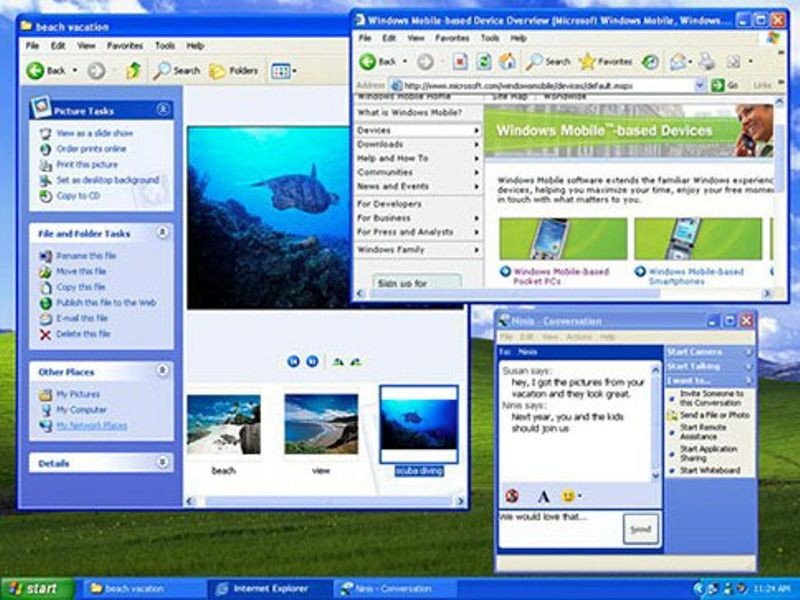
Microsoft launched Windows XP on October 25. For many people, its blue interface and green Start button became the visual background to homework, chat windows, digital photographs and experiments with the family computer.
An operating system accumulates meaning because so many unrelated activities pass through it. The same desktop might host a school assignment in the afternoon, music in the evening and a game someone stayed up too late to finish.
Remember hearing the XP startup chime on the family computer? Our guide to the sounds of 2000s tech revisits that chime and lets you play a real dial-up connection.
Remembering that environment does not make an unsupported old installation a sensible everyday internet computer. The historical interest lies in the experience and design; screenshots, museums and isolated retro setups can preserve it without confusing nostalgia with current security support.

November 15: Xbox enters the living room
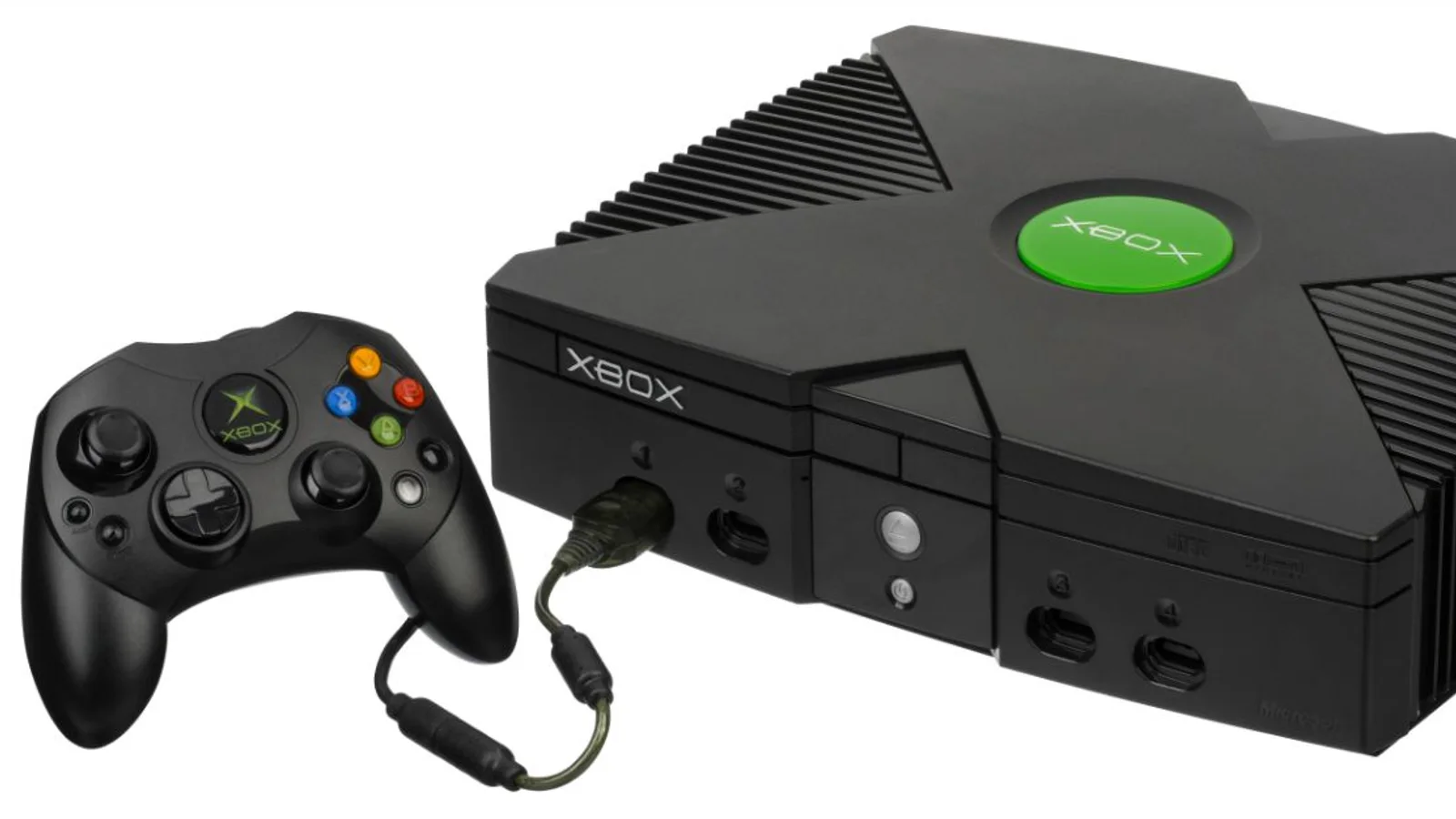
The original Xbox launched in North America on November 15, 2001, a date confirmed by Xbox’s anniversary history. Its size and black-and-green design made an unmistakable statement beside the television.
The console brought built-in storage and a network connection into its identity, while games such as Halo: Combat Evolved gave the hardware a social life. Multiplayer could mean sharing a screen or arranging a local network before online console play became routine.
It is worth keeping those stages separate: Xbox Live was a later service, not something that launched alongside the console in November 2001. Our Xbox retrospective follows that wider story.
Two earlier stories help explain how computers and the internet entered more homes. Read how the iMac G3 made the family computer impossible to ignore, then see why AOL CDs seemed to be everywhere at stores, in the mail and beyond.
Three memories that belong to later versions
Later success can blur the first version of a product. These distinctions change what a person could actually do in 2001.
| Easy to mix up | The 2001 reality | Why it matters |
|---|---|---|
| iTunes and the iTunes Store | The January application managed music; Apple’s music store opened in 2003. | The first routine was importing and organizing a collection, not buying songs from the later store. |
| An illuminated GBA screen | The original Game Boy Advance used a reflective screen without a built-in light. | Playing position and room lighting were part of the experience. Later illuminated hardware should not stand in for the original model. |
| Xbox and Xbox Live | The console launched in North America in November 2001; Xbox Live followed in 2002. | Split-screen and local networking belong in the first chapter; the later online service belongs in the next. |
Launch history also differs from ownership history. A November product could become a vivid memory years afterward. Remembering an older PC or a different handheld in 2001 does not contradict the release calendar: the world people used was a mixture of generations.
That is what makes this period more interesting than a row of invention dates. Files moved between devices, a playlist needed preparation, and a game console was a place in the room. Convenience was growing, but each activity still had its own physical setting.
Together, these launches show a world becoming more digital without yet becoming one continuous feed. Each object or application had a distinct job. That separation created extra work, but it also gave the routines their character: choosing a cartridge, tending a playlist, opening a desktop and deciding what to do next.