An old Hotmail address can be a tiny time capsule: a nickname, a favorite band, a number added because somebody else had already taken the good version. Long after the computer that created it was gone, the address could still tell people where to find you.
That portability was the important idea. Hotmail helped make personal email something you could open in a web browser, rather than something tied so closely to a particular computer or internet provider.
Its thirtieth anniversary in 2026 is a chance to remember how an ordinary inbox became part of the way people introduced themselves online—and why an address ending in @hotmail.com can still work today.
1996: email moved into the browser
Sabeer Bhatia and Jack Smith launched Hotmail on July 4, 1996. WIRED’s contemporary profile of Bhatia traced the early business and the independence-themed launch date.
The proposition was straightforward: use a browser to reach your messages, with a free account that did not have to change every time you changed your connection provider. It was one of the services that brought webmail to a mass audience, rather than the invention of email itself.
That mattered in a world of shared and borrowed machines. A school computer, a friend’s PC or a terminal in an internet café could become a route back to the same inbox. You did not have to make that machine your own before reading a message.
The service’s invitations at the bottom of outgoing emails also let users encounter the product through people they already knew. A message did two jobs: it carried the conversation and advertised the place where the conversation could continue.
Microsoft saw an entrance to the wider web
Microsoft announced its acquisition of Hotmail on December 31, 1997, describing plans to integrate the service with MSN. The announcement did not disclose the purchase price.
On December 1, 1998, Microsoft reported more than 30 million active accounts worldwide. That historical figure measures accounts, not thirty million individual people, but it conveys how quickly the service had become a major destination.
An inbox gave the portal a reason to be part of a daily routine. News or search could be useful when you needed them; a message from somebody you knew supplied a more personal reason to return.
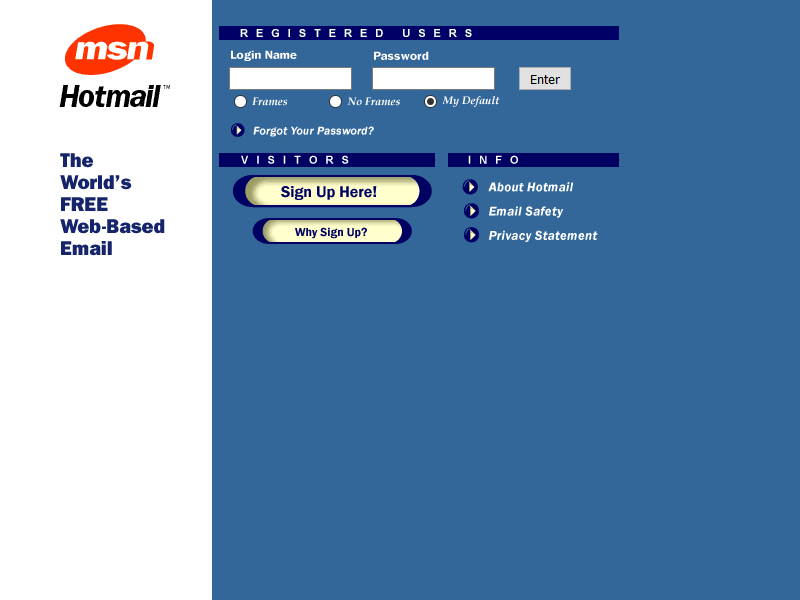
For many users, MSN Hotmail became part of the familiar desktop landscape that later included Windows XP. The blue interface and the name in the browser felt like fixtures, even as the service underneath kept changing.
Your address became a small piece of identity
Choosing a username was an early lesson in the difference between who you wanted to be and what was still available. A sensible first attempt could end in an improbable combination of initials, punctuation and numbers.
Then you had to live with it. The same address might go on school assignments, game accounts, forum registrations and messages to friends. A decision made casually could become surprisingly durable.
Before social profiles gathered everything into one page, email connected many separate places. It was where confirmation messages arrived, passwords were recovered and small photographs landed as attachments.
That is why the nostalgia can feel unusually personal. An old address recalls a network of relationships and registrations, not just a product logo.
Messenger gave the inbox a social life
A Hotmail address could also be used with MSN Messenger. For users who lived in both services, exchanging an email address meant opening two kinds of conversation: something to read later and something that might begin as soon as the other person came online.
Hotmail was not the only address a Microsoft Passport account could use. But its close association with MSN made the pairing feel natural, especially among friends who were all getting started at roughly the same time.
The inbox and the contact list served different moods. Email could hold a longer message; Messenger could turn an ordinary evening into a conversation with several people at once. Together, they made the shared household computer feel like a social destination.

The inbox needed housekeeping
Not every message was worth keeping. Chain letters, dubious warnings, oversized forwards and promotional mail could fill the space between genuine conversations.
A forwarded joke might arrive wrapped in several layers of previous recipients and replies. A threatening prediction about bad luck could somehow become a reason to send it to everybody you knew. The inbox recorded the web’s social habits as faithfully as its useful information.
Limited storage made deletion feel consequential. Keeping a sentimental message could mean removing something else. The routine of sorting, emptying and making space became part of having an account.
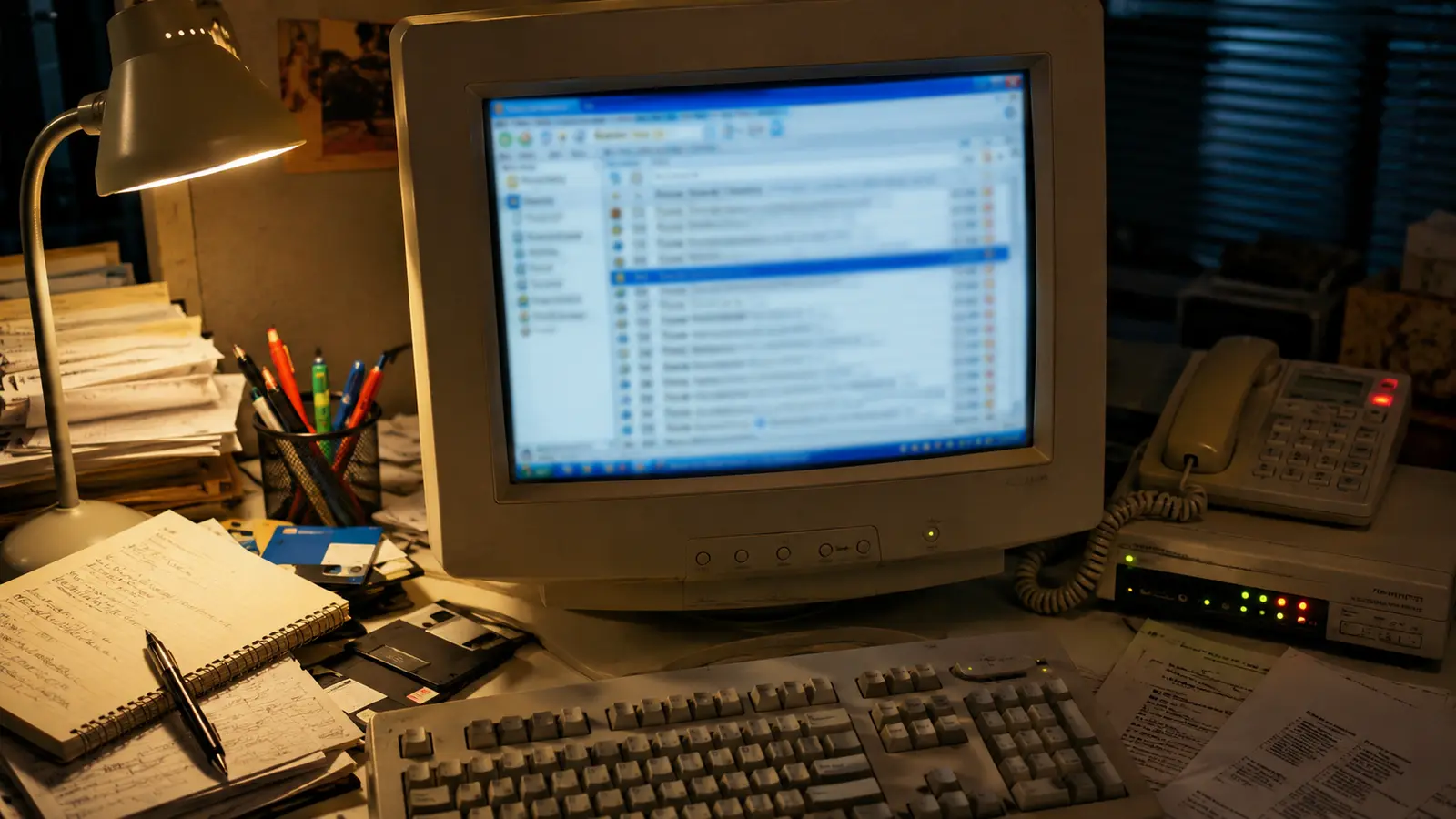
Outlook.com changed the sign above the door
Competition pushed expectations toward more storage, better search and cleaner interfaces. Microsoft revised its web services under the Windows Live identity before making a larger branding change.
The company introduced the Outlook.com preview on July 31, 2012. In 2013, Hotmail users moved to the newer service. Existing Hotmail addresses could be retained; users did not all have to tell their contacts that their email had changed.
By May 2013, Microsoft reported that the migration was complete and Outlook.com had more than 400 million active accounts. That total described the combined service, not an unchanged audience for the original Hotmail interface.

Can you still use an old Hotmail account?
Yes, if the account still exists. Microsoft’s current Hotmail sign-in guidance directs users to Outlook.com with their Microsoft account credentials.
That does not mean every abandoned inbox survives indefinitely. Microsoft notes that an account unused for more than two years may have been deleted. Its official sign-in troubleshooter is the appropriate starting point if you cannot access an old account; nostalgia alone cannot restore deleted messages.
For addresses that remain active, the continuity is striking. A username chosen beside a CRT monitor may now arrive on a phone, carrying a little piece of the person who chose it.
Hotmail’s enduring contribution is that expectation of continuity: the computer can change, the room can change, and your messages can still be waiting for you.