
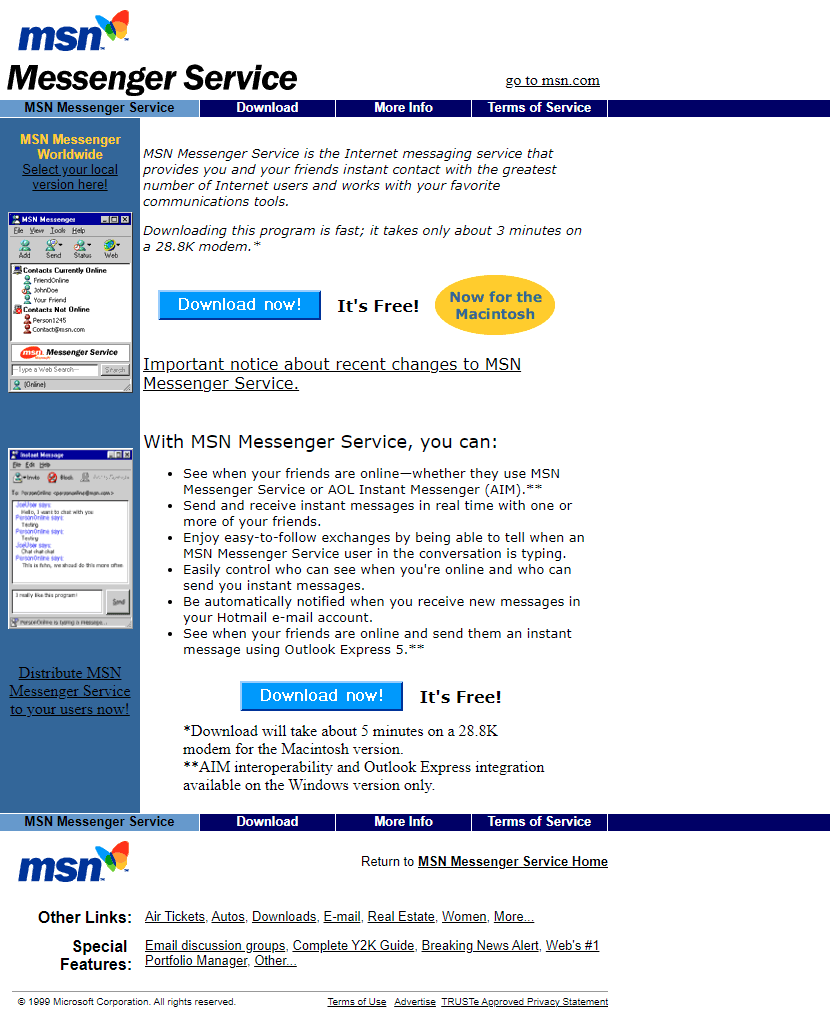
A small notification could change the direction of an entire evening: somebody had just signed in. For a generation of computer users, MSN Messenger turned a list of names into a place where friendships, crushes, arguments and elaborate misunderstandings could happen.
The program occupied only part of the desktop, but it could command most of your attention. A contact’s status invited interpretation. A personal message might be a lyric, a joke or a very public hint aimed at one particular person.
Messenger disappeared because the habits that made it central changed, and because Microsoft chose to bring its communication services together around Skype. Its cultural life lasted far longer than a simple list of software features can explain.
- 1999MSN Messenger arrives with presence indicators and instant text chat.
- 2006The Windows Live Messenger name replaces MSN Messenger.
- 2013Microsoft moves Messenger users toward Skype; China follows a separate timetable.
- 2025Skype itself retires, with Microsoft directing consumers toward Teams Free.
It began with the question: who is here?
Microsoft announced MSN Messenger Service on July 21, 1999, with downloads available from midnight on July 22. The original promise was straightforward: see whether people were online and send them an immediate message.
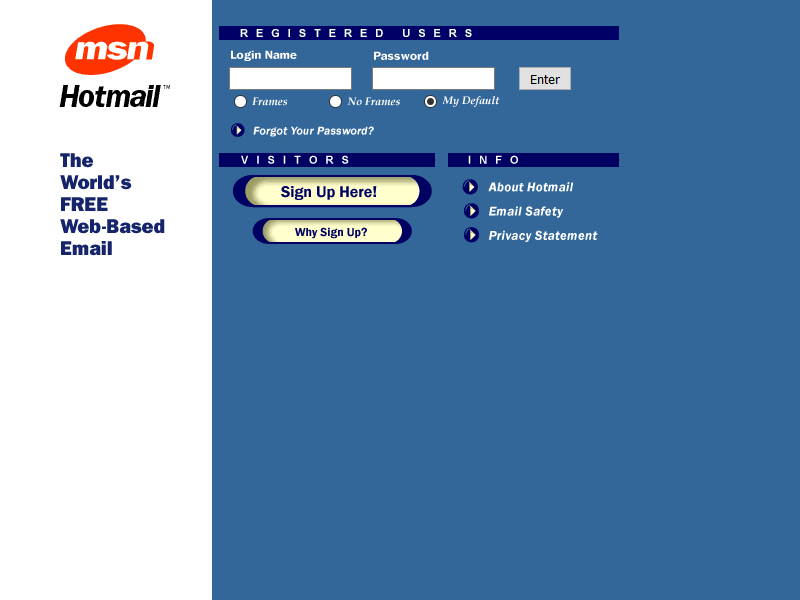
Integration with Hotmail gave the service a natural starting point. Many users already had an email address and a reason to use Microsoft’s online services. A contact list could make that identity feel more social.
Instant messaging was not new to the internet. Messenger joined an existing field, but it became a particularly familiar part of everyday computer use in many countries during the following decade.
The computer was a place you went to
In many homes, online conversation still involved sitting down at a shared computer. Somebody else might need it later. A connection might be slow, or an evening’s access might have a clear beginning and end.
Opening the browser, checking email and signing into Messenger became a routine. You could arrive to find a roomful of available contacts, or discover that the one person you wanted to speak to was absent.
Presence had emotional weight because it was not continuous. A friend appearing online could feel like somebody entering the room. Signing out could end a conversation in a more definite way than putting a phone back in a pocket.
That rhythm is part of why the service belongs so strongly to the Windows XP era, even though it existed across several versions of Windows and changed considerably during its life.

A display name could be a tiny performance
The contact list was not always a neat directory of real names. Symbols, nicknames, jokes and dramatic phrases could make it look like a wall of miniature announcements.
The personal message added another layer. You could advertise your mood without directly beginning a conversation. A carefully ambiguous line might invite a particular person to ask what had happened while giving you room to pretend it had no intended audience.
Much of this now looks wonderfully excessive. At the time, it was an accessible way to shape an online identity. You did not need a sophisticated profile page to make a small corner of software feel like yours.
Customization also came from a wider culture of extensions and add-ons, so not every remembered visual effect belonged to the official program itself. The personal memory often bundles all those experiments into one version of “MSN.”
Emoticons made conversation more expressive—and harder to read
As the service developed, display pictures, custom emoticons, backgrounds and animated Winks made a chat window increasingly visual. A short message could become a sequence of tiny images.
That freedom sometimes defeated its own purpose. When a frequently used letter or word triggered an elaborate animation, an ordinary sentence could become a decoding exercise. The joke was funnier for the person who had configured it than for the person trying to read it.
Still, the clutter carried personality. A particular emoticon could become associated with a friend in the same way that a catchphrase did in person. People were building a shared language from the tools available.
The nudge had absolutely no patience
The nudge combined sound and movement to demand attention. A conversation window could shake because somebody had decided that waiting for your reply was unacceptable.
It was useful, funny and irritating in roughly equal measure. Its memorable quality came from how directly it invaded the experience of using the computer. The message did not simply appear; the interface seemed to object to being ignored.
Today’s phones produce plenty of interruptions, but the nudge belongs to a different social atmosphere. The person sending it knew you were probably sitting near that same machine, perhaps switching between homework, music and several conversations.
Being available was something you could negotiate
Online, away, busy and invisible states supplied a small vocabulary for managing access to yourself. They also created an enormous vocabulary of speculation among everyone looking at them.
Away might mean that a person had left the room. It might mean that they were avoiding one conversation while continuing another. A status did not always explain the situation as neatly as its label suggested.
The familiar modern questions were already present: how quickly should you respond, what does silence mean, and can you be online without being available to everybody?
Messenger did not invent those social problems. It gave them visible indicators and a soundtrack.
The name changed before the habit disappeared
In 2006, the service became Windows Live Messenger as part of Microsoft’s broader Windows Live branding. Users continued to call it MSN, much as people keep an old nickname after the official name on the door changes.
Voice and video calls, file and photo sharing, group conversations and integrations extended the service well beyond its original text-chat proposition. It was a substantial communications platform, not merely a relic waiting for mobile apps to arrive.
But the center of online life was moving. Social networks made chat part of a larger destination, and smartphones made messaging something that traveled with the user. The act of returning home to sign into a desktop program became less necessary.
Microsoft brought Messenger into Skype
After acquiring Skype in 2011, Microsoft operated two major consumer communication services with overlapping features. Bringing them together became part of its strategy.
Microsoft’s documentation records the Messenger-to-Skype migration in April 2013. Users could sign into Skype with their Microsoft accounts and bring their Messenger contacts with them. China followed a different timetable, so the service did not vanish everywhere on one universal day.
For many users, however, 2013 marks the practical end of the familiar routine. The conversation history of a generation moved on through other apps, with varying success at carrying the feeling of the old contact list along.
Even the successor eventually became history
The story gained another chapter when Microsoft retired Skype on May 5, 2025, directing consumer users toward Microsoft Teams Free.
That sequence is a useful reminder that a dominant communication tool is not a permanent place. Accounts, interfaces and corporate priorities change. What users remember may belong to a very specific period within a service’s much longer technical history.
MSN Messenger’s lasting association is with the possibility that somebody you cared about might appear in the list. The customization, the sounds and the impatient nudge made that possibility feel personal.
The technology around conversation has improved enormously. The small wish underneath it remains recognizable: to find out whether your friends are there, and to have a reason to start talking.

Shared memories