A small plastic egg could make a school day unexpectedly complicated. Somewhere inside a pocket or backpack, a few pixels needed food, attention or cleaning. The device was obviously a toy. The obligation could feel surprisingly real.
Tamagotchi made caring into the main event. Instead of asking you to defeat an enemy or reach a destination, it asked you to notice a creature, learn its needs and keep returning. A successful day might contain very little drama; neglect could produce far too much.
The first worldwide craze belongs firmly to the late 1990s, but the brand did not remain there. Its history now includes connected devices, new generations of players and a place in the World Video Game Hall of Fame.
A portable pet was a simple idea with a powerful hook
The concept emerged from the work of Akihiro Yokoi at WiZ and Aki Maita at Bandai. The Strong National Museum of Play’s history describes Yokoi’s proposal for a mobile pet toy and Maita’s role in developing the raising simulation that made the idea playable.
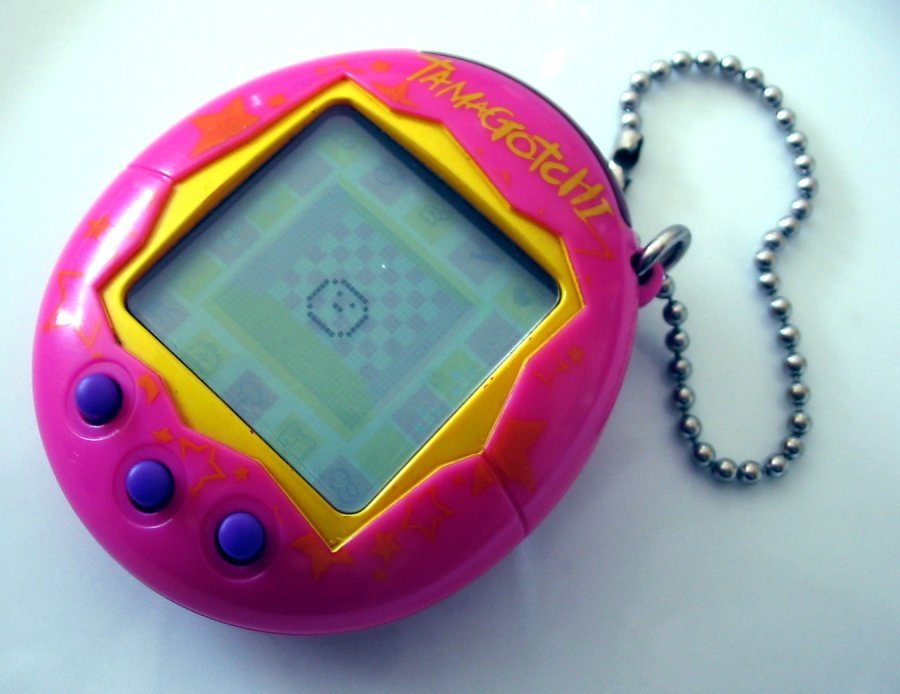
The physical design did much of the explaining. An egg-shaped shell suggested something alive inside. A keychain made the object portable. Three buttons and a small monochrome screen kept the interface approachable.
The creature did not need realistic fur or sophisticated animation. Its limited expressions left room for the owner to supply a personality. A handful of changing pixels could become impatient, unhappy or endearing because somebody had already decided to care about them.
November 1996: the first egg hatches in Japan
Bandai dates the original Japanese launch to November 23, 1996. Its official history places the international release in May 1997, when the idea reached a much wider audience.
The basic routine combined feeding, playing, cleaning and responding to illness or calls for attention. Care affected the creature’s development. The details differed between releases, so memories of particular characters, games and rules are not always memories of the same model.
Time was central to the appeal. This was not simply a game that resumed exactly where you left it. The pet had an ongoing routine, including sleep, and your day had to make room for checking on it.
The beep made the relationship feel two-sided
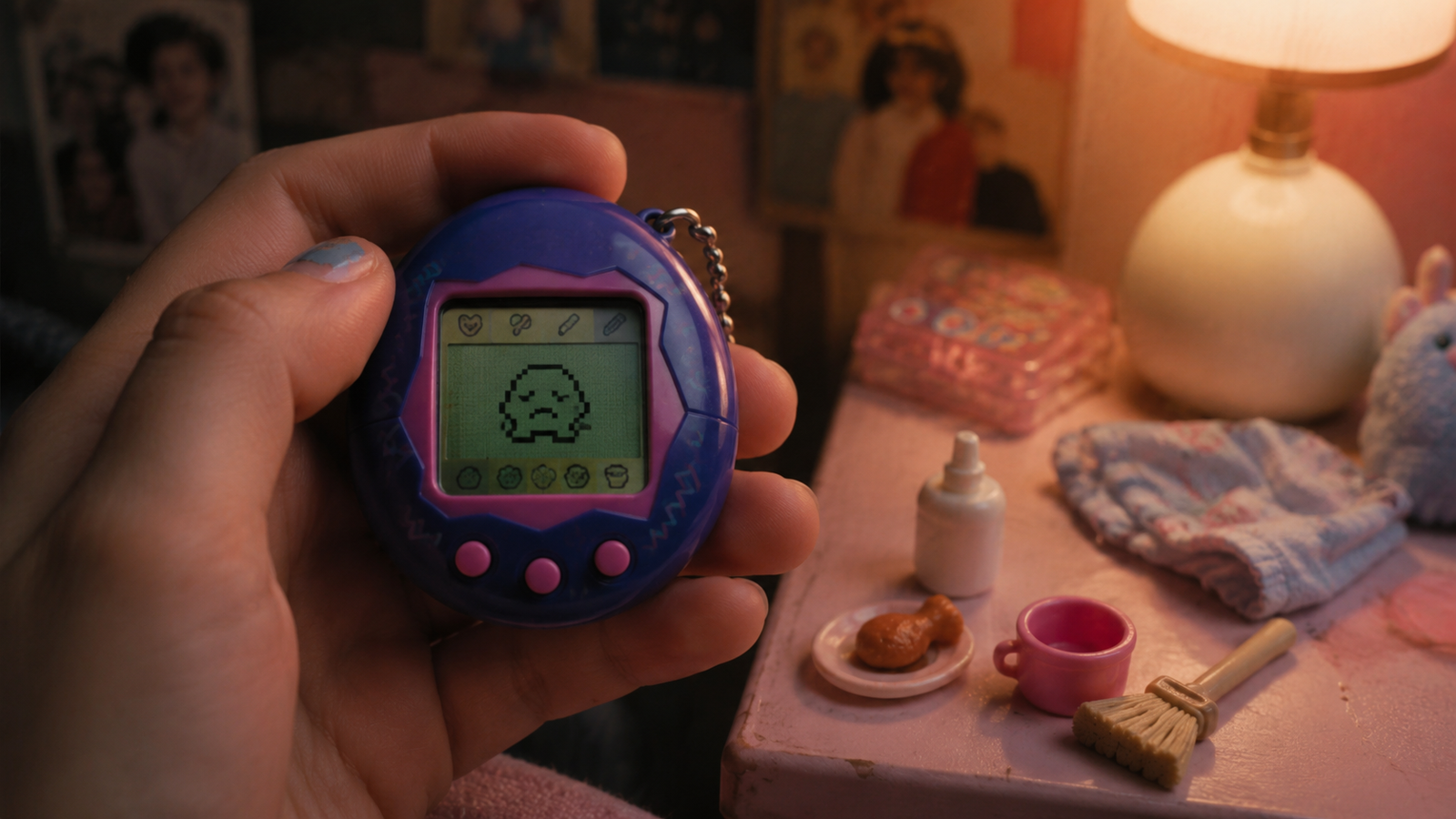
Most toys waited for their owner to begin. A virtual pet could appear to initiate the interaction. A sound from your bag suggested that something inside it wanted you.
That small reversal made checking the device a habit. You were not always looking for a new challenge; you were checking whether everything was all right. Repetition created familiarity, and familiarity made the next alert feel personal.
The emotional stakes did not require players to believe the creature was literally alive. People can understand a system perfectly well and still become attached to the particular history they have built inside it.
A friend might compare the creature they had raised with yours. The difference supplied a reason to talk about how you had been playing, even when nobody could agree which tiny mistake explained the result.
Death made a small toy unusually memorable
In the original style of play, a pet’s life could end. Poor care could have consequences, and its eventual departure was not equivalent to losing one round of a conventional action game.
The difference was the accumulated routine. Feeding, cleaning and watching a creature develop gave the outcome a little personal history. Resetting the device began another attempt, but it did not erase the owner’s memory of the previous one.
The experience could be funny, upsetting or simply inconvenient, depending on the player and the moment. It would be too much to claim that every owner received the same lesson about responsibility. What the design reliably offered was a reason to pay attention.
1997 brought the toy into shops, pockets and classrooms
The international craze turned the device into a recognizable accessory. Different shell colors invited comparison, and the keychain placed it among the small possessions that made a 1990s backpack feel individual.
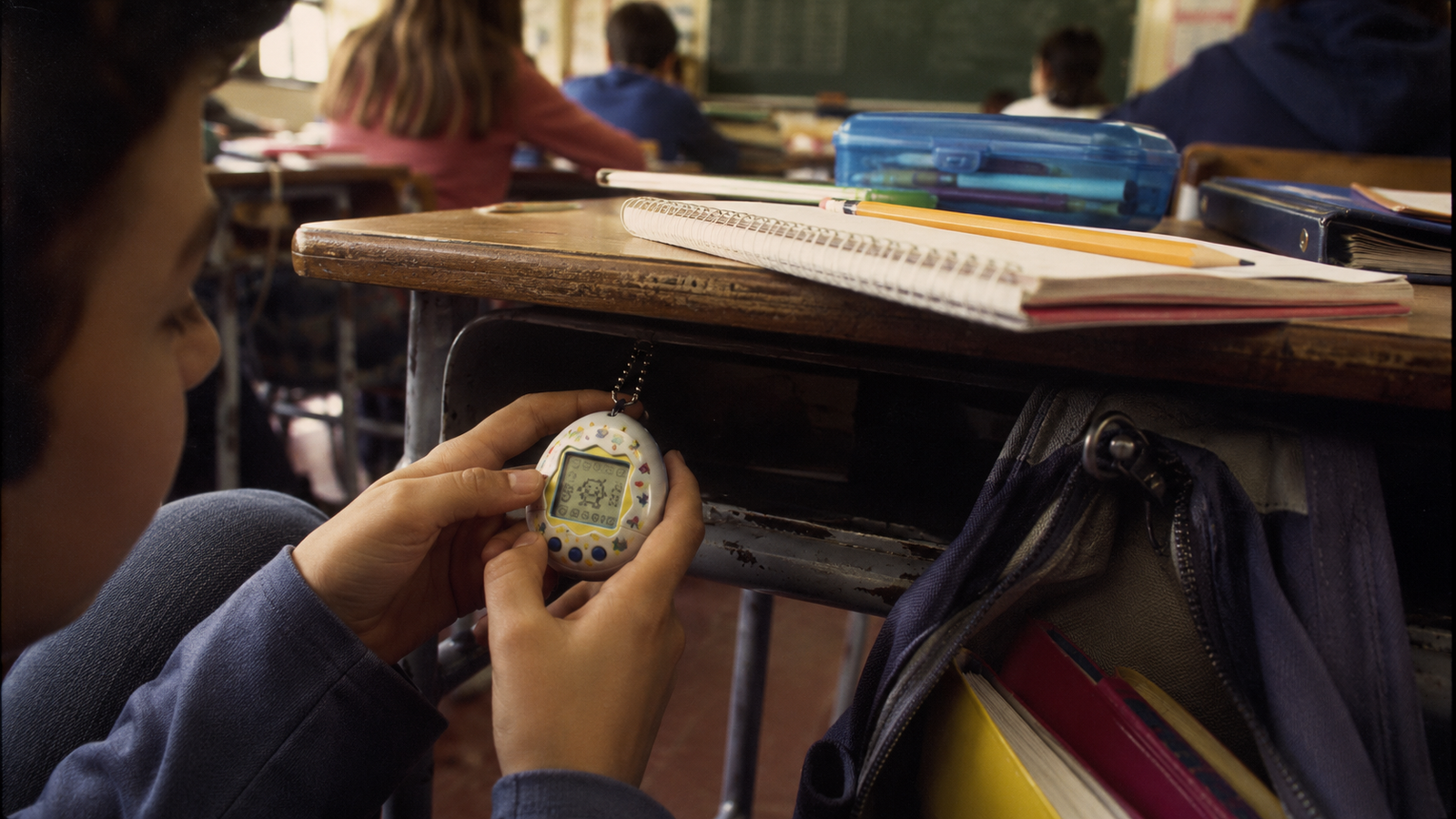
A toy that asked for attention did not fit neatly into a lesson. Contemporary reporting makes that friction more concrete than a general claim that “every school banned them.” A June 1997 Honolulu Star-Bulletin report described confiscated devices, school restrictions and adults helping to look after children’s virtual pets.
That last detail captures the strange success of the idea. A product small enough to fit in a child’s hand could recruit another member of the household into its routine. The owner went swimming or to school; somebody else inherited the feeding schedule.
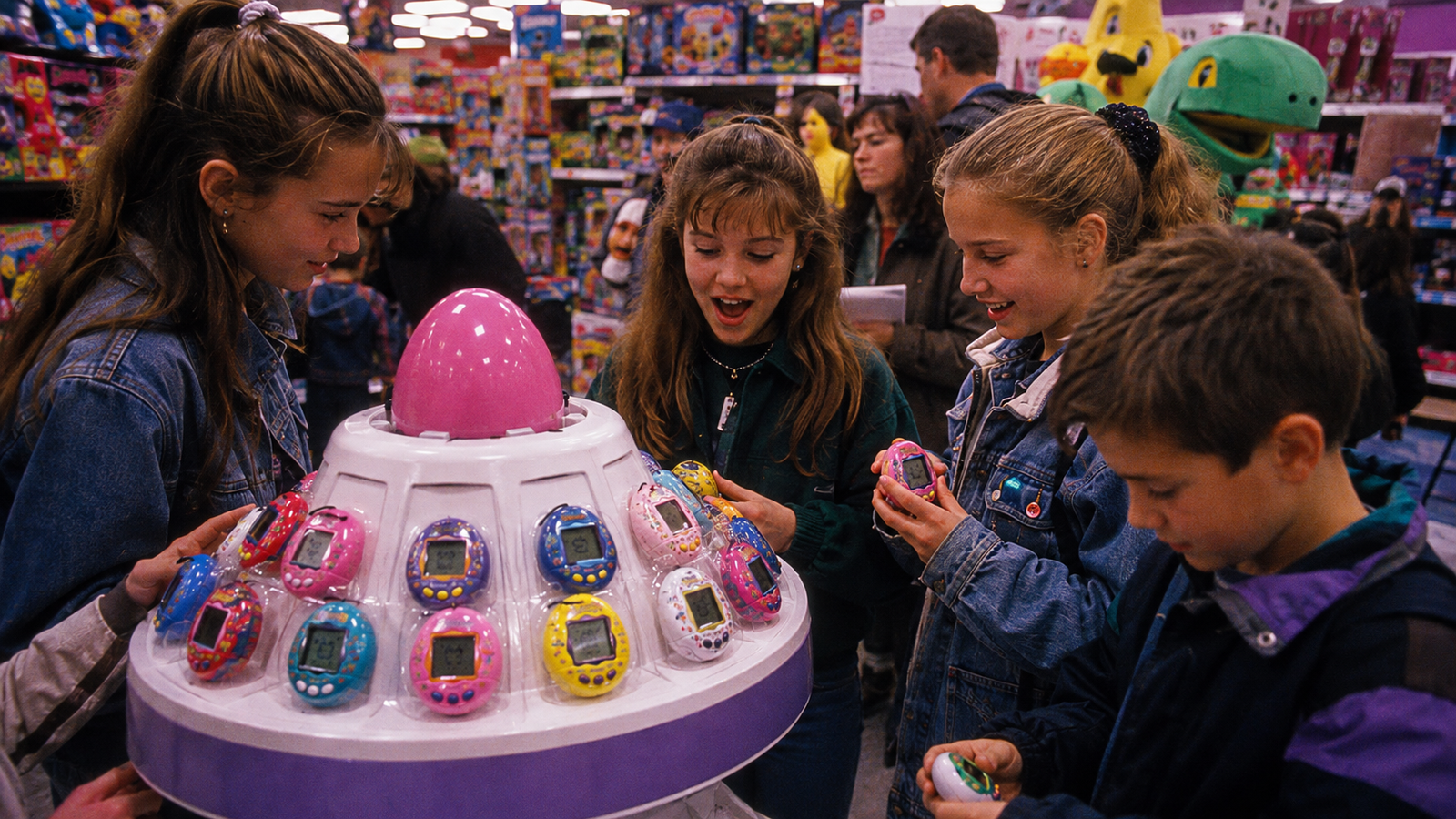
Not every remembered virtual pet was a Tamagotchi
The popularity of electronic pets produced a crowded category. Other brands and imitators offered dogs, cats, dinosaurs and unfamiliar creatures in handheld shells.
For a child, the distinction between the official brand and a similar device could matter less than the pet inside. Decades later, “my Tamagotchi” may describe a different product with related rules.
That is worth remembering when comparing stories. A different button layout, unfamiliar game or surprising feature may be a clue to the actual device, rather than evidence that somebody has remembered the era incorrectly.
The shared attraction was the same compact arrangement: a creature you could carry, a set of needs you could understand and a screen that changed because of what you did.
Connection gave the next generation a social life
The first wave of excitement subsided, but the idea remained useful. In 2004, a new generation added infrared communication. Devices could interact, moving the experience beyond one owner and one isolated pet.
That changed the role of bringing a toy to meet a friend. The conversation could now include an actual exchange between the devices. The shell was still small, but the world it suggested had become larger.
Later releases experimented with color screens, new activities and different forms of connection. These were additions to a recognizable core rather than proof that the original design had been waiting for a smartphone to replace it.
A dedicated device can make a small activity feel distinct. You pick it up for that particular relationship, rather than finding the pet somewhere inside a phone already full of unrelated demands.
Nostalgia became one audience among several
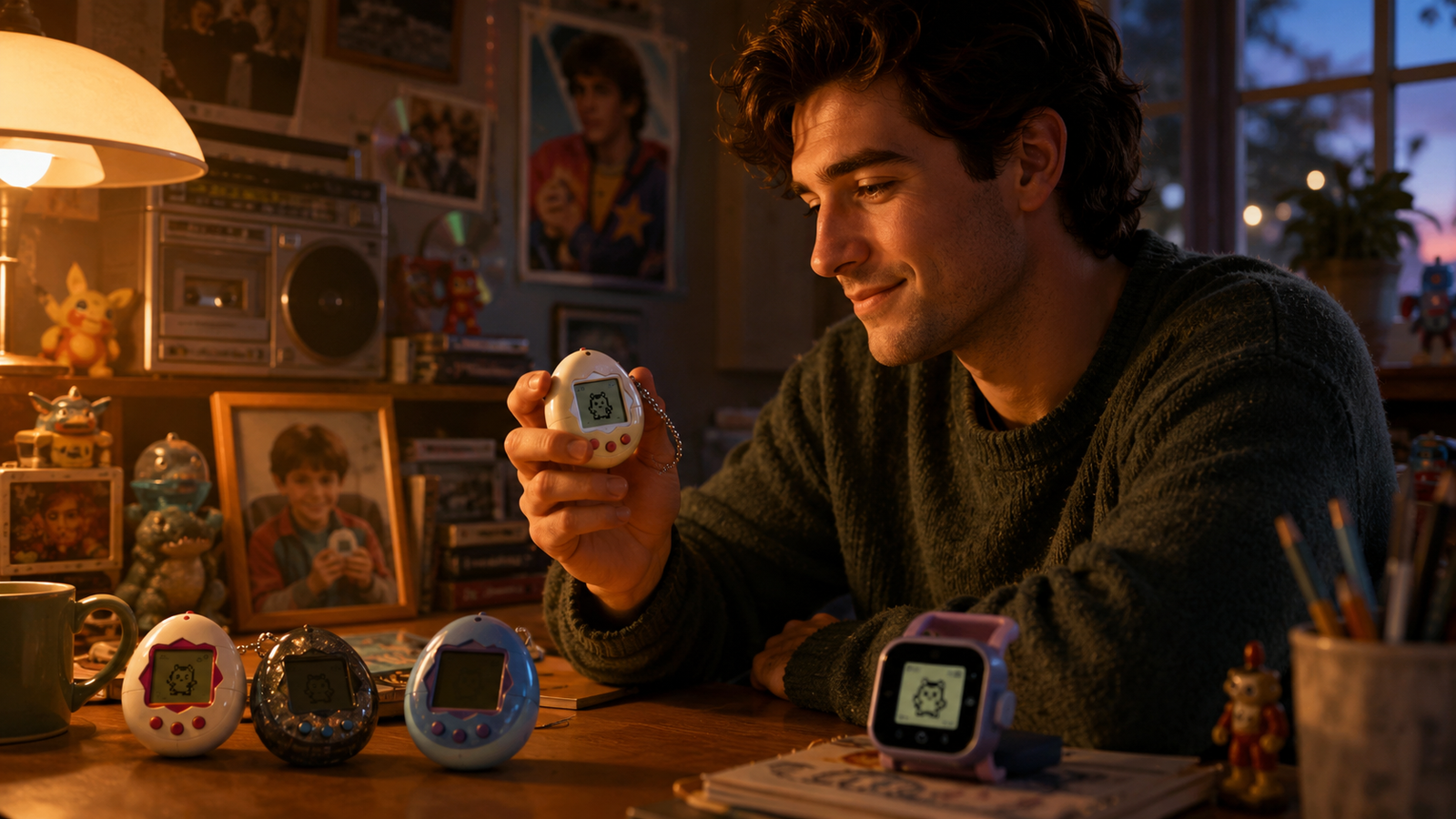
Releases inspired by the original devices gave adults an easy route back. The shell, buttons and screen could recall the first ownership experience before a new pet had even hatched.
But collecting and playing are not identical motivations. Somebody may enjoy a shell design, a character collaboration or the object as a fashion accessory. Somebody else may be mainly interested in raising another creature.
Bandai’s 2026 anniversary feature describes a brand that had passed 100 million units shipped worldwide, spanning multiple generations of products and audiences. Shipments are a measure of distribution, not a count of unique owners or pets successfully raised.
A toy-sized game earned a place in gaming history
In May 2025, The Strong inducted Tamagotchi into its World Video Game Hall of Fame, alongside Defender, GoldenEye 007 and Quake.
The company is revealing. These are very different kinds of games, with very different ideas about what a player should do. Tamagotchi’s contribution belongs to care, attachment and the blurred boundary between a toy and a video game.
Its enduring idea is easy to describe and harder to reproduce well: make a simple creature matter to somebody. The graphics can change, the connection can improve and the shell can become collectible, but the next request for attention still has to feel worth answering.
That was the achievement of the original egg. It did not need to look alive. It needed you to check on it—and perhaps ask somebody else to check while you were away.