After Halloween, an empty doorway looks like a hiding place. After The Ring, the television feels less like furniture. The horror films that stay with us leave something ordinary looking different when the credits end.
Our number one is The Exorcist. Its greatest scare is the helplessness of a parent who cannot make a familiar room safe. Hereditary comes closest; The Descent wins for physical panic. If the assignment is Halloween atmosphere above everything else, move the 1978 Halloween to the top.
This is our editorial ranking, with specific reasons for the order. Expect mature horror and discussion of premises and technique; we leave the major endings alone. Use the fear profiles to choose your night.
HALLOWEEN SPECIAL / THE WATCHLIST
Choose tonight’s kind of fear.
Pick the feeling. We’ll point you to the film—and explain the choice.
Our number one turns a bedroom into a place nobody can make safe. Choose Hereditary instead if family grief is the kind of dread you want to sit with.
For trapped-in-a-place panic, choose The Descent. For a group, choose The Thing. The full explanations are below.
1. The Exorcist (1973)
A home that stops feeling safe.
The Exorcist earns our top spot because it makes helplessness feel practical. Chris MacNeil looks for answers through the systems a parent would trust. Examinations and explanations cannot give her back an ordinary bedroom. By the time priests cross that threshold, the film has made entering a room feel like taking a side.
The spectacular images are what end up on posters. The harder thing to shake is Ellen Burstyn’s exhausted, increasingly desperate parent trying to get somebody to understand what is happening upstairs. That human center is why we put it above Hereditary: the supernatural terror grows out of an immediately recognizable need to protect someone.

Choose it for serious supernatural dread. Expect disturbing religious imagery, medical scenes and harm involving a child.
Film reference: AFI’s film record.
2. Hereditary (2018)
The fear of being trapped inside a family.
The opening moves from a miniature house into a bedroom, quietly teaching you to see the family as figures inside an arrangement. Ari Aster keeps returning to that uncomfortable scale. A house should give its occupants privacy; here it can look as if somebody else has taken the roof off to inspect them.
Toni Collette gives the grief an abrasive, painful presence. Family conversations already feel dangerous before the film’s other explanations arrive. It sits just below The Exorcist because its dread depends more on surrendering to that particular family’s emotional collapse. If that is what gets under your skin, reverse our top two.
For the visual thinking behind that feeling, Aster’s conversation with Robert Eggers connects his 2:1 frame to domestic interiors and Douglas Sirk. The shape of the picture is part of the argument, not just a delivery format.
Choose it for emotional, oppressive horror. Child death, family trauma and graphic injury make it a heavy movie-night choice.
Film reference: A24’s film page.
3. The Descent (2005)
Panic before the monster arrives.
A person squeezing through a narrow passage is enough. You understand the body, the rock and the tiny margin between moving forward and getting stuck. Neil Marshall lets that physical problem become frightening before the cave’s other dangers have to contribute anything.
The cramped geography keeps paying off. There is no reassuring wide-open route into which the characters can simply run when the situation changes. This is our number three because it delivers two fears at once: the immediate threat and the environment that makes escaping it so difficult. Pick a different night if confinement itself is the part you hate.
Choose it for claustrophobia and survival panic. Expect strong gore and cave entrapment. Different released versions have different endings; check the edition if that matters to your rewatch.
Film reference: BFI’s film record.
WHY THE SHOT WORKS / TRY IT
The doorway is doing half the work.
A bright foreground gives your eyes somewhere comfortable to land. The dark space behind it keeps a question open.
The lit foreground is easy to read. The dark doorway stays unresolved. The frame can make you wait before it reveals anything.
Original NostalgiaSignal blocking diagram, not a frame or shot recreation from Halloween. The lesson is the gap between the space you understand and the space you keep checking.
The same idea without the control: put a small figure in the rear doorway and the room changes meaning, although the lamp and foreground person stay the same. Carpenter’s widescreen compositions make background space an active part of the suspense.
4. Halloween (1978)
Someone could be standing just beyond the frame.
Carpenter makes daylight suspicious. Laurie looks through a classroom window and the threat is across the street; the neighborhood has not needed to become a gothic ruin. Hedges, parked cars and the edge of a doorway offer enough room for someone to be there—and then not be there when you look again.
For the feeling of October 31, this would be our number one. For sheer sustained fear, the first three press harder. What the 1978 original does beautifully is make an ordinary American street feel watchable in every direction. Keep an eye on the empty part of the frame, not only the person talking.
Choose it for stalking and sustained anticipation. This means the 1978 original, with violence, nudity and sexual content—not the later film with the same title.
Film reference: the official Halloween film guide.
5. The Thing (1982)
The person beside you could be the danger.
An isolated station is a bad place to have an enemy. It becomes a worse place when you cannot reliably identify which member of the group might be one. The Thing makes the practical need to cooperate collide with the desire to keep everybody at a distance.
The blood-test sequence is a compact demonstration of that idea: the arrangement of bodies and the question of who gets to perform a test are already stressful before its result. The transformations are extraordinary, but the suspicion gives them a story to tear apart. For a room of friends willing to argue about motives, this is our pick.
Choose it for paranoia and practical-effects horror. Graphic bodily transformation is central, so skip this one if body horror ruins the evening for you.
Film reference: Universal’s film page.

6. The Blair Witch Project (1999)
Hearing something you cannot locate.
At night the camera can record a little patch of visible world while sound keeps arriving from somewhere beyond it. That mismatch is the film’s great resource. A better view would let you check the situation; the available footage keeps that reassurance out of reach.
The fear also lives in watching cooperation deteriorate. Getting lost becomes an argument about responsibility, and another argument does not make the woods more legible. We rank it below the bodily immediacy of The Descent, but above louder films that explain their threats too generously. The missing-filmmaker story is fictional; its presentation is part of the construction.
Choose it for unseen menace and an argument-filled descent into disorientation. Handheld movement can be uncomfortable for motion-sensitive viewers.
Film reference: Lionsgate’s edition notes.
7. [REC] (2007)
The exit has been taken away.
The news camera follows an ordinary assignment into an apartment building. Once the exit is sealed, the stairwell becomes shared, contested space: the route people need is also the route that carries the danger. The lens has to stay close enough to a crowd to keep recording it.
Where Blair Witch stretches a frightening distance between the noise and the picture, [REC] keeps collapsing that distance. People and doors rush into the frame; available light becomes a condition of knowing what is around you. Choose the original 2007 Spanish film for a night that accelerates into panic.
Choose it for fast, enclosed panic and graphic violence. We mean the original 2007 Spanish film, not the American remake Quarantine. Handheld camerawork is part of the format.
Film reference: Sony’s film page.
8. The Ring (2002)
A familiar screen becomes a threat.
A cassette is made to be played. A television faces the place where you sit. The Ring turns both of those perfectly sensible arrangements into liabilities, then adds a telephone call and a deadline. The threat does not need you to enter an unfamiliar castle; the equipment is already in your house.
Its recorded images refuse the comfort of an ordinary scene. They arrive as fragments that an investigation can organize without making them entirely pleasant to remember. The American 2002 adaptation belongs on this list because it leaves an object changed: afterward, the blank television is a more interesting rectangle of darkness.
Choose it for cursed-media dread and eerie imagery. This is the 2002 American film; the 1998 Japanese Ring is a different adaptation worth a separate night.
Film reference: Paramount’s film page.
9. Alien (1979)
You are inside the machine with it.
The crew eat, smoke, complain and operate equipment. Those ordinary textures matter. The Nostromo feels like somewhere a group has to work, so the corridors and machinery have a use before they become places in which something can hide.
That gives the creature an unusually convincing house to haunt. Ridley Scott can spend time on a passage, an opening or an uncertain shape because the ship has already earned your attention as a space. Alien is the best choice here for slowly inhabiting the danger. Give it an attentive room; a loud party will flatten much of what makes it work.
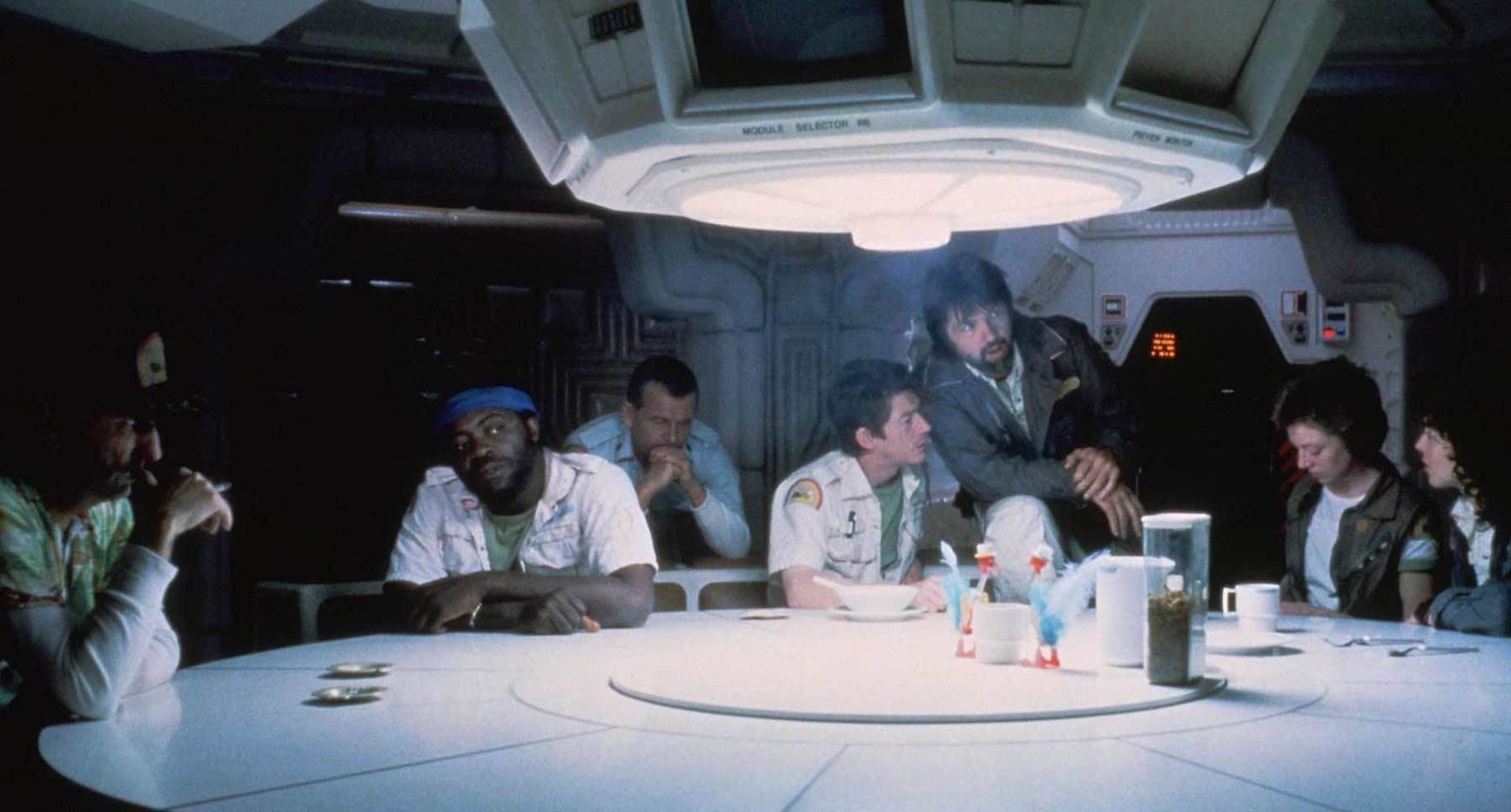
Choose it for isolation, stalking and science-fiction body horror. We mean Alien, not the more action-driven Aliens.
Film reference: 20th Century Studios’ film page.
10. A Nightmare on Elm Street (1984)
There is no safe moment to close your eyes.
Wes Craven takes away the break you normally get from a frightening day. A school corridor, a bed or a bath can stop obeying ordinary rules, and waking up is no longer the reliable boundary you want it to be. The film has found an escape route everybody eventually needs and put a threat inside it.
The original Freddy is most effective before the franchise turns his personality into a larger part of the attraction. Nancy’s attempts to investigate and prepare give the impossible premise something practical to push against. It closes our ten because the concept is still superb, even when its more theatrical moments invite a different kind of enjoyment from our top picks.
Choose it for nightmare imagery and a dark 1980s atmosphere. Expect graphic violence and sexual imagery; the familiar character does not make the original a light family film.
Film reference: AFI’s film record.
Three double bills that change the conversation
Halloween → The Ring. Begin with the threat outside the house, then move to a recording already inside it. Compare the empty doorway with the blank television: both ask you to keep looking at a rectangle.
Alien → The Thing. One makes the workplace unsafe; the other makes the people sharing it uncertain. The interesting comparison is how a group tries to keep functioning when its ordinary rules stop helping.
The Blair Witch Project → [REC]. Watch the camera lose control in opposite ways. The first cannot show you enough of the surrounding world; the second cannot put enough space between itself and the danger.
Our Halloween rule: choose the fear the room wants, then give the quiet scenes a chance to work. A ranking is useful when it helps you pick—not when it turns the evening into a contest.
Which film changes the room for you?
We have put The Exorcist first. Make the case for the title you would move above it: a sound, a room, a sequence or a particular kind of dread. Copy a pick from the guide near the top and send it with your own number one.
Keep the night going
Five films from 1996, five different kinds of fear offers a smaller shelf with a precise year behind it.
How VHS changed movie night explains why a cassette could become part of the experience.
What happened to Blockbuster? follows the ritual of choosing a film into the business behind the counter.
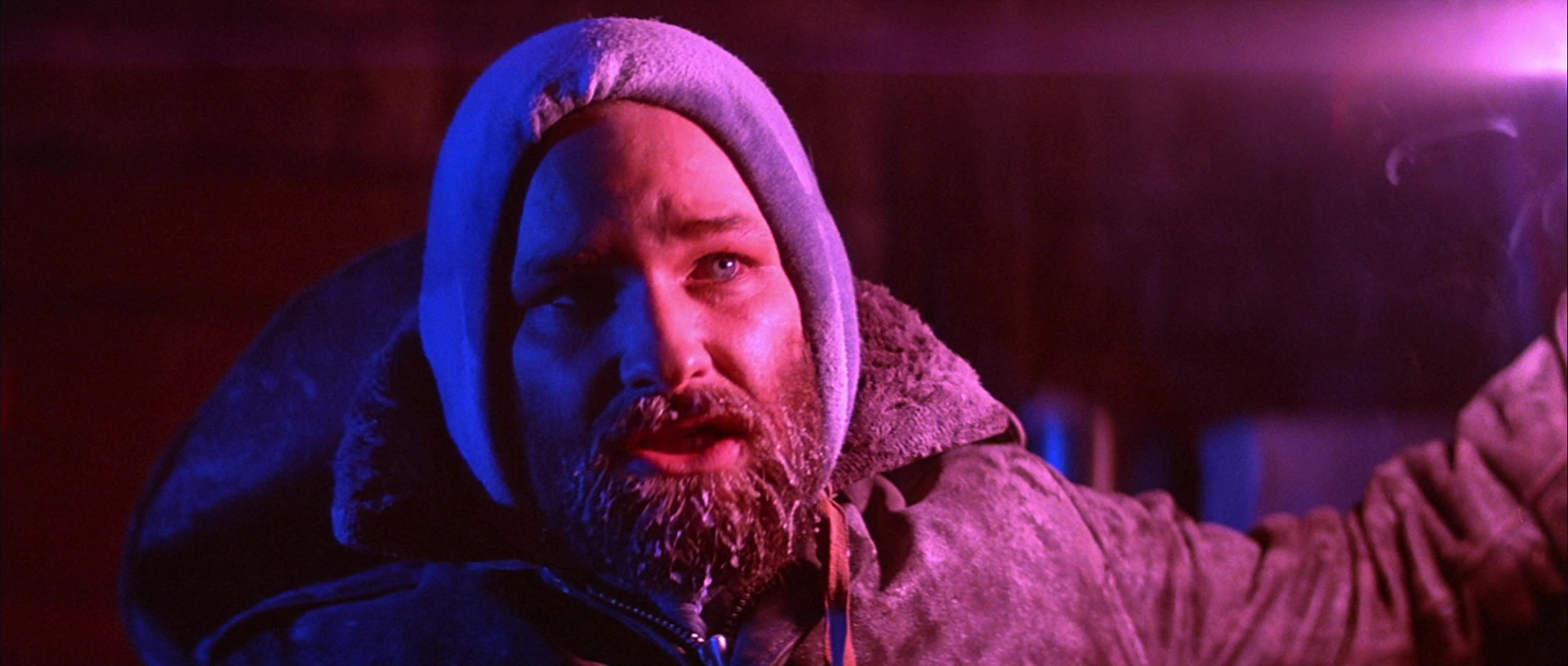
Hero: official The Thing (1982) artwork, © Universal Studios. Film records and studio pages are linked beside their entries. This is critical editorial selection; no audience poll or new laboratory fear test is claimed. Streaming catalogs vary by territory.