Band of Brothers makes its scale felt through small actions: a glance before somebody moves, the difficulty of carrying equipment, the pause after a familiar voice fails to answer. The battles are large. The experience of watching them remains close to individual people.
HBO’s ten-part 2001 miniseries follows Easy Company of the 506th Parachute Infantry Regiment, 101st Airborne Division, through training and the European campaign. Adapted from Stephen E. Ambrose’s book and executive-produced by Tom Hanks and Steven Spielberg, it became a landmark in what television could attempt.
At 25, its achievement is more interesting than a comparison between television and cinema. The series uses the time available to television to make a group feel familiar, then makes every change within that group consequential.
Research supplied a structure, not just details
In a Television Academy interview, lead writer Erik Jendresen describes working closely with Richard Winters and receiving scrapbooks, correspondence and other records. His initial plan contained thirteen episodes; the finished series contained ten.
The material helped solve a narrative problem: how to follow a large unit without reducing everybody to a label. Jendresen also recalls abandoning more formal introductions and trusting viewers to distinguish the men over time. That decision gives the early episodes a useful difficulty. Faces become recognizable through behavior and relationships rather than a neat presentation of character biographies.
The audience’s growing familiarity is part of the dramatic structure. A name that initially passes quickly can later carry the weight of several episodes. Recognition accumulates, and an absence eventually becomes noticeable without an explanatory speech.
The unit is the continuing character
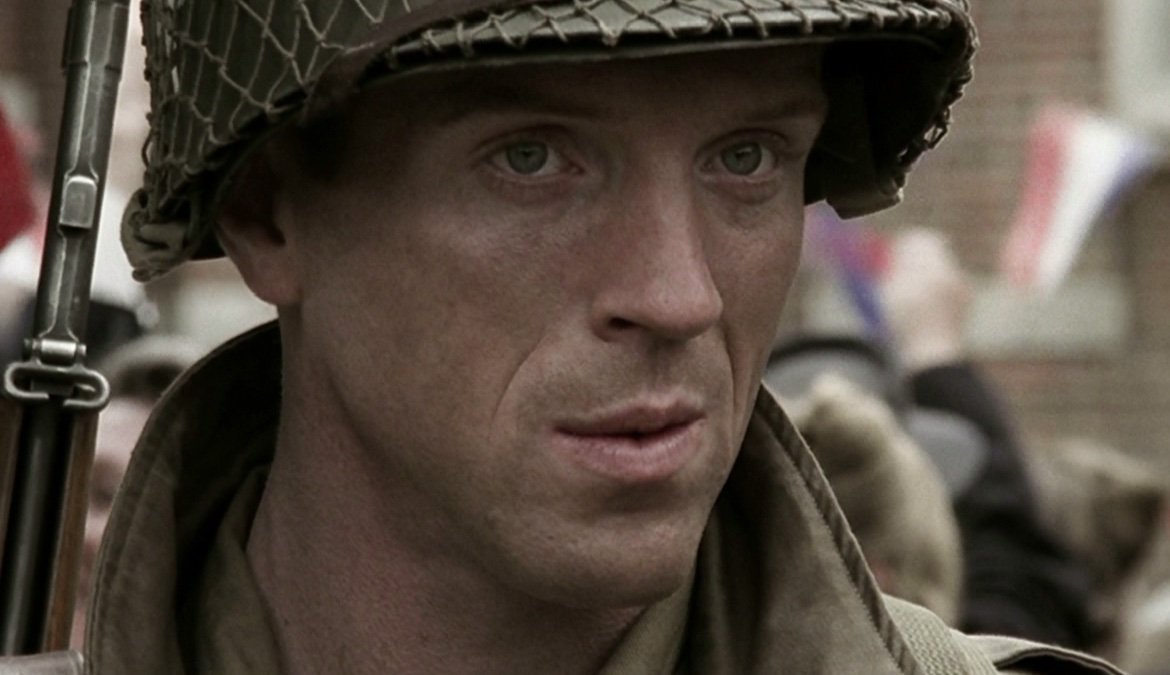
Damian Lewis’s Winters provides an important point of orientation, but the series repeatedly moves its attention. Officers, medics, replacements and exhausted veterans encounter the same campaign from different positions.
That movement prevents competence from becoming a universal solution. Knowing how to give an order is different from being able to treat a wound, and both are different from arriving among people whose shared experiences you cannot yet understand.
The company persists while its membership and confidence change. Television’s length makes that contradiction possible to feel. The group becomes more familiar to the viewer at the same time that war removes pieces of the world being recognized.

The physical world gives the performances resistance
The production’s scale was substantial, but its value is in what the actors seem to have to negotiate. The uniforms, ground, buildings and weather create a world in which movement has a cost.
The American Society of Cinematographers’ production account describes work by cinematographers Remi Adefarasin and Joel Ransom, with principal and model units exposing roughly two million feet of film. It also documents a forest built inside a Hatfield hangar for the Bastogne episodes and the combination of physical sets with visual effects.
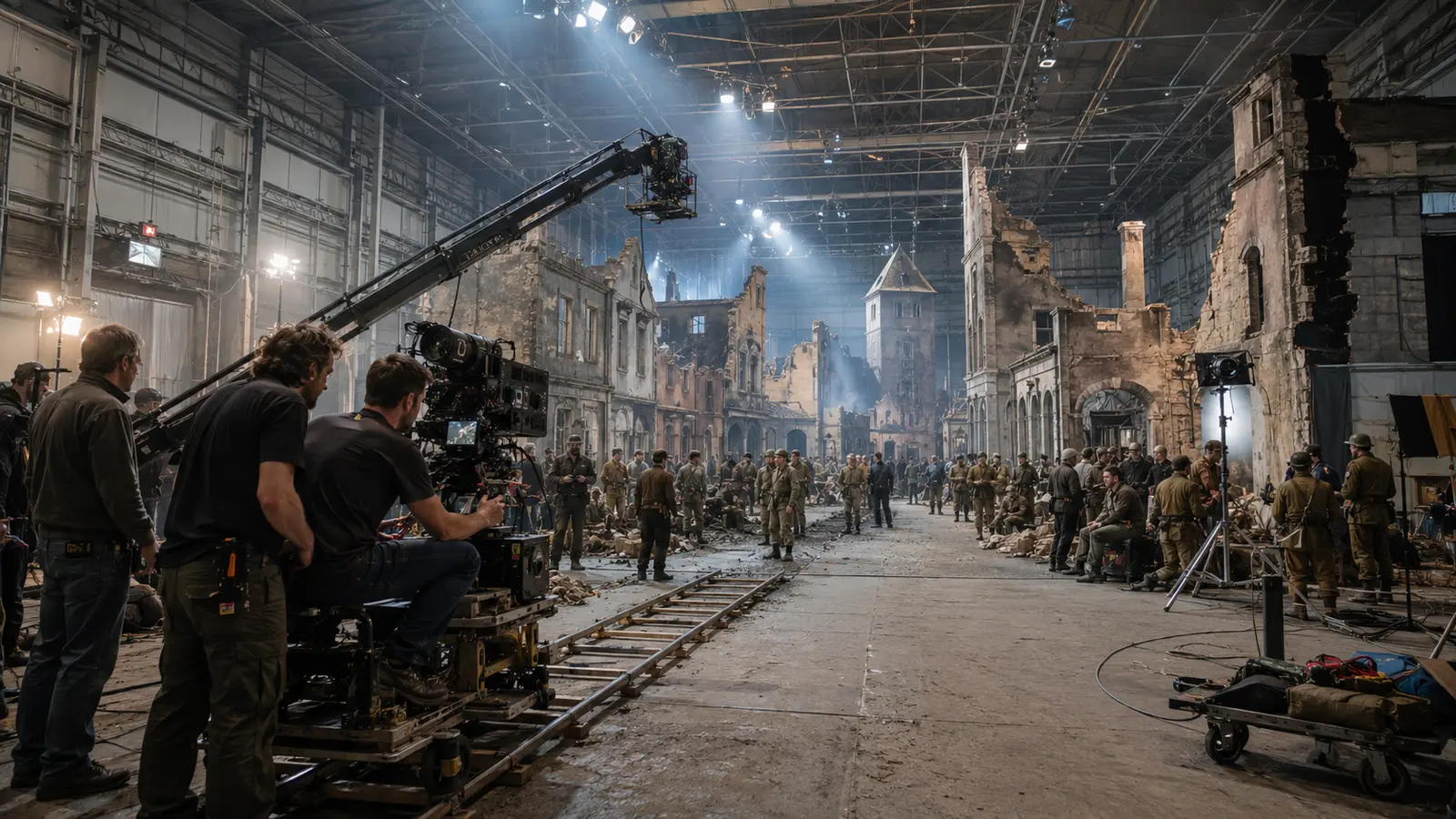
The article’s production illustration is a reconstruction, not a photograph of that actual set. The distinction is especially important for a historical drama: a plausible image can create a false sense of evidence if it is not labeled.
On screen, the practical and digital work contributes to a consistent environment. A background does not need to announce itself as an effect for the image to feel large. Often the more persuasive achievement is the space immediately around a character: somewhere to crouch, a surface to lean against or an obstacle that prevents a clean escape.
Its visual style keeps discomfort in the picture
The images are frequently harsh, but the series is not one uninterrupted gray texture. Training grounds, occupied towns and winter woods create different demands on the eye. A clear landscape can still be dangerous; a beautiful distant view does not make the person in the foreground comfortable.
That variation helps the campaign feel like a progression rather than a sequence of interchangeable battles. The spaces change, while fatigue carries forward. The viewer does not receive a complete reset at the beginning of every episode.
The most memorable images often bring the scale back down again. A forest becomes a few trees and a hole in the ground. A military operation becomes the distance a person has to cross before reaching someone who needs help.
A researched drama is still a drama
The veterans’ interviews give the series a relationship to lived memory that fictional performances alone cannot provide. Jendresen explains that these segments emerged from documentary interviews being filmed alongside the production. Their placement invites the audience to hear recollection before watching a dramatic reconstruction.
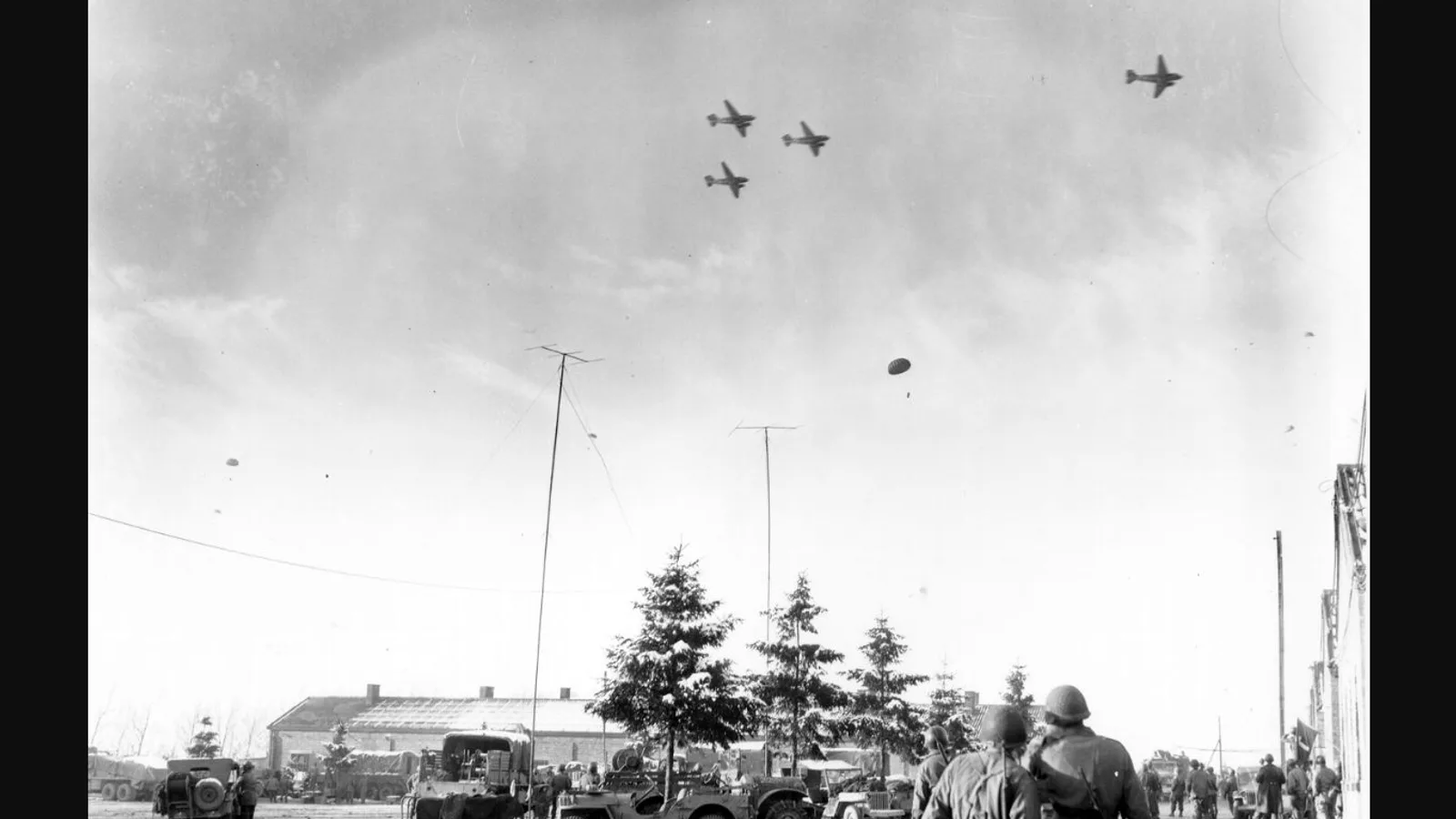
That connection does not make every exchange of dialogue a verbatim historical record. An adaptation selects, compresses and arranges material. A convincing scene can encourage a viewer to investigate an event, but it cannot replace the documents, testimony and historical debate around it.
Our archival Bastogne image belongs to a different category from a still of actors in costume. Both can help tell this story, provided the caption makes clear what each actually depicts.
The series rewards the time it asks for
The Peabody award citation recognizes the production’s connection between major events and the lives of individual men. That relationship is also why the series remains effective across repeated viewing.
A first watch can be devoted to orientation: names, places, units and the course of the campaign. A later one can make room for performances at the edge of a scene or for the way somebody’s response changes after earlier experiences.
The DVD box set suited that kind of attention. Episodes, interviews and supplementary material could become a collection to work through. The familiar home-video habit of returning to a particular passage served something more demanding than comfortable repetition.
Anniversary attention can lead beyond the screen
The National WWII Museum’s 2026 anniversary symposium, scheduled for July 31 and August 1, brought the production’s history into conversation with preserved veterans’ oral histories. Its program distinguished the people who made the series from the people whose experiences inspired it.
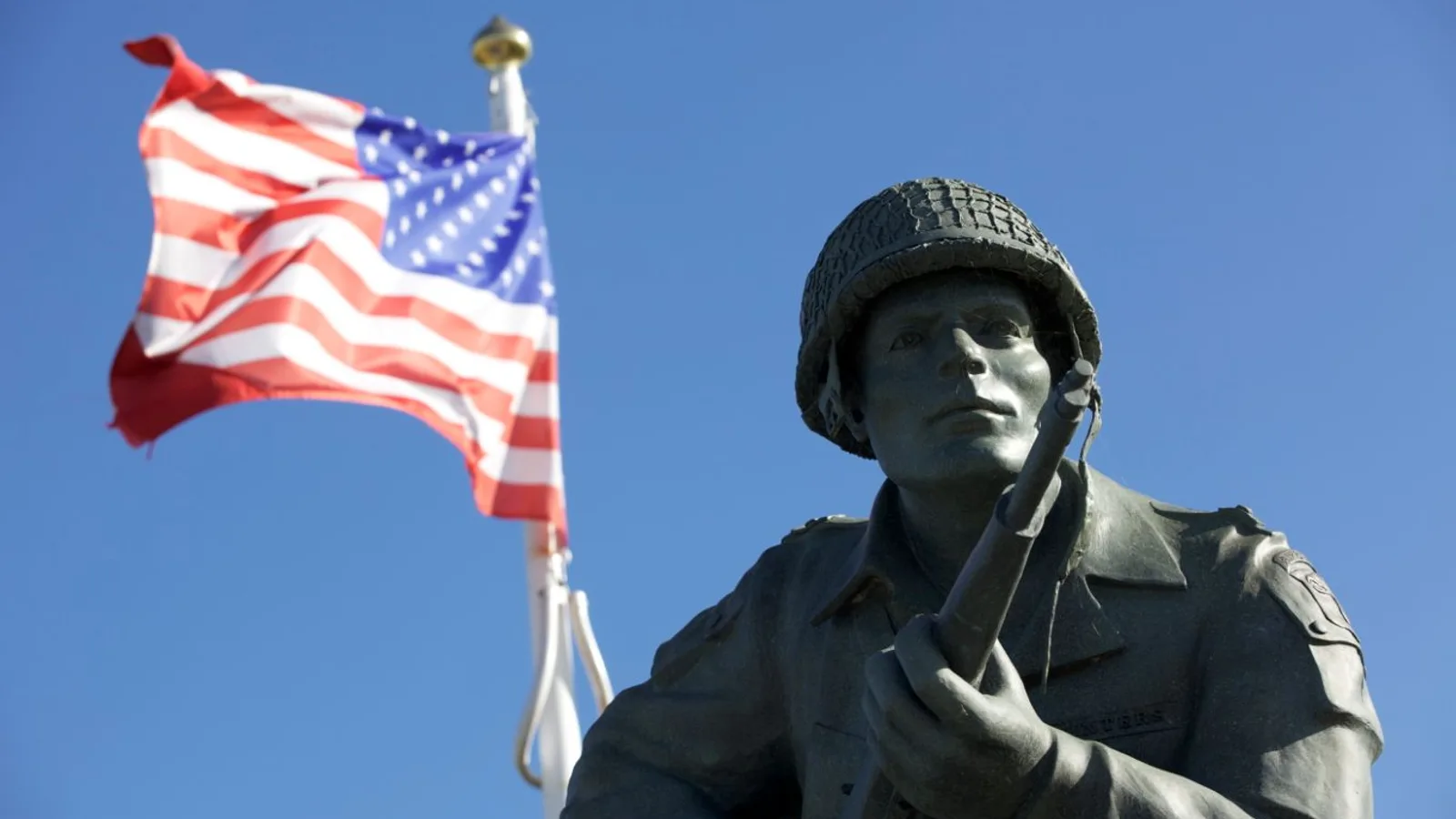
That distinction is a useful way to approach the anniversary. Admiring the filmmaking can be the beginning of curiosity about the history, rather than its conclusion. A performance can make a name memorable; further reading can reveal what the drama could not include.
Band of Brothers remains powerful because its different kinds of scale support one another. The production creates a world large enough to seem difficult to survive. The episodes give the audience time to recognize the people moving through it. The smallest decisions then matter because the series has made room for their consequences.