A mixtape asked you to commit to the running order. MiniDisc let you change your mind. That track could move up, an awkward bit could come out, and the little disc could become a different evening without starting the recording again.
That was the attraction: music you could keep as an object, with an arrangement you could keep revisiting. MiniDisc sat in an interesting space between the cassette collection and the fluidity of digital files.
The appeal was bigger than being smaller
Sony’s design archive dates the MZ-1 portable recorder to 1992. Its description emphasizes immediate access and digital editing, including controls intended to make those differences from a cassette player visible.
A compact disc already let a listener jump between tracks. MiniDisc’s distinctive attraction was bringing that kind of navigation together with recording and editing in a small cartridge format. The important word is recording: a personal disc could be assembled instead of merely purchased as a finished album.
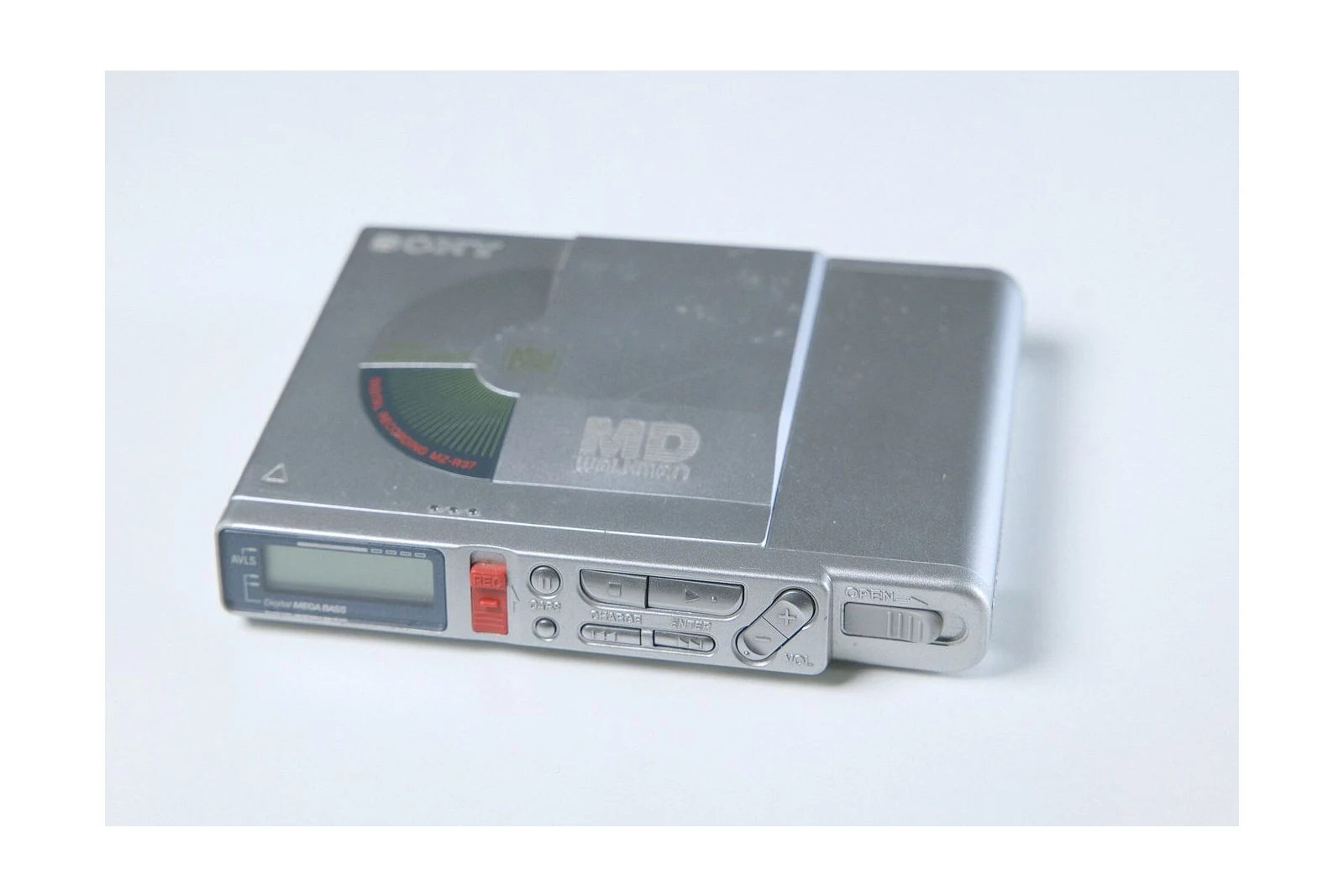
The recorder shown here is the later MZ-R37, not the original MZ-1. MiniDisc equipment changed considerably over the format’s life, so it is worth keeping a particular model’s capabilities separate from the broader idea.
The table of contents did the organizing
The Sony MZ-R37 operating instructions describe erasing tracks, adding or removing track marks, changing order, and labeling recordings. These functions depended on the disc’s management information as well as its recorded audio; the manual warns against disturbing the recorder while it updates that information.
For a listener, the practical difference was simple. Fixing the order of a compilation did not require recording the entire selection again from the beginning. A continuous recording could be divided into more useful sections. A title could replace the guesswork of remembering what track number seven contained.
Those are small conveniences individually. Together, they change the personality of a collection. A disc can remain a work in progress instead of becoming permanent the moment you finish recording it.
Digital flexibility still had physical boundaries
MiniDisc did not remove every limit. You still handled separate discs. You still had to get audio into the recorder. A model’s inputs, recording modes, and transfer options determined how that happened.
It is particularly misleading to imagine that every MiniDisc recorder behaved like a later computer-connected model. Sony’s tenth-anniversary history distinguishes developments such as MDLP and Net MD from the original launch. Those later features should not be projected backward onto every machine with an MD logo.
The physical limits could also be part of the attraction. A disc was a manageable unit: one compilation, one listening mood, or one project. A handful of them could form a small library with names and cases, rather than a collection visible only after opening an application.
A little label for a very particular mix
There is something inviting about having room for a title but not an essay. A short label forces a decision about what a selection is. It might name an artist, a journey, a season, or a person who will understand the reference.
A digital track list can carry far more information, but a physical label is visible before the player is on. It lets the collection exist around the device. The drawer, case, and stack on a desk become another way to browse.
That is a different pleasure from claiming one format sounds inherently more authentic. It concerns the relationship between an object and a set of choices. The songs may be digital, but selecting the disc is still a physical action.
Why it resists a simple success-or-failure story
Old formats often get reduced to whether they won. That question can flatten the reasons a person might have enjoyed using one. A format can lose its place in the mainstream and still have offered a coherent, useful experience.
MiniDisc’s experience was especially specific: portable recording, editable sequences, removable media, and a device built around listening rather than a dozen unrelated jobs. Its inconveniences were real, but so was the logic connecting its features.
There is no need to turn that into buying advice or pretend that aging equipment is effortless to maintain. The more interesting question is what the format allowed you to do with a collection once you had made it.
A cassette asked you to commit. A huge file library makes almost any choice reversible. MiniDisc occupied a pleasing space between them: a small object that said, “Here is the mix,” while leaving you room to change your mind.
Keep exploring
- The iPod Comeback: Why a Music Player With One Job Still Matters
- The CD Comeback: Why Streaming-Era Listeners Are Buying Discs
Hero photograph: Sony MZ-R37 1.jpg by -stk. CC BY-SA 4.0. Resized and padded for this page; photograph otherwise unchanged.