The most moving part of a stadium concert can be the moment it stops feeling enormous. In Budapest, Freddie Mercury sings a Hungarian folk melody and the audience recognizes something of its own. A visiting band briefly becomes a guest participating in the crowd’s musical life.
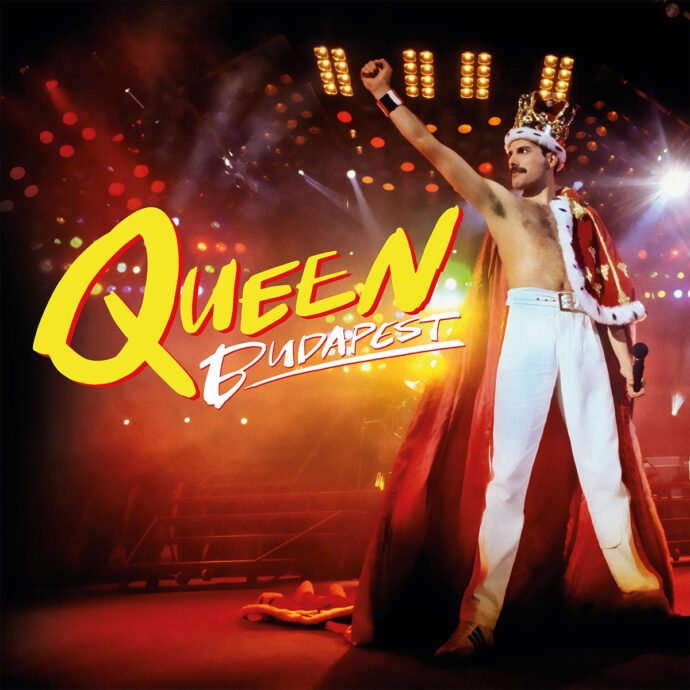
Queen performed at the Népstadion on July 27, 1986, during the Magic Tour. Forty years later, the concert film returns to cinemas and IMAX beginning October 7, 2026. Sony Music’s announcement confirms a 4K restoration, newly remixed audio and an accompanying interview with Brian May and Roger Taylor. Local dates vary; the official film website is the place to check a screening.
A major concert in a divided Europe
The event took place before the end of communist rule in Hungary and before the borders associated with the Iron Curtain opened. That context matters without requiring a simplistic picture of an audience that had never heard Western music.
Fans already had relationships with the songs. The remarkable change was having the band physically present, with the scale and collective experience of a stadium production. A recording could travel in ways a person could not; a concert brought the two forms of access together.
Publicity calls it a pioneering Western stadium rock show behind the Iron Curtain. That is a specific claim about scale and setting, not a reason to erase earlier musical exchanges across Eastern Europe. The history becomes more interesting when the distinction stays visible.

The audience is part of the performance
Mercury’s command of a crowd can look effortless when reduced to a short clip. In a full concert, you can see the repeated work: offering a phrase, waiting for an answer, changing the size of a gesture and sensing when the room is ready to take over.
The band supports that exchange. Brian May’s guitar can widen the sound without smothering the voice. Roger Taylor and John Deacon keep a huge audience connected to a shared pulse. The spectacle is built by four musicians, even when the camera is drawn toward one.
The traditional song “Tavaszi Szél Vizet Áraszt” makes the relationship especially clear. In the band’s anniversary announcement, Taylor recalls Mercury using phonetic words written on his hand. The charm is partly in the effort: the visitor has learned something for this particular audience.
No lyric quotation is needed to understand the gesture. Recognition changes the crowd’s response. For a few minutes, the performance is about a place and its listeners rather than a set that could have happened anywhere.

Budapest was not Freddie’s last concert
The film is sometimes discussed as though the tour ended in Hungary. It did not. Queen’s final concert with Mercury took place at Knebworth Park in England on August 9, 1986. Budapest’s special place in the archive concerns the professionally filmed performance, not the final date on the stage.
That distinction protects the event from an unnecessary myth. The images already carry the weight of a period that would not return. They do not need to be assigned the wrong ending to become poignant.
A viewer watching in 1986 and a viewer watching now bring different knowledge. The former sees a powerful band in motion. The latter knows how limited the remaining opportunities would be. The camera records the same gestures, but time changes what we feel while looking at them.
Restoration begins with something that survived
The anniversary release was restored from original 35 mm material, with Park Road Post Production handling the 4K restoration. Sony also identifies the original multitrack recordings as the basis for the new audio mix.
Those details explain why preserving source material matters. An old home-video copy contains the decisions and limitations of its transfer. Original elements can offer more information for a later restoration to recover.
Resolution alone is not the whole experience. Stable imagery, balanced color and intelligible sound all affect how close a performance feels. A restored film should let the viewer attend to the musicians rather than continually noticing the age of the copy.

The concert that came home on tape
For many people, a filmed concert was an encounter with a show they could never have attended. A VHS tape reduced a stadium to a television, but it also made the performance repeatable.
The scale shrank while familiarity grew. You learned the pause before a line, the camera movement before a chorus and the point at which the audience raised its arms. Repetition made the film part of a room in your own home.
A return to a large screen reverses some of that process. Details that once disappeared into the television become visible, and another audience supplies a new shared reaction. The recording stays fixed while the circumstances around it change.

What the anniversary makes possible
Sony lists October 30, 2026 for accompanying physical and digital editions, including Blu-ray, DVD, CD and vinyl. At the time of this update, that date is still ahead. The cinema release and the later home editions offer different ways to revisit the same performance.
The most compelling invitation is not simply to see a sharper picture. It is to watch the exchange between a band and an audience long enough for it to develop. A chorus becomes a response; a foreign-language song becomes a welcome; a preserved evening acquires another life.
Budapest matters because that exchange can still be seen. The cameras did not preserve the whole meaning of the night, but they left enough for another generation to discover why it mattered.